Thursday, July 8, 2021

Reflections on the Evolution of Gaming (part 2)


Reflections on the evolution of Gaming (part 1)


I have a few more thoughts to add to my last post. Occasionally I’ll find myself trying to explain concepts that make perfect sense to me but are completely foreign to my kids, such as long-distance telephone calls and how cheat codes propagated before the advent of the internet. There was a major shift in technology dealing with how we communicate between the late 90’s and the late 00’s. In between those times, there was this weird transition phase with things that are considered archaic, like limits/costs on text messages and a separate version of the internet designed for non-smart phones. It’s sort of like growing pains for teenagers, and how different parts of the body grow to their adult shape/size at different times, leading to awkward and gangly looking kids.


Likewise, console gaming went through a similar phase during the transition between 2D and 3D, which mainly affected the Sega Saturn, Sony Playstation, and N64, which I consider to be the awkward teenager stage of gaming. Adam Koralik has said that his favorite generations of consoles were the 4th and 6th generations, corresponding to Nintendo’s SNES and Game Cube eras. His reasoning is that the designer/programmers developed the concepts and found out what they could and couldn’t do on the NES and N64 systems and learned how to make the games for those systems, but were somewhat limited by the technology. When the next generations came out, they could finally make the games they were intending to make all along. I firmly believe that the game Miyamoto was trying to make was A Link to the Past, but was unable to do so when he made the original Legend of Zelda, and likewise, something like Twilight Princess is what the Ocarina of Time developers had in their head but had to scale it back quite a bit to fit the N64’s capabilities.


During that era, there were certain practices that are considered weird by today’s standards that we just had to accept, and they all pretty much came about because of hardware limitations and other considerations. I’m going to mainly compare the original Playstation and the N64 here for these examples. Games like Resident Evil and Final Fantasy VII got around the PSX’s inability to create large 3D spaces by having the backgrounds be pre-rendered static images while the 3D characters were limited to where they were allowed to move. The 3D models were fairly blocky and didn’t have a lot of texture mapping. Because of the relatively large amounts of disc storage (for the time, anyway) developers could include pre-rendered video clips as cut scenes, and some games actually had CD quality music played and recorded with actual instruments instead of digitized music or MIDI files. While loading times are still a thing these days, they were looooooong back then, and programmers tried all sorts of things to mask loading times. Another fairly unique characteristic was the “jitter” that accompanied polygons due to not having floating point values.


Meanwhile, on the N64, there were things such as an odd mixture of 2D sprites on 3D planes (like the trees on Super Mario 64 or the racers on Mario Kart), oddly the reverse of FFVII. Characters were still blocky, but slightly less so than the PSX. Both systems did camera tricks to show off the 3D capabilities, like how it swerves in/out/around the characters during a battle on FFVII, or the Lakitu Bros camera flying around Peach’s castle which both gave a tour/aerial view in addition to showing off. Due to cartridge limitations, pre-rendered Full Motion Video was basically out of the question, and was replaced with real-time rendered motion capture clips. These are still in use today, as the big advantage is smaller storage requirements but also having it reflect the situation accurately. By this I mean that games like Rogue Squadron will show the pre- and post-level cut scenes with whatever vehicle is chosen by the player instead of playing the clip of the suggested/preferred ship for the level. Music was still mainly produced internally by the sound chip, but there were instances of digitized music from real sources (like the Star Wars theme in Shadows of the Empire).


Another interesting relic of this “growing pains” period are the FMV games. With CD-ROM technology, it was far easier to store video clips, and it made developing what are basically, “choose-your-own-adventure” games that don’t involve much playing, just pushing a button to make a decision here and there. It sounds all fine and dandy, but these games spend their budget on sets, actors, costumes, and other usual TV/movie stuff instead of artists and level designers. In theory, these games should be easier to make because there's no need for programming hit boxes, background/foreground layers, and palettes - just links to video files, and graphically it was assumed they would be more appealing because they're actual video as opposed to looking like 16-bit pixels. The goal was to blur the line between game and movie. But in almost all cases, the actors aren’t even good enough to appear in B-movies, and the sets are clearly the cheapest stuff they could find. The most well-known example (and probably the best game in this category) is Night Trap. Due to the low quality of the “games,” their popularity quickly waned when the novelty of CDs wore off. These kinds of games also introduced us to the concept of quick time events, which is where players are prompted to push buttons during a cutscene to make them more interactive.


Voice acting is much better these days, though not perfect. But in the earliest instances of it, it was far more likely to be terrible. The scene between Dracula and Richter Belmont is one of my favorite examples of this. Again, this comes down to hiring bad actors to save money. All of this came about because the door was opened by the monumentally larger storage capacity of the CD (as compared to cartridges), which is both good and bad. It was good because it lessens some of the constraints developers had been fighting for years and because it reduced costs on the manufacturing side; but it was also bad because a lot of developers felt that they had to fill the disc with content to help consumers feel like they got their money’s worth, choosing to do previews, licensed music, video cutscenes, or other filler and fluff. Something can also be said about limitations breeding creativity.


Something else that moved along the evolutionary track is how controllers work and how they are shaped. They started out as a button and a stick (Atari), but as time went on, the stick was replaced with a D-pad, and more buttons were added. Various other control schemes were tried along the way - track balls, number pads, dials - as well as different button arrangements and controller shapes. For fun, compare the proliferation of NES controller variations versus how few there are for today’s consoles. Over time, most controllers have sort of morphed together to become very similar. The current version of the PS5 controller, the XBox Series X controller, and the Nintendo Switch Pro Controller have dual grips with mostly the same buttons/sticks in 
the same places (other than the left D-pad and stick being swapped on the PS). Sure, there were some hiccups in development along the way - motion controls, pressure sensitive or differently sized/shaped buttons, touch screens, 3 grips, and memory card slots - but eventually good ideas won out over bad ones and we seem to have settled on the ideal controller, at least one that works well enough for games in general. There will always be the random odd example like the DDR Dance Pad, light guns, or the Guitar Hero guitar, but the modern controller has the right amount of buttons and the right configuration for 98% of games.


Right in step with the controller development was how games were programmed to be played. Super Mario Bros popularized the, “B runs and A jumps” concept that most games have followed suit out of habit, and ones that don’t just feel . . . wrong. When 3D games first hit the scene, there wasn’t a ton of thought put into how one would control them, and many of the earlier games have really bad/awkward controls. Eventually, though, a game comes along with such good controls that most games started emulating it. Ocarina of Time and Super Mario 64 come to mind as examples of doing it so right that most games handle like them these days. Different ways of handling FPS and Third-Person views were tried but now they almost all control the same, which makes picking up a new game in the same genre a much gentler transition. Just like evolution in species, the good ideas persist and the bad ones get left by the wayside. Street Fighter II and Mortal Kombat were the games to revolutionize fighting game controls, which still persist to this day.


I’m excited to see where this pastime goes, but hopefully we don’t forget the lessons of the past along the way.

Monday, July 5, 2021

Rewriting A Link Between Worlds


While I really liked A Link Between Worlds, I kinda felt like they (Nintendo's writers) were phoning it in when it came to some of the story elements. They had a good opportunity to connect the storylines between ALttP and the original LoZ and didn't even try. So this is my effort to do that, and other than a couple of cut scenes, mostly all it would take is to amend the text a little.

The backstory - what isn't explicitly mentioned right off the bat is that after the events of A Link to the Past, the remaining people of the Dark World founded Lorule. Once Ganon was gone, the people made a kingdom and turned the Pyramid of Power into a Castle and started to live life again. But because they haven't had the Triforce's power in the realm, after a while the land has been starting to crumble, hence why the map is fractured, and Lorule is slowly dying. These facts come to light in small snippets from Hilda or other Lorule denizens. Also, there never was a Lorule Triforce - only the normal one that Ganon had used to transform the Golden Land into the Dark World all those years ago. 


The game starts off the same - Link wakes up, gets the sword, takes it to the captain, goes through the graveyard tunnel, fights Yuga, meets Ravio, etc. After that he goes to the castle to inform Zelda what's going on and there's a lot of commotion and that's because not only is there graffiti on the castle walls, but the people are panicking because the Triforce has disappeared and they don't know what happened to it. Inside the castle while he waits for Zelda, Link reads the history of Hyrule but the fifth panel of the story is going to be changed a little bit to be a little more in line with the events of ALttP, specifically that the Triforce was never split into 3 parts and that it's kept by the royal family in a secure place, only to be used in the most dire of circumstances. As Link is led to meet Zelda, she's talking with a captain and mentions that she can't figure out how the intruder slipped past the guards while we are shown a view of the Triforce location, which has vines lining the walls in the same way that the Palace of Darkness did (see pic above) hinting that Yuga flattened himself and slid along the wall under the vines. Zelda’s theory is that someone is trying to resurrect Ganon, but it’s a red herring. 


Then Zelda gives the Pendant of Courage to Link and sends him to see Sahasrahla. He doesn't believe that Ganon is returning anytime soon, but that they should trust Zelda's intuition just to be on the safe side and sends him to fetch Osfala. After that, all the normal stuff happens, he gets the Master Sword and goes back to Hyrule Castle. As Link is confronting Yuga, he turns Zelda into a painting and slips into Lorule thinking that Link won't be able to follow. Link enters Lorule and after poking around the castle a bit, he sees the ceremony Yuga performs with the portraits of the Seven Sages. It’s revealed that Yuga has the Triforce of Power and that he tried to grab the whole Triforce, but it split and two of the pieces are missing (mirroring what happened to Ganon in Ocarina of Time).


Yuga (correctly) assumed that Zelda has the Triforce of Wisdom, and that one of the descendants of the Seven Sages was the most likely candidate to have the Triforce of Courage so that’s why he turned all of them into paintings and kidnapped them. However, none of them have it, so in his frustration he scatters them across Lorule. He then begins the process of extracting the Triforce of Wisdom from Zelda’s painting when Link shows up in a triumphant entrance and sees that Hilda is attempting to “stop” Yuga, and tells Link that she can hold him for a while, but needs the help of the Seven Sages to aid her in completely stopping Yuga, as her magic isn't strong enough. This is a ruse done as a way to keep Link occupied while they do the ritual to get the Triforce from Zelda. We will later find out that Link was a bit noisy (probably breaking pots or something) and Hilda had caught onto his presence, hence the fake-out "binding" of Yuga to send Link away.


So then the rest of the game goes on like normal with Hilda telling Link small bits of Lorule back history whenever he reaches a new area or completes two dungeons and then Link finally recovers all of the portraits and goes back to Lorule Castle sooner than Hilda expected. He walks in on Hilda (without being seen/heard this time), and sees that Hilda has been successful in extracting the Triforce of Wisdom from Zelda by showing her hand with the Triforce symbol on it while gloating to the painting of Zelda. Then it becomes apparent that Hilda and Yuga are in cahoots when she says to Yuga (who surprisingly isn’t being restrained in any way), “Okay now give it to me,” and Yuga tells her ‘no.’ It turns out that Yuga kinda admired Ganon and when he got the Triforce of Power decided to follow in Ganon’s footsteps and try to get the whole thing. Hilda is bewildered and angered at this betrayal because he’s double crossing her and ruining the plan they had. Hilda was supposed to get the whole Triforce and Yuga was the backup agent she hired when Ravio had chickened out.


Then Yuga senses the Triforce of Courage in the room and notices Link, who has been watching this play out. It turns out that in rescuing the sages, Link demonstrated the courage to be worthy of the Triforce of Courage, and Hilda realizes that by sending Link on what she believed to be a wild goose chase, she inadvertently caused Link to gain the Triforce of Courage. Yuga lashes out at Link and the first phase of the fight ensues. When he is beaten, Yuga takes the Triforce of Wisdom from Hilda and phase 2 begins. When Link is successful, he takes the Triforces of Power and Wisdom away from Yuga, frees Zelda, then gives her the reunited Triforce willingly. Ravio runs in and tries to stop the madness, reporting that most of Lorule has been destroyed, that the fighting over the Triforces has accelerated the destruction process, and the remaining good people are all gathered in front of the castle wondering what they should do.


Hilda surrenders herself to Zelda for her crimes, fully expecting to be executed for her plot, but also admitting that she was desperate. Zelda then uses the Triforce and after a flash of light, Zelda, Link, Hilda, Ravio, Sheerow, and all of the people from Lorule (but not Yuga) are standing in Hyrule. Zelda announces that the people of Lorule are offered refuge, and that she won’t execute Hilda. However, her titles, magic, wealth, and political powers are revoked and that she will be just a regular citizen in Hyrule. Zelda expresses sympathy for Hilda trying to save her people, misguided as it was.


The epilogue has Zelda deciding that the completed Triforce is too tempting of a target to be kept at the castle, and it can’t be destroyed lest Hyrule ends up like Lorule. They decide that one of the pieces should be hidden far away in a palace just in case. It’s also decided that the people of Lorule will take up living in the forest, and it wouldn't be a smart idea to have them so close to the sacred grove and the Master Sword's resting spot, so Link leaves the sword in the care of Damp
é (someone they know they can trust), whose descendants will watch over it until the next hero needs use of it.


Saturday, July 3, 2021

Playing Habits


When it comes to hobbies, how one participates will fall somewhere along a spectrum between a wide/shallow mode and a narrow/deep style. For example, I have a friend who has what I call “hobby ADD,” because he finds a new obsession and is super into it and excited to talk about it . . . for like 4 weeks. And then he moves on to a new hobby. The end result is that over time he develops a really wide and diverse set of skills/knowledge that can be useful in future endeavors, but it’s not something that he ultimately becomes a true expert/scholar at. The expression, “Jack of all trades, master of none” applies very much in this case.

Meanwhile, I have another friend who has basically 2 things he likes, and if it’s not those two things then he’s not interested in having a conversation. But he is deeply knowledgeable about them and can answer any question about them.

I fall somewhere in between, where I have a couple of things I do deeply and a lot more that I do superficially. But what I want to apply this analogy to is how I played each system in regards to their games. In this case, playing wide and shallow would mean playing/finishing a wide variety of games once or twice, and playing narrow and deep would be playing the same three games many times over.


With the NES, I feel that I played both widely and deeply. There were about two years between the time when the NES was released widely enough to where the populace was aware of it and the time I got one for Christmas, and during that period I was limited to playing at friends’ houses or convincing my mom to rent one (the whole system) for a weekend from a grocery store. Once we got an NES, I felt like I needed to catch up to my friends who had been playing these games for a while. Because we had access to a video rental store (literally 50 yards out my front door) we could easily rent a large assortment of games for $2, so we often did. We also traded with a few friends to get games that required more than a weekend to finish. So between ultimately owning around 15 games, trading with friends, and renting from stores, I ended up getting quite a few titles under my belt in the roughly two years between getting the NES and the SNES, and felt like I hit all of the major games/series in that time. Of course, once I got the SNES I still played the NES but over time it was used less and less.


When it came to the SNES, I was an early adopter which has both advantages and drawbacks. The obvious advantage is that I have access to the new system and can play it to my heart’s content, and that I was now in the enviable position of owning one and my friends would have to come to my house instead of the other way around. However, the disadvantage is that there’s always a limited number of games at launch, and everything is full price (later adopters might get bundles/discounts and have a better selection of games, by contrast). It also means that I only had one friend with whom I could trade games (Jake), and he already had the one that I owned (SMW), but he was nice enough to let me borrow some (like Ultraman) because he trusted me. 

One other disadvantage to early adoption was that it took a while for the rental stores to catch up and have a selection of SNES titles. They were probably a little annoyed that they had to run out and buy licenses/games for a whole new system and might have been a little hesitant to invest the money. So it meant that for the first year or so, I had a very small library and limited options to play other games and had to play the little library I had over and over. But once the SNES caught on and stores had more titles I could expand my horizons a bit. I don’t think I played as many titles on the SNES as I did the NES (paradoxically while owning it for a longer time period before upgrading) but a lot of the games took longer to finish (I’m thinking specifically about Square's RPGs). One thing that hampered my ability to get some things was that I gave up my paper route after the 8th grade, and didn’t have a replacement source of income until just after 9th grade, so for that year I was somewhat limited on my ability to buy/rent stuff on my own. However, I think I definitely got my money’s worth out of that system and while I did miss a few titles (ChronoTrigger and Super Mario RPG come to mind), I was pretty satisfied. I also invested in a few accessories - the Super Scope and the Mouse, and the Ascii Pad.


With the Game Boy there were several limiting factors in play. Firstly, while we weren’t early adopters (meaning that many games were available by the time we got one), there weren’t really a ton of avenues for playing things outside of our personal library. Stores didn’t rent them (I assume because they were too easy to lose/damage) and I only knew of two other friends who had one with something I wanted to play. 

So while the selection was limited, I didn’t feel like I missed out because a good chunk of the Game Boy games were just ports of NES games that are more easily played on the TV (Tetris, RC Pro-Am, Dr. Mario) or slight adaptations of NES games I already had access to (Mega Man games, Kid Icarus). The few that were considered a legitimate entry/sequel (such as Zelda: LA, Metroid 2, SML2: 6GC, etc.) I either owned or got to play from borrowing.

Looking back, I also feel that we played the Game Boys "wrong," meaning that we mostly used them in our house as the consolation prize when someone was already using the TV that had the NES or SNES. We didn't take them on medium length car rides or keep them on our person for when we would encounter situations where they would be useful (like DMVs, waiting rooms, etc.)


The VB isn’t really worth talking about in this conversation. I ended up with 5 games, which is almost 24% of all titles. From that point of view that’s the highest percent of titles per system I own. But I mainly played Mario Tennis, Red Alarm, and Golf. I didn’t have anyone to trade with (literally - I still don’t know anyone else who has one to this day) and there were no rentals.


But starting with the N64, I felt like I got cheated out of some of my investment. Like the SNES, I was an early adopter and was paying for everything myself (at the time I was also collecting comics and cards, which ate into my game budget). It made it difficult to procure the extra controllers (which were a little spendy) and it took rental stores even longer this time to start getting N64 games. The other problem I ran into is that I knew there was a hard date where things would be interrupted. I had my first year of college and a 2-year trip abroad happening about a year after the N64 released. And that 2.5 year gap is right when the N64 hit its sweet spot in terms of good/popular games. So I felt that I was around for the launch and the first wave of decent games, then got to see the final act, but I missed out on a lot of the good stuff in the middle.

While it’s true that there was less 3rd-party support for the N64 so there was a comparatively smaller list of “essential games,” and it's also true that most of the essentials were 1st-party titles, I still can think of about 10 games that I would have bought without question if I had spent those 2.5 years with a job under more, shall we say, "regular," circumstances. In particular, I missed out on Smash Bros, F-Zero X, Paper Mario, Mario Party, some of the Rare titles (Banjo Kazooie/Tooie and Conker's Bad Fur Day) along with the hours of playing time. It also happened to be the last console that there was really any easy way of rentals. Stores stopped renting out to disc-based consoles because discs aren't as robust as cartridges.


Gameboy Advance - This is definitely a narrow and deep one. I mostly used it as a way to play the Zelda Oracle games and as the "Tingle Buddy" for Wind Waker on the GC, at least until I got the GBA Player for the Gamecube. But basically the Oracle games, and Castlevania: Circle of the Moon, X-Men Mutant Apocalypse and Minish Cap. I didn’t have anyone to trade with except Mitch/Brady (who lived 5 hours away) and like normal GB, there were no rentals. There are definitely a bunch of games that I could have bought, but a lot of them were SNES re-releases and other remasters of games I had already played, so their expense couldn't be justified by a college student with a new family. In that way, these SNES remasters were sort of like the NES ports of the original Game Boy that I didn't feel compelled to own. And like the original Game Boy, I also played this handheld "wrong," in that I mainly played it around the house, and only took it outside on longer trips to California for the most part. 


Speaking of being "poor," the Game Cube spanned a lot of the same time period as the GBA and so it had similar issues. We got it about 3 months after it released, which was roughly a year after getting married. This console was relevant during the majority of the time I was attending college and usually also working in some capacity, and also coincided with moving houses, having a couple of kids, and dealing with a lot of responsibilities in the church we were attending. In other words, there were plenty of things that kept us busy and poor, so I couldn’t buy a lot of games, and had to play the ones I did own multiple times when I got the time. So this was definitely a narrow but deep type of play. There were 5 main games I played - Rogue Leader, Wind Waker, Mario Sunshine, Metroid Prime, and the Lego Star Wars games. Near the end of its life, I did get some more games that were used so it looks like I ended up with a good set, but the collection was pretty meager for most of the time it was relevant. I did get to borrow a game from Brady here and there, but there were no rentals that I could find. 


DS - This one's easy. I didn't get one the whole time it was relevant. I only got one after getting a 3DS and it was only because my daughter decided to upgrade her Christmas present of the red Mario DS to a purple 3DS. And I've never owned a DSi (at least until I started collecting systems). 


Wii - This console came near the end of my time at college, so I ended up with a few more games than the Game Cube, but not by many. Besides the Zelda titles, the main things we had were several Guitar Hero games, several Lego games, and a lot of the things like Wii Play/Wii Sports. So it was a bit wider than the previous console, but we had multiple games in the same series. But one thing that I will say is that we had more accessories for the Wii than other systems - multiple Wii remotes (including Motion Plus and Nunchuks), the Wii Fit Board, and guitars for Guitar Hero. Had we not gotten those accessories we could have put the money to at least 4 other full price titles. This is also the first system where we could download digital games and we had a few of those. 

But on the other hand, once I installed Homebrew on the Wii, it breathed a whole new life into it. We used it to play old NES, SNES, and GB/GBC/GBA games that I never got to play as a kid and as an easy way to play the classic games without having to rely on ageing hardware. Overall, I would classify the Wii as more narrow/deep, but it became more wide/shallow with the Homebrew.


3DS - This one started out sort of narrow and deep but it has evolved into a very wide and deep library. I got it roughly a year after release, so there were several decent games I could have gotten, but at first I used it to catch up on the two DS Zelda games (PH and ST), the DX version of Link's Awakening, and Four Swords Anniversary Edition. For a good while it was only those 4 Zelda games. But over time, I would expand the library (and the number of 3DS systems) with enough titles that my 18 game case was full and so were my kids' cases. These included the DS games we got as well as the 3DS games. In the household, we probably have around 40 game cards, which is pretty decent, besides a lot of digital titles. It felt more like the original NES to me in that we had a lot of the "must haves" and plenty of other games so it's a wide and deep console for me. This console also happened to hit its heyday right when I started earning more money and we were more financially stable, so I was willing to spend a little more money. 

Additionally, when we got Homebrew on our 3DS systems, it opened up avenues to easily play a lot of the retro games without needing to drag the GBA and a case of cartridges around. I still play it quite a bit and hope to keep doing so. 


Wii U - In contrast to the 3DS, this one is both narrow and shallow. I actually have like 4 physical games for it that I've never played, and several more digital games that I haven't touched. I mainly used it for the two Zelda HD remakes and playing the Metroid Prime Trilogy. My kids played Smash and Mario Kart 8 on it quite a bit, as well as a few other games, but it wasn't nearly as used as all the other systems we have had. 


The Switch is interesting in that I have played a few games (mainly Breath of the Wild and Octopath) quite deeply but I have also bought quite a lot of digital titles when they were on sale. Many of these games I have only played through once and probably won't pick them up again, but I was glad to have played them. During the NES/SNES days, I purchased games I knew to have replay value and rented the rest. As there are no rentals these days, what it's become is waiting for a game to go on sale for $5 and buy it digitally. I figure that's what a rental probably would have cost, except that I actually get to keep it. So instead of looking at my library with sadness that I spent money on games I'll never play again, I see it as a long term rental with the option to play it again should I choose to. 


Friday, July 2, 2021

Grab-bag Post #2


Grab-bag Post #1


"We have so much time, and so little to see . . . wait a minute. Strike that. Reverse it."
     - Willy Wonka


I kinda need 3 copies of me. There's only so much time in the world, and there's so many things I'd like to have done. So I would need one of me to be the normal teacher/husband/father and do all the family stuff. Home repairs, car maintenance, school plays, outdoor recreations, kids' sports events, books, etc. Version 2 would be dedicated to watching all of the culturally significant TV shows and films that I hear about but have never seen, as well as keep up on current stuff. Version 3 would catch up on the video game and comic book backlog, as well as play current games (most modern comics are rubbish, apparently). At night, all 3 consciousnesses would "synch up" so that all of us would have experienced all of the stuff.


Chasing the Purple Dragon


To a certain extent, a lot of games don't really "scratch the itch" for me the same way they did when I was younger. I think there are several reasons for it.
 
1) I have a lot more choice over what, when, and how much I purchase. It's one of the benefits of being an adult. I'm no longer reliant upon parents and birthday/Christmas gifts to hope I get something I'll like, so I no longer have to "make due" with mediocre games.
 
2) As a kid, being able to just have video games was a big deal for me. My imagination filled in the gaps left by bad design and limited technology from the images/text in the manuals and on the box art. I also just accepted that some games have odd design choices or poor localization that I had to live with or do without, whereas now I can see it as a design flaw and don't feel pressured to accept it if I don't want to. And now that modern programmers have more resources and consoles have enough horsepower under the hood, there's no excuse for bad graphics/translation so I'm more willing to put a game down if it doesn't meet my standards.
 
3) Part of what I liked about them was talking about them and comparing notes, so to speak. The only people I really get to do that with are my boys and my brother Brady, and people on Reddit. Not that I'm complaining about my family, but there's something about having a rousing lunch table debate with schoolmates over games that just doesn't happen anymore for me.
 
4) I think it can be hard to go back to just mediocre games or even slightly above average games once a really good game makes an impact. So for example, after playing something like Final Fight, the original Double Dragon seems weak/outdated by comparison. It's almost like how addicts need stronger drugs to get the high they once had, and for me, Breath of the Wild was a really big high. I kinda got spoiled by playing a lot of well designed games from Nintendo/Miyamoto, so a lot of other games just seem a little lacking. It's as if I got used to John Williams' level of quality movie music composing before learning that other composers existed and having to put up with everyone else not matching up. 
 
5) More resources are being spent on mobile games that end up being kinda crappy. Many of the modern Triple-A titles aren't released on Switch because of hardware limitations, and I'm more reluctant to experiment with new games because of the price.


My Precious

I know a lot of people trade in games to places like GameStop so they can purchase newer stuff, but I've never been one to do that other than four times.

1)  I traded Contra III (SNES), a game I bought used from the Card Shop in Ontario, straight over for a copy of The Legend of Zelda (NES), complete with manual. I kinda wish I had just outright bought Zelda because I would still like to have it, and it's actually worth quite a bit now.
 
2)  I gave Michael my copy of Mega Man X3 (SNES), which I also purchased used from the Card Shop because he was having trouble finding one and was an avid Mega Man collector. This is the one I'm most okay with, since it's better to be in his collection than just sitting in my closet, despite how much it's currently worth.
 
3)  I gave Brady my copy of Xenoblade Chronicles (3DS) to give to a friend because I really wasn't enjoying it and I was hoping for more of an experience like Octopath or Final Fantasy VI.

4)  I sold my copy of Skyrim (Switch) through Reddit because I was upset that it didn't have certain control scheme fixes in 2018 (like inverting axes) and the game was kinda buggy. 

I have some others that I'm tempted to sell/trade, but the return on investment verses the amount of work needed to sell them is low enough that it's just easier to keep them in my collection.


Reminiscing about O-town

One thing I always liked about growing up where I did (meaning the placement of my house in Ontario) is that we lived on the border of the commercial/residential zones (thanks to SimCity for that vocabulary). It meant that many conveniences like gas stations, some fast food places, and the mall were just a short walk. In fact, Pizza Hut, the video rental store, Circle K, and several other things were on my block and I didn't even need to cross a street to get there, and the mall required only crossing once. Both pizzerias and Circle K had arcade machines, as did the mall so I had fairly easy access to them (but a finite supply of quarters, much to my chagrin). 

And while I'm on the subject, I fondly remember the mall being a magical place when we first moved to Ontario. It had a really wide variety of stores - 2 shoe stores, 4 clothing stores, a drug/general store, a fancy restaurant, a candy store, a pizza shop, a Sears appliance showroom, a bookstore, a Hallmark gifts and card store, a bank, a florist, an arcade, a hardware store, a sports equipment store, and a grocery store. It also had 2 ramps because it was built onto a sloped piece of land, and the stairwells next to the ramps had the mall office and a mini-arcade. Many community events were held in the mall on Saturdays, like demonstrations of how to escape a fire put on for kids, scout-o-rama, Halloween events, and magic shows. Plus the seasonal decorations and the amount of people walking around just made it fun. Over the years, though, shops started closing up and being replaced with more clothing stores until that was pretty much all that was left besides the grocery store and a dollar store. It's kinda sad, really. 


Stuff I used to like

Some of the things I enjoyed as a kid didn't survive the transition to adulthood, so to speak. While this blog is mainly focused on Marvel and Nintendo stuff, I also enjoyed He-man, Transformers, ThunderCats, TMNT, and a little Voltron. Curiously, I really wasn't into GI Joe all that much. Later interests were Darkwing Duck and the Batman Animated series. However, once easy access to the source of the property (meaning the TV show) was gone, my interest waned. I did like a few aspects of some of the Power Rangers concepts, but didn't feel like investing as much time into watching it all that much. 


Grab-bag Post #3


Wednesday, June 23, 2021

Being a Zelda Loremaster


This post is going to be similar to my write up on the review of the storyline and the consistency post. It’s basically an, “if I could remake the Zelda series in my own image,” type of post. I have a list of about 10 things that I would go back in time and change, if I could. Most of it isn’t personal - things like telling Archimedes to use the radius instead of the diameter when calculating π or telling Benjamin Franklin that it’s the negative charges that move in an electrical circuit, not the positive charges. As it pertains to Zelda, I wouldn’t want to change too much about it - I would want the games to be mostly as they already are with only slight tweaks and changes to the in-game text and manuals (other changes to reduce tedium would be nice, but we’re focusing on just story and lore for now).


It would be nice to have the Lore of Zelda be as deep as Tolkien’s, where it’s easy to tell that they had some of the history worked out beforehand instead of just making it up as they go, and when a new group of writers comes in they don’t throw out what was written before (something that happens in comic books far too often). Along with that would come some geographical consistency, and landmarks that wouldn’t be constantly moving around.


I would love the idea of having all of this pre-planned out years in advance, and having each game serve as revealing one small chapter of the entire over-arching tale of Hyrule, kinda like how the game show Classic Concentration revealed an entire picture once all of the cards were removed. And as part of that, it might not seem like each game is connected entirely or seems to have wildly different geography until a future game explains exactly what happened that serves as a bridge between games, and at some point the entire story would suddenly come into focus, making Miyamoto/Aonuma seem like geniuses (I suppose Breath of the Wild or its sequel would be a perfect story to do so).


So, if I could magically transport myself back to 1980’s Kyoto, Japan (speaking perfect Japanese, of course) and serve as a special advisor to Shigeru Miyamoto and whatever team was working on the Zelda games, here’s what I would do.


The first thing is to inform Mr. Miyamoto that while it might not seem like it now, the lore of the series is going to be scrutinized so it would behoove him to get some of the facts straight before writing up the backstory in the first game’s manual. Realizing that he cares far more about the world he’s creating than the reason behind why someone would want to play there, I would offer to serve as Loremaster of the series, and mostly work with advanced knowledge of the games to make small adjustments to what they (the designers) create. This advanced knowledge would come in handy for things like coming up with explanations about small inconsistencies such as the sudden disappearance of Gorons in the downfall timeline (I could write that the destruction forced them all to Labrynna/Holodrum), or why there were no towns/castles in the first game’s map (the actual answer being technical limitations but it’s easy enough to have a story-based reason as well).


As it stands now, the symbology throughout the games is frustrating when there could be some really great lore that shows the evolution of the symbols with their associated peoples/groups. For example, the 3 symbols for the 3 time songs from Oracle of Ages somehow became associated with the Triforces in Wind Waker and it has been that way ever since. The fact that they were used in Skyward Sword (first in chronology, mind you) means that it’s all kinds of screwed up for when/how the symbols are used. The Hylian shield showing up in Link’s Awakening HD and the Master Sword in the Oracle games is kinda the same thing - instead of the items retaining special meaning/value, it is just the “Zelda version of ‘best’ shield/sword”. The way the goddess symbol combines with the bird and Triforce can be kinda cool if they did it consistently/correctly. Symbology done correctly would be really interesting and meaningful.


I like the idea of a cyclical tale - even the Matrix did it (poorly, admittedly), and that each incarnation is a bit of a different tale. What I would really like is if they planned out a major release with a new incarnation of Link/Zelda who saves Hyrule, then that particular Link does 2 or 3 gaiden games that slightly reference the first one - sorta like how they retroactively made the GBC games all sequels to Link to the Past. In fact, between the handhelds and the consoles, that could work out pretty well. Release a 3D console game (like Ocarina of Time or Wind Waker) that deal with Hyrule/Ganon/Triforce and then have two or three 2D handheld games (like Minish Cap or Phantom Hourglass) that have the followup side-story of that particular incarnation of Link/Zelda that doesn’t involve Ganon or the Triforce. I realize that consoles and handhelds don’t line up as well as they need to be for this to happen, but it’s a nice thought.


The music is somewhat consistent - like how Zora’s domain and Goron City have always had similar music, and Princess Zelda’s theme is always on point. The main Hyrule overworld theme has been used haphazardly - how it was absent in Ocarina of Time but present in Majora’s Mask, etc. If it was the overworld theme only when the adventure was in Hyrule it would be more consistent. As with the various symbols, name places, etc., there should be thought into why these musical choices were made and not just shameless fanservice callbacks.


While I appreciated the BotW map showing “regions” that were named after past Zelda places/people, it doesn’t really make sense in the timeline, unless it’s intended for the merging of the three timelines to happen (TBD). Otherwise it’s just fanservicey callbacks.


Basically, all it would have taken is a little forethought - which is the difference between how the MCU succeeded (at least through Endgame) and Star Wars shat the bed recently. Like even Lucas had a plan when he “wedgied out” the capital ships in Episodes 2 and 3 of Star Wars to seem like a progression from those to the Star Destroyers of the OT. Precursors of TIE fighters and X-Wings were present and their evolution is easy to deduce, whereas the Disney sequels are just a mess with no internal logic or consistency. Meanwhile, the MCU treated each movie almost like it’s one episode of a series, and despite having different directors/producers on each movie, they all remain consistent with each other to a high degree. We could think of individual games as chapters in the history of Hyrule and weave a grand tapestry of lore.


Grab-bag Post #1

This post is going to be a random collection of easily digestible opinions and ideas that might not be fully formed, but most contains thoughts that don't have enough substance to warrant its own post. 


"Impossible Mode"

I'm not a fan of games that include some kind of extremely difficult mode. Two examples that jump to mind are Hollow Knight's steel soul mode, and Shovel Knight's trophy of finishing the game without falling into a hole. I know, I know, I should just "git gud." But the thing that bugs me is that it's like they [the developers] don't realize I have a backlog of games a mile long. I like 100%-ing games, and when I see those kinds of modes/trophies I just lose interest because in order to do it I would have to dedicate all of my gaming time to this one game for months on end and it just doesn't seem worth it. Maybe if I was a kid who only had 3 games or was somehow stranded on an island with only 1 game to play, then sure.


"Console Generations"

I've remarked that assigning consoles to "generations" post-hoc is somewhat arbitrary, just like how we label different eras of comic books (Golden Age, Silver Age, etc.). But I kinda do like the idea for organizational purposes. But what would be really nice is if the major console manufacturers got together and had a gentlemen's agreement to only release a new console every 7 years (and all within a few months of each other) with a minor hardware revision somewhere in year 4 (like the New 3DS or X-Box One X). That would make it easier to classify generations but it would also let programmers/designers fully flesh out the capabilities of each machine and get the most out of the hardware before we move onto bigger/better. Look at how much better games like Batman: Return of the Joker looked on the NES compared to something like CluClu Land, or compare DKC and Star Fox to Super Mario World. I realize the major drawbacks are that if someone produces a flop they have to sit on it for 6 years before fixing their mistake (see Wii U to Switch era for some lessons Nintendo learned) and that it would have completely eliminated Sega's hardware strategy in the 90's. But it's a nice thought to have just so I can more easily label things and put them in their proper boxes. 


Star Wars Transmission Errors

One thing I've heard about culture is that it's passed on from one generation to the next, and over time some things stick while other things evolve, and still others are pruned off. But as part of that, I see a lot of parents transmit their hobbies or love of a particular thing to their kids, like sport team affiliation. I've certainly done that in the case of video games and superheroes to my kids to a certain extent. But what's interesting to me is how I was able to get Avery on board with Star Wars when he was young but Logan has very little interest. And I think I can point to the Sequel Trilogy (and Disney's acquisition of LFL in general) as the culprit. Before the dark times, I would watch the various movies regularly, but not so much once the ST came out. Avery was also young during the post PT/Clone Wars times when there were a lot of good Star Wars things coming out. I also think to a certain extent that I've not been wanting to pass it on as much, now that I know the ending sucks (similar to how I won't recommend someone start watching Game of Thrones because the ending is so awful). 


Using up all the good stuff


I feel like there needs to be years of comics to tell a coherent story and for some editing/retconning to make it good before it graduates to a movie. Comics being the visual medium that it is, it necessarily follows that one issue can't be the source plot/dialogue for a whole movie, or even an episode of a TV show. It takes several issues to tell a story arc, and not all story arcs are created equally. When you take a property like the X-Men, for example, there are decades of stories from which to draw inspiration to either create a somewhat original patchwork story (like the first movie) or major stories that were particularly well done (like how God Loves, Man Kills was adapted into X2 or Days of Future Past was adapted into, well, Days of Future Past). The animated series tended to burn through major stories too quickly, and this continued with X-Men '97, where it seemed like they were trying to do a whole X-over, like "Fall of the Mutants" in one episode rather than make it, say, a 3-part story arc and show all the nuance that the original comic had, and essentially ran through 15 years of highlights over 10 episodes. 

But it seems to me that Hollywood doesn't share these concerns with keeping the product pure and of high quality. Adapting more recent things like the Kamala Kahn Ms. Marvel seems premature because we don't have the benefit of hindsight to see if it made a lasting impact on the franchise. In addition, seeing more recent comic stories being the focal points of movies/shows feels like they’re rushing things and will soon run out of source material - just like Game of Thrones when it surpassed GRRM’s books or how The Walking Dead caught up to the comic plot. It's safer to use an animated series as test waters to see how well a particular story works before sending it to the big screen. Also, in their rush to get their newer, more woke characters which only entered the comics as early as 6 years ago, Marvel Studios is skipping past stories that sold hundreds of thousands of copies in order to adapt stories that sell just hundreds of copies. 


Monday, June 21, 2021

My Experience with Zelda Part 5


Previous Entries:

My Experience with Zelda Part 1


My Experience with Zelda Part 2

My Experience with Zelda Part 3

My Experience with Zelda Part 4


For Christmas 2017, Anne got me a Breath of the Wild blanket, featuring an image of Link shooting an ancient arrow. It was warm and soft and I soon started using it whenever I was on the couch and cold. She started calling it my "magic blanket," since whenever I laid down with it on me I fell asleep fairly quickly. 

The third entry of the Dark Horse Zelda books came out in June of 2018 - the Zelda Encyclopedia. I pre-ordered it clear back in December, but it took 6 months to finally become available. The colors and release order of these books coincidentally match the boxes of the Extended Editions of the Lord of the Rings movie sets. 


Over the summer of 2018 Anne, Aurora, Logan and I played through Four Swords Adventures using the 3 GBA SPs we have between us and the modified backlit GBA hooked up to the Wii emulating a Gamecube. This marks the game where Anne has now completed the same number of Zelda games as Avery. Logan, on the other hand, has finished them all (at least in one form or another). She finished Twilight Princess HD next and then Tri-Force Heroes. This only leaves Skyward Sword and Breath of the Wild for her to finish. 


In the fall of 2018 I finally figured out how to get Custom Firmware on my 3DS thanks to the fine people of /r/3dshacks, which allowed me to do a couple of things I've wanted for a while. First, I finally have a copy of Minish Cap on my 3DS, and second, I have digital versions of all my favorite games so I don't have to carry around a case with gamecards. So what that means is that I have all Zelda games except 5 on my 3DS (WW, FSA, TP, SS, and BotW). 

But beyond that, it has opened up a whole new avenue for some of the spin-off games that I either never could play before or had to jump through a whole bunch of hoops and/or pay a lot of money to play. It wasn't too long until I also had BS-TLoZ Map 1, BS-TLoZ Map 2, and BS-TLoZ: AST installed onto my system. I followed them up with the 4 Tingle games (which admittedly, I only did for the completionist in me): Tingle's Rosy Rupeeland, Tingle's Balloon Fight, Too Much Tingle Pack, and Tingle's Balloon Trip of Love. I also got the 3DS version of Hyrule Warriors and a Twilight Princess themed Picross game, and a GBA port of the Zelda Game & Watch game. Which is to say that with the exception of Link's Crossbow Training and the actual Zelda wristwatch, I had all of the (official) Zelda spin-off games on my 3DS. 


3DS CFW also allowed me an experience that I didn't think I would ever have. By installing the Japanese version of the original Legend of Zelda, I was able to finally yell into a microphone to kill a Pol's Voice. The original Famicom's controller 2 had a microphone instead of Start/Select buttons, and a few games integrated this feature. The manual for TLoZ mentioned that they were afraid of sound, and most people assumed it referred to the Recorder (flute), similar to how Digdogger is weakened. But since the US version of the NES didn't have a microphone, the programmers altered the monster with the weakness of being killed by arrows without updating the manual.


Around this same time, the Nintendo Switch Online launched, and came with a feature to play old NES games. I made a Japanese account so I could also download the Famicom equivalent, and was able to play Japanese versions of both Zelda 1 and 2. The only real difference in Zelda 1 was a few sound effects (the FDS had an additional sound channel available) and more accurate hints from the old man (i.e., no Engrish transrations). But Zelda 2 had several interesting changes - a few in the graphics/sound area but mostly in the leveling up system. Later I learned how to emulate the FDS on my 3DS including the startup BIOS and having to switch to the B side of a disk (and sitting through the loading wait time). 


Just after Christmas, I happened to spot Creating a Champion, the fourth Zelda book from Dark Horse, while perusing the store. I wasn't really planning on getting it, but I had some Christmas money to spend and so I got it and now have all four volumes displayed on some nicer bookshelves in our living room. 

After playing a few of the Tingle games, I decided I might as well play all of the spin-off and non-canon games, even the unholy trilogy that we normally do not speak of (*shudders*). This involved downloading two different emulators for the PC. One emulator (MESS) could play two of the games and had controller support, but wouldn't play the cut scenes, so I had a YouTube video of them pulled up and would watch them at the proper time. It supported Save States, so I could get through some of the frustrating parts without having to start whole levels over. The other emulator (TinyCDi) could play the other game using a keyboard but wouldn't do Save States and would crash every time Zelda died. But I got through them finally. 

The next big news for the Zelda world was the announcement of another spin-off game called Cadence of Hyrule. In a similar vein to Hyrule Warriors, this was a game was a coat of Zelda paint on another style of game. In this case, it was Crypt of the Necrodancer, which I had never heard of before. I got excited for it and pre-purchased it (as well as the original CotN game) but it turns out that we were supposed to be in Vegas on a family vacation when it was to be released. So I couldn't really play it upon release and it took a little while to get back into it. 


In the process of finishing the latest spin-off game (CoH), I came across another one that I hadn't played - Navi Trackers. It was a process to get it working. Because it was only released in Japan (and Korea, strangely), I could either try getting a Japanese GameCube and disc, or hard-modding my American GameCube (and still buy the disc). But I found option #3: getting Custom Firmware on my Wii U. So after doing all the work to get it working, I got everything set up and ready to play only to find out that there isn't the "hardware handshake" protocol between the Wii U and the GBA when emulating the Gamecube. So that meant option #4: getting it working on the CFW Wii (which worked, thankfully). I played a few levels with each of my family, but only in pairs (meaning, never with 3 or 4 people). Having to teach them how it works because they can't understand Japanese was kinda neat, too. 


In September of 2019, the second Link's Awakening remake was released for the Switch. It's not officially called Link's Awakening HD, but most people on the internet refer to it that way to distinguish it from the original b/w Link's Awakening and the GBC remake (DX). I was very glad to get to play one of my favorite games in glorious, gorgeous HD with the harder difficulty. And the new dungeon maker mode of play is . . . okay. I think the game should have been more like $40 instead of full price, but apparently I'm a sucker for anything Zelda. Avery and I both got a copy from GameStop on the midnight release (along with a poster). 

After seeing a copy of it at a used game store, it occurred to me that the manual inside of the plastic case for my copy of Four Sword Adventures has been missing its cover ever since I bought it. I had never seen the cover until that day and it bummed me out. Fortunately I devised a solution - use a hi-res scan PDF of the manual and the color copier at work to reproduce it. It took a few tries to get the exact dimensions and to get the front and back sides to match up exactly on a 2-sided print, but I eventually succeeded and restored the manual to its former glory. Along those same lines, I occasionally see the Gamecube Collector's disc, which has LoZ, AoL, OoT, and MM on one disk along with previews of other games. I'm tempted to get it but unwilling to pay the high price at the moment. Perhaps when the house is paid off . . . 

Then after some months of looking at one, I finally bit the bullet and purchased a 30-year-old digital watch just to play the Legend of Zelda Game Watch. I put more details in the Spin-off post, but while I'm glad to own a piece of Zelda history, the experience of playing it isn't anything to write home about. But I at least persevered through it so I could honestly claim that I have finished it. 


Anne reached the point where she only had Skyward Sword and Breath of the Wild to finish, and I decided that she should do Skyward first. I also took it as an opportunity to finally get around to playing it through a second time. While it wasn't quite as bad as I had been touting all these years, there were still many frustrations and problems that bothered me. I wrote more about this experience in its own post. Logan also decided that he wanted to complete all of the spin-off games as well, so he slogged through the CD-i games on our computer and did the rest on his 3DS. I think the only one he didn't finish is Tingle's Rosy Rupeeland. 


While I obviously have all of the games, I'm not usually one for merch. I need it to provide me with lore, backstory, or some other kind of content. After buying the four Dark Horse books, I decided to try the Mangas. I let Anne know of my plans and so I started getting them for birthdays/Christmases starting in 2019. The first ones were Twilight Princess vol.1-3 and then the version of ALttP that was in Nintendo Power along with ALttP/MM. I've slowly amassed all of the Legendary Editions of the Himekawa books, and am now only needing to finish the Twilight Princess books. As I'm very much an, "In for a penny, in for a pound," kind of collector, I looked into all of the older mangas/books as well. Using online resources, I found a fairly good list of publications, including various comics, mangas, guidebooks, sheet music, and novels based on the games. For now, I managed to find digital scans of almost everything, which will be enough for now. Perhaps in the future I might hunt down these elusive pieces of Zelda history. 


I did a few of projects on the computer to kill some time. The first was to complete my Musical Journey Through Hyrule edit. It was something that I started while anticipating Breath of the Wild but I got distracted once it (and the Switch) came out. The second was to make desktop wallpaper of the various Zelda game logos. It was easy enough to do the various spin-offs as well, so I did. Once I finished that, I got the idea to use Photoshop to make a somewhat realistic version of the LoZ title screen, using real textures. I had so much fun that I decided to do it for all of the main games. 


Another way I flexed my Photoshop skills was to make a Zelda poster. I had previously made one for Avengers: Infinity War that had the various MCU movie posters based off of one my brother saw online. The problem with the one he saw was that the movies were out of order and some of them were the international release posters. I recreated it in Photoshop with the correct posters and added things like the Netflix shows. After Endgame came out I made an updated one with the newer movies and took out some of the TV stuff. But I had the idea to also make a Zelda one. The problem was that unlike movie posters, the game boxes were sometimes vertically oriented (NES, and Gamecube on), sometimes horizontal (SNES, N64), and sometimes square-ish (handhelds). My solution was to make them all squarish and just expand the picture as needed. It turned out pretty well and I spent weeks going over minutia to eliminate mistakes that would only be a couple of pixels in size. We got a few misprints and were informed that they wouldn't refund anything, unfortunately, but we had enough to cover the orders from ourselves and friends/family. Later I made one for the spin-off games, but never got it printed since I'm probably the only one who would appreciate such a thing. 

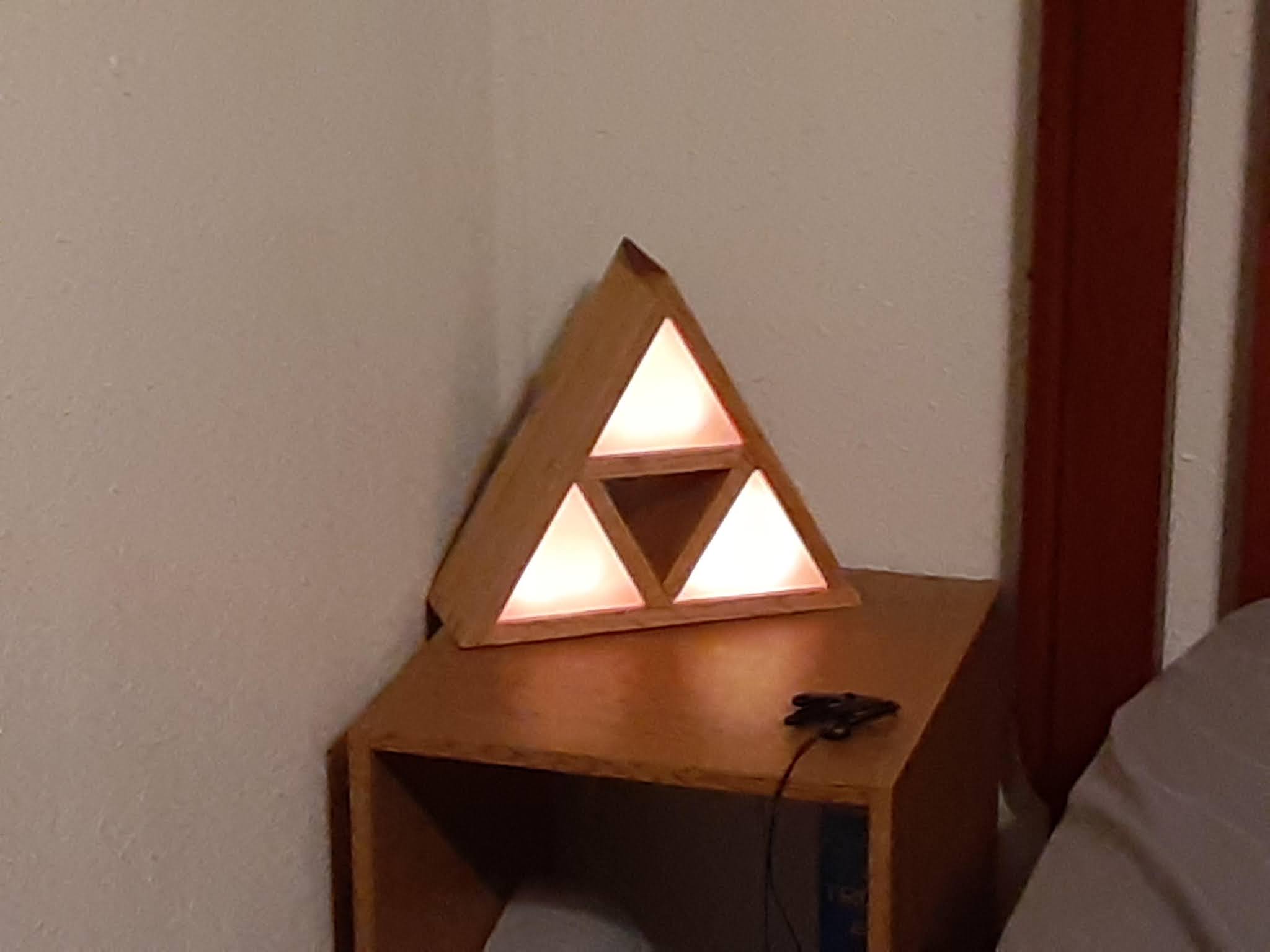
During the Spring 2020 when everything went tits up because of the 'rona, we spent some of the time doing home improvement projects and I decided to make myself a lamp like one I've seen people make on Reddit. Using a piece of oak and some very precise calculations, I got the wood frame all done, then finished it with some plexiglass and rice paper, some LED light strips, and some leftover fabric to make a lamp that can change colors and is dimmable. 

While I enjoyed the 3DS version of Majora's Mask for the updated graphics and portability, there were quite a few changes they made that I wasn't too keen on, such as the Zora swimming nerf and the boss battles. Thankfully, a group of people who know how to patch such things made a patch available for those of us who have custom firmware. It fixes many of the problems that crept into the remake and makes it more like the original N64 version. 

Over the summer, the big thing I was looking forward to was the release of Hyrule Warriors: Age of Calamity. Truth be told, I wasn't the biggest fan of the first game, but this one looked more like Breath of the Wild so I was a little more excited. Avery picked up our copies on release day (along with a keychain). However, it happened to release right when I was in the middle of a few games so I put it off and didn't play it for a few weeks. However, I found myself rather enjoying the game, as Aonuma-san had given Koei Tecmo some direction and insight to making it feel more Zelda-like. This article articulates a lot of what I thought and felt about it


To complement my lamp I made, Brady found a Triforce tree topper on clearance at GameStop and sent it my way. Anne also finished Breath of the Wild just after Christmas 2020, making 19 out of 19 Zelda games completed for her. She practiced her profanity skills and learned some patience along the way, but for now she can claim to have at least completed all of the games (for now). Convincing her to do the spin-offs or 100% them . . . that's a different story. 

[Disclaimer - the information was accurate as of the publication date, but has been made less accurate as future events/developments have happened since publication]