Showing posts with label WiiU. Show all posts

Saturday, July 3, 2021

Playing Habits


When it comes to hobbies, how one participates will fall somewhere along a spectrum between a wide/shallow mode and a narrow/deep style. For example, I have a friend who has what I call “hobby ADD,” because he finds a new obsession and is super into it and excited to talk about it . . . for like 4 weeks. And then he moves on to a new hobby. The end result is that over time he develops a really wide and diverse set of skills/knowledge that can be useful in future endeavors, but it’s not something that he ultimately becomes a true expert/scholar at. The expression, “Jack of all trades, master of none” applies very much in this case.

Meanwhile, I have another friend who has basically 2 things he likes, and if it’s not those two things then he’s not interested in having a conversation. But he is deeply knowledgeable about them and can answer any question about them.

I fall somewhere in between, where I have a couple of things I do deeply and a lot more that I do superficially. But what I want to apply this analogy to is how I played each system in regards to their games. In this case, playing wide and shallow would mean playing/finishing a wide variety of games once or twice, and playing narrow and deep would be playing the same three games many times over.


With the NES, I feel that I played both widely and deeply. There were about two years between the time when the NES was released widely enough to where the populace was aware of it and the time I got one for Christmas, and during that period I was limited to playing at friends’ houses or convincing my mom to rent one (the whole system) for a weekend from a grocery store. Once we got an NES, I felt like I needed to catch up to my friends who had been playing these games for a while. Because we had access to a video rental store (literally 50 yards out my front door) we could easily rent a large assortment of games for $2, so we often did. We also traded with a few friends to get games that required more than a weekend to finish. So between ultimately owning around 15 games, trading with friends, and renting from stores, I ended up getting quite a few titles under my belt in the roughly two years between getting the NES and the SNES, and felt like I hit all of the major games/series in that time. Of course, once I got the SNES I still played the NES but over time it was used less and less.


When it came to the SNES, I was an early adopter which has both advantages and drawbacks. The obvious advantage is that I have access to the new system and can play it to my heart’s content, and that I was now in the enviable position of owning one and my friends would have to come to my house instead of the other way around. However, the disadvantage is that there’s always a limited number of games at launch, and everything is full price (later adopters might get bundles/discounts and have a better selection of games, by contrast). It also means that I only had one friend with whom I could trade games (Jake), and he already had the one that I owned (SMW), but he was nice enough to let me borrow some (like Ultraman) because he trusted me. 

One other disadvantage to early adoption was that it took a while for the rental stores to catch up and have a selection of SNES titles. They were probably a little annoyed that they had to run out and buy licenses/games for a whole new system and might have been a little hesitant to invest the money. So it meant that for the first year or so, I had a very small library and limited options to play other games and had to play the little library I had over and over. But once the SNES caught on and stores had more titles I could expand my horizons a bit. I don’t think I played as many titles on the SNES as I did the NES (paradoxically while owning it for a longer time period before upgrading) but a lot of the games took longer to finish (I’m thinking specifically about Square's RPGs). One thing that hampered my ability to get some things was that I gave up my paper route after the 8th grade, and didn’t have a replacement source of income until just after 9th grade, so for that year I was somewhat limited on my ability to buy/rent stuff on my own. However, I think I definitely got my money’s worth out of that system and while I did miss a few titles (ChronoTrigger and Super Mario RPG come to mind), I was pretty satisfied. I also invested in a few accessories - the Super Scope and the Mouse, and the Ascii Pad.


With the Game Boy there were several limiting factors in play. Firstly, while we weren’t early adopters (meaning that many games were available by the time we got one), there weren’t really a ton of avenues for playing things outside of our personal library. Stores didn’t rent them (I assume because they were too easy to lose/damage) and I only knew of two other friends who had one with something I wanted to play. 

So while the selection was limited, I didn’t feel like I missed out because a good chunk of the Game Boy games were just ports of NES games that are more easily played on the TV (Tetris, RC Pro-Am, Dr. Mario) or slight adaptations of NES games I already had access to (Mega Man games, Kid Icarus). The few that were considered a legitimate entry/sequel (such as Zelda: LA, Metroid 2, SML2: 6GC, etc.) I either owned or got to play from borrowing.

Looking back, I also feel that we played the Game Boys "wrong," meaning that we mostly used them in our house as the consolation prize when someone was already using the TV that had the NES or SNES. We didn't take them on medium length car rides or keep them on our person for when we would encounter situations where they would be useful (like DMVs, waiting rooms, etc.)


The VB isn’t really worth talking about in this conversation. I ended up with 5 games, which is almost 24% of all titles. From that point of view that’s the highest percent of titles per system I own. But I mainly played Mario Tennis, Red Alarm, and Golf. I didn’t have anyone to trade with (literally - I still don’t know anyone else who has one to this day) and there were no rentals.


But starting with the N64, I felt like I got cheated out of some of my investment. Like the SNES, I was an early adopter and was paying for everything myself (at the time I was also collecting comics and cards, which ate into my game budget). It made the process of procuring things like extra controllers  rather difficult 
(due to the cost, mainly) and it took rental stores even longer to start dealing in N64 games than they had with the SNES. The other problem I ran into is that I knew there was a hard date where things would be interrupted. I had my first year of college and a 2-year trip abroad happening about a year after the N64 released. And that 2.5 year gap is right when the N64 hit its sweet spot in terms of good/popular games. So I felt that I was around for the launch and the first wave of decent games, then got to see the final act, but I missed out on a lot of the good stuff in the middle.

While it’s true that there was less 3rd-party support for the N64 so there was a comparatively smaller list of “essential games,” and it's also true that most of the essentials were 1st-party titles, I still can think of about 10 games that I would have bought without question if I had spent those 2.5 years with a job under more, shall we say, "regular," circumstances. In particular, I missed out on Smash Bros, F-Zero X, Paper Mario, Mario Party, some of the Rare titles (Banjo Kazooie/Tooie and Conker's Bad Fur Day) along with the hours of playing time. It also happened to be the last console that there was really any easy way of rentals. Stores stopped renting out to disc-based consoles because discs aren't as robust as cartridges.


Gameboy Advance - This is definitely a narrow and deep one. I mostly used it as a way to play the Zelda Oracle games and as the "Tingle Buddy" for Wind Waker on the GC, at least until I got the GBA Player for the GameCube. But basically the Oracle games, and Castlevania: Circle of the Moon, X-Men Mutant Apocalypse and Minish Cap. I didn’t have anyone to trade with except Mitch/Brady (who lived 5 hours away) and like with the normal Game Boy, there were no game rentals. There are definitely a bunch of games that I could have bought, but a lot of them were SNES re-releases and other remasters of games I had already played, so their expense couldn't be justified by a college student with a new family. In that way, these SNES remasters were sort of like the NES ports of the original Game Boy that I didn't feel compelled to own. And like the original Game Boy, I also played this handheld "wrong," in that I mainly played it around the house, and only took it outside on longer trips to California for the most part. 


Speaking of being "poor," the GameCube spanned a lot of the same time period as the GBA and so it had similar issues. We got it about 3 months after it released, which was roughly a year after getting married. This console was relevant during the majority of the time I was attending college and usually also working in some capacity, and also coincided with moving houses, having a couple of kids, and dealing with a lot of responsibilities in the church we were attending. In other words, there were plenty of things that kept us busy and poor, so I couldn’t buy a lot of games, and had to play the ones I did own multiple times when I got the time. So this was definitely a narrow but deep type of play. There were 5 main games I played - Rogue Leader, Wind Waker, Mario Sunshine, Metroid Prime, and the Lego Star Wars games. Near the end of its life, I did get some more games that were used so it looks like I ended up with a good set, but the collection was pretty meager for most of the time it was relevant. I did get to borrow a game from Brady here and there, but there were no rentals that I could find. 


DS - This one's easy. I didn't get one the whole time it was relevant. I only got one after getting a 3DS and it was only because my daughter decided to upgrade her Christmas present of the red Mario DS to a purple 3DS. And I've never owned a DSi (at least until I started collecting systems). 


Wii - This console came near the end of my time at college, so I ended up with a few more games than the GameCube, but not by many. Besides the Zelda titles, the main things we had were several Guitar Hero games, several Lego games, and a lot of the things like Wii Play/Wii Sports. So it was a bit wider than the previous console, but we had multiple games in the same series. But one thing that I will say is that we had more accessories for the Wii than other systems - multiple Wii remotes (including Motion Plus and Nunchuks), the Wii Fit Board, and guitars for Guitar Hero. Had we not gotten those accessories we could have put the money to at least 4 other full price titles. This is also the first system where we could download digital games and we had a few of those. 

But on the other hand, once I installed Homebrew on the Wii, it breathed a whole new life into it. We used it to play old NES, SNES, and GB/GBC/GBA games that I never got to play as a kid and as an easy way to play the classic games without having to rely on ageing hardware. Overall, I would classify the Wii as more narrow/deep, but it became more wide/shallow with the Homebrew.


3DS - This one started out sort of narrow and deep but it has evolved into a very wide and deep library. I got it roughly a year after release, so there were several decent games I could have gotten, but at first I used it to catch up on the two DS Zelda games (PH and ST), the DX version of Link's Awakening, and Four Swords Anniversary Edition. For a good while it was only those 4 Zelda games. But over time, I would expand the library (and the number of 3DS systems) with enough titles that my 18 game case was full and so were my kids' cases. These included the DS games we got as well as the 3DS games. In the household, we probably have around 40 game cards, which is pretty decent, besides a lot of digital titles. It felt more like the original NES to me in that we had a lot of the "must haves" and plenty of other games so it's a wide and deep console for me. This console also happened to hit its heyday right when I started earning more money and we were more financially stable, so I was willing to spend a little more money. 

Additionally, when we got Homebrew on our 3DS systems, it opened up avenues to easily play a lot of the retro games without needing to drag the GBA and a case of cartridges around. I still play it quite a bit and hope to keep doing so. 


Wii U - In contrast to the 3DS, this one is both narrow and shallow. I actually have like 4 physical games for it that I've never played, and several more digital games that I haven't touched. I mainly used it for the two Zelda HD remakes and playing the Metroid Prime Trilogy. My kids played Smash and Mario Kart 8 on it quite a bit, as well as a few other games, but it wasn't nearly as used as all the other systems we have had. 


The Switch is interesting in that I have played a few games (mainly Breath of the Wild and Octopath) quite deeply but I have also bought quite a lot of digital titles when they were on sale. Many of these games I have only played through once and probably won't pick them up again, but I was glad to have played them. During the NES/SNES days, I purchased games I knew would have a high replay value and rented the rest. As there are no rentals these days, what it's become is waiting for a game to go on sale for $5 and buy it digitally. I figure that's what a rental probably would have cost, except that I actually get to keep it. So instead of looking at my library with sadness that I spent money on games I'll never play again, I see it as a long term rental with the option to play it again should I choose to. 


Sunday, August 12, 2018

My Experience with the Wii U


When the Wii U was about to release, I made a decision to not get it right away. Like many, I saw it as a newer, upgraded, and more powerful version of the Wii that had some features we had hoped would originally be available on the first iteration. But unlike a lot, I also knew and recognized it as a separate console and not just a tablet controller upgrade. Ultimately, I decided to delay the purchase because there wasn’t really anything that I really wanted to play on it immediately. And even though it had been 6 years since getting the Wii, I still felt sorta like I hadn’t gotten enough time with it due to school, work, and family obligations preventing me from playing to my heart’s content – something I had felt with the N64 due to being out of the country for a while. I also felt that the price was a bit much for what was offered, even though we had more money coming in at the time. Plus, it hadn’t been a tremendously long amount of time since my last purchase – the 3DS. So all of those things combined led me to not buy it upon launch.

It was about 10 months later that I finally got one. What pushed it over the edge was that there was a price drop of $50 for the deluxe setup, and it came with The Legend of Zelda: The Wind Waker HD and Hyrule Historia (both digitally). The Gamepad was also Zelda themed, with the Hylian crest and script decorating it. I went to Wal-Mart at midnight to get it, and they had the shelf tag out, but nobody could actually find one or knew anything about it. So I went home upset, went to work the next day, and bought one from GameStop on the way home.

At the time we didn’t have a TV with HDMI ports, and we had maxed out all the inputs on it as it was, so it had to share the A/V cable with the regular Wii. Most of the time we played on just the Gamepad, essentially treating it as a glorified handheld. When we wanted to play on the TV we had to reach behind the Wii and unplug the multi-out cable and plug it into the Wii U, and then vice-versa to play something on the Wii. About 9 months later, our TV broke and was replaced with a newer, flatter model that had HDMI capabilities, so then needing to swap cables back and forth was no longer necessary.

I elected to not migrate all the settings and save files from the Wii to the Wii U for a few reasons. Firstly, I had hacked the Wii with emulators and didn’t know how that would go over during the migration. Secondly, I quite liked being able to play my new WWHD game off TV while the kids kept playing Wii Sports Resort, or whatever; migrating would mean they would have to start a new file for that to happen. But mostly, it was a matter not wanting to go through the hassle, especially when I was planning on keeping both consoles going strong; in other words, I wasn’t going to be one to migrate and then sell/discard the Wii.

The console said it came with a coupon for a copy of Hyrule Historia. I planned on redeeming it and giving it to my friend’s son who had become a Zelda fan because of me. Unfortunately, it was a digital copy so I have a physical copy as well as the digital version on the Wii U. At first, the only game we had was Wind Waker HD, and I mostly enjoyed the updates that were made. But one of the best ones was using the Miiverse as a replacement for the Tingle Tuner, and getting pictures of harder-than-usual-to-find photos for the figurine gallery. But other than a few random posts, I didn’t use the Miiverse for much, and I while I had a few “friends” on the console, I didn’t really do anything with them.


We later bought a white Pro Controller when it was on sale. I had hoped for a black one to match the console, but never got one. While I liked using it more than the Gamepad, it still didn’t feel as good in my hands as a GameCube controller did (which I consider to be the best controller Nintendo has ever made). I got used to having separate fingers on the R and Z buttons on the GameCube controller, but when I did that on the Wii U Pro controller it felt like it was almost on the verge of falling out of my hands. The grips were a little too fat to be held by just 2 fingers, and it lacked the GameCube-style “scooped” shape of the R/L buttons which helped support some of the weight of the controller. I also thought that Nintendo feared being called out for copying the X-Box controller so they put the right control stick above the buttons meaning the right thumb always felt “out of place” from its natural position.

Because we already had 4 Wiimotes and nunchuks, we didn’t need to buy any more. We purchased a fifth Wiimote – one that was black and had the Motion Plus built in. Now we have 2 white original ones, and 2 black Motion Plus ones. The other older white one became the one we use with our emulator Wii. Though we swap them back and forth between both consoles as needed, I would like to leave the newer black Wiimotes to stay with the Wii U and the older white ones to stay with the Wii.

Our first Christmas with the Wii U, Avery got Splinter Cell: Blacklist. Having played the previous Splinter Cell games, I felt that they were ok for him to play. But it turns out that I should have done a little more homework/research because the games was a bit more violent/mature than I had anticipated. 

We ended up getting Hyrule Warriors, Splatoon, Super Mario Maker, Mario Kart 8, and Super Smash Bros. for Wii U at various Christmases over the next 3 years. The kids will go through small spats of playing these games every so often, but it doesn't happen all that much, and for some reason I'm just not as into them. Other purchases included Nintendo Land (used), Star Fox Zero, and Avery bought Super Mario 3D World. My brother also bought me Deus Ex. 

The principal of the school I teach at was somewhat of a gamer, and while he was in Gamestop one day to get something, there was something of a line forming because a mother was trying to return a bunch of stuff her son had bought and didn’t have all of the cords/accessories. After a lot of hassle, they offered her a really low price for what she was trading in, but then rescinded when some cables were missing. Seeing an opportunity to get a great deal and get the line moving again, he offered to pay what Gamestop offered and got a Wii U and several games for $75. He brought it to school and I showed him how to set it up and everything. He intended to give it to the family for Christmas, but nobody really wanted it so he ended up selling it all for about $150.

One reason I got the Wii U was for the Zelda titles. Obviously buying the WWHD themed console was part of the motivation to break down and get the console. I also got the Twilight Princess HD remaster. There were rumors of how the next Zelda game would function, with some envisioning a Motion Plus sword (like Skyward Sword) with a satchel-like attachment for the Gamepad that allowed link to look through it and view Hyrule. It was an intriguing idea, but one that never came to fruition because it kept getting bumped and eventually released on the same day as the Switch. So this became the only console that had no exclusive new Zelda games (WWHD and TPHD were remakes, and BotW was released on the Switch as well). I purchased Minish Cap on the Wii U Virtual Console just because I was curious about it and because it would mean not having to pull out the GBA to play it. As a bonus, it made it more convenient for Anne to play it (and the save state made the figurine quest way easier).

I would bet that over the years since its purchase, the Wii has still gotten about equal playing time with the Wii U, which is to say I’m surprised at the Wii’s longevity and a little disappointed with the Wii U. They’re both side-by-side in a cabinet under the TV [Editor's note: FWIW, its younger brother, the Nintendo Switch, already has more playing time on it than the Wii U]. We also use it for watching YouTube on the big TV, but it definitely hasn’t been played as much as I would have thought.

One thing I did that breathed a little life into the Wii U is that I hacked it to add some custom firmware. It was actually considerably easier than doing the same thing on the 3DS. With the new firmware, I was able to add a few things. Though I could add all of the same NES/SNES/GB/GBC/GBA emulators and games that I had on my hacked Wii, I chose to leave those on the Wii or 3DS because the only ones I really was interested in adding were the N64 games since they run a little better on the Wii U. I installed as many Zelda games as I could to the home menu, but I was most curious about how the DS games worked on the Gamepad.


Along with the slightly better (but nowhere near perfect) N64 emulation, I also installed Nintendont, which allows me to play GameCube games (which does have perfect emulation). To help with the controller situation, I also purchased the Wii U to GameCube controller adapter as well as a couple of adapters allowing me to use N64 controllers. I haven't done it yet, but I should also have the ability to install digital versions of Wii and Wii U games onto the external SSD I added. So that means that my Wii U can play/emulate basically any Nintendo console and handheld perfectly except for the Switch (because it's newer), the 3DS (because the Gamepad can't do 3D), and the N64 (because that console is just a mess from a technical hardware standpoint). 

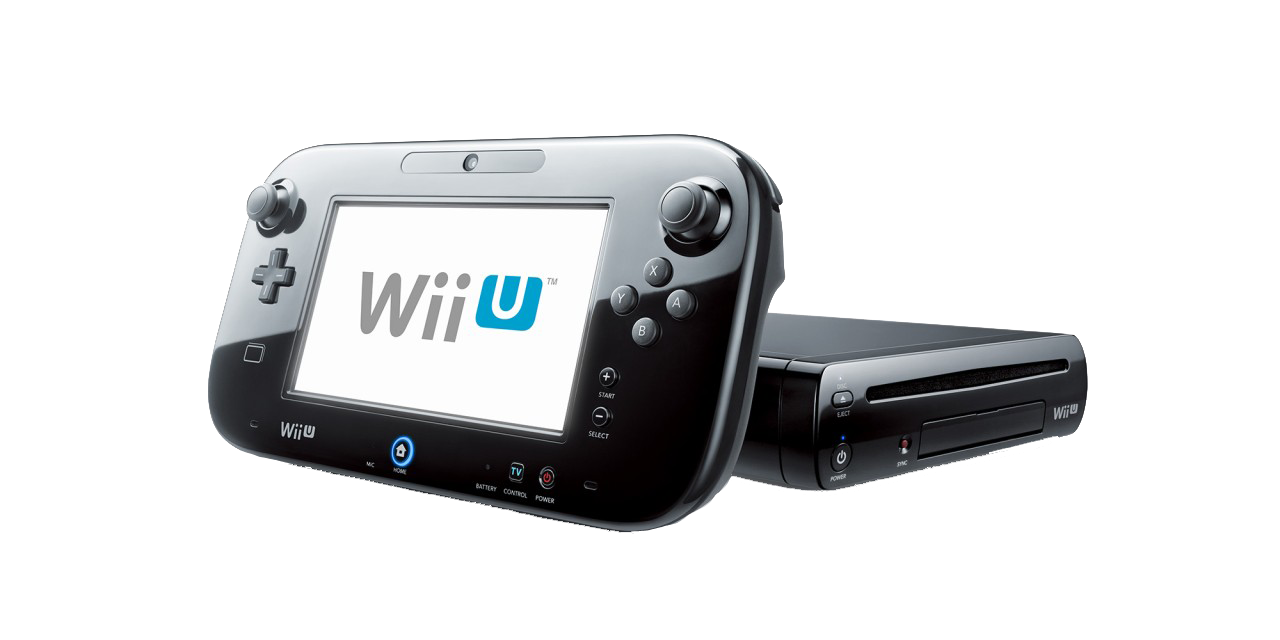
The Wii U


After the smash success of the Wii, Nintendo released their follow up console 6 years later. The Wii hadn’t been much of an upgrade over the GameCube in the technology/hardware/polygons sense, instead focusing on fun and motion controls. And while those were great innovations, competing consoles boosted polygon counts, frame rates, hard drive capacity, and most importantly, online features. Nintendo had fallen behind in certain aspects, and so the Wii U was meant to rectify those problems.
The console itself was only slightly bigger than the original Wii, but had a more rounded features. It came in both black and white, and in a basic and deluxe setup, with the deluxe including additional stands, hard drive space and Nintendo Land. Like the original Wii, it featured the same ports and connections (AC, multi A/V, Sensor Bar, USB, SD card), but now included an HDMI connection. The Sync button was moved to the outside (instead of being behind the little door, where the SD card slot and 2 more USB ports were).The only thing it lacked from the original Wii was the reset button (which was mostly meant for the emulated GameCube games).

The media was a Blu-ray optical disc, and it boasted updated/upgraded online features, better processing power/speeds, as well as HD graphics and full surround sound capabilities, though in many ways it felt like a game of catchup to other consoles of the time. It was backwards compatible with any Wii games/hardware, but GameCube functionality was removed, though it did allow someone with a Wii to migrate their save files and settings to the new Wii U. The USB ports allowed someone to connect an external hard drive to keep more saves and digital games to supplement the included internal space, as well as keep backups.
Many of the games could still be controlled using the same Wiimotes/nunchuks, as long as it had the Motion Plus upgrade. An optional wireless Pro Controller was also available (sold separately) that was more like a traditional controller. But the included controller was the biggest difference. The Gamepad was basically a touch screen tablet that had the standard buttons and control sticks on the side. It had gyro controls so by tilting/twisting the Gamepad it could do things like change the aim of a bow or camera just like the 3DS. There was a camera and a microphone, a slot for a stylus, and its own small speakers. Around the cameras were IR sensors so a Wiimote could be used with just the Gamepad, as well as an NFC sensor for amiibo functions. Both the Gamepad and the Pro Controller featured 2 control sticks, a D-Pad, +, -, Home, the traditional ABXYRL buttons, as well as a second set of R & L buttons called ZR and ZL.

It was, in many ways, like a melding of the Wii with a 3DS where the Gamepad was the lower touch screen and the TV is the upper screen. Used creatively, it allowed for the touch screen to be used as a map or submenu while displaying the main screen on the TV, or to look around as a scanner in an “augmented reality” manner. It also allowed for an “off-TV” experience, in that every game could be played with just the Gamepad and no TV if wanted/necessary. If someone is playing a game and the TV is wanted by someone else, it’s a simple matter of a button press to make the game play entirely on the Gamepad, freeing up the TV. Because it supported 4 Wii Remotes and the Gamepad, up to 5 people could play certain games with something they called “asymmetrical play,” with the person who had the Gamepad playing an entirely different way.

Later the Wii U would gain amiibo functionality to coincide with the release of Super Smash Bros. for Wii U. amiibo were small figurines of popular Nintendo characters that had a special chip in the base that could be used to unlock features in certain games or to save stats/configurations. So, for example, someone could upload their customized Smash character (complete with win/loss record) to an amiibo to take to a tournament or friends house. But many games used them as a sort of a DLC-unlocker in that it opened up new playing modes or gave a free life refill. The "New" Nintendo 3DS (and later New 2DS) would also include amiibo functionality. Because so many people loved the design of the GameCube controller and relied on it for Smash Bros., an adapter that allowed 4 GameCube controllers was released along with a re-release of the controllers themselves.

Another later feature was the inclusion of the Miiverse, a Nintendo-moderated, pared down, and kid-friendly version of Twitter of sorts. People could post their thoughts on particular games or show screenshots. The Gamepad made facilitating these posts rather convenient because one could drag stamps or draw pictures using the stylus in addition to putting in text and screenshots. This also was available on a 3DS with a firmware update. 

The Virtual Console was updated and upgraded, and now allowed games from the NES, SNES, Game Boy Advance, N64, and even the DS. A small selection of games from the TurboGrafix-16 was also available. Like the Wii, each game was its own "channel" on the menu. A variety of other digital titles and demos was also available on the eShop, as well as apps for things like Netflix and YouTube. 

However, there were a few things that were not as well thought out as they could have been. The battery life on the Gamepad did somewhat limit what could be done with it, and it had only a 20-foot range, so it was effectively tethered to the console. The button layout was also a little unfortunate, in that the designers put symmetry ahead of functionality; to wit, the right stick and four buttons’ placement should be swapped for maximum functionality. When playing a game with a Pro Controller on the TV, the Gamepad still mirrors the screen and has to be on for the Wii U to function even though it’s not really being used. And when switching from a regular TV playing experience to a Gamepad one, it may require restarting the system and/or game to facilitate the change – something that could take upwards of 5 minutes depending on the original setup. Charging the Pro Controller the "official" way required the Wii U to actually be switched on the entire time, not just plugged in, so most people opt to use an external AC adapter instead. And while it was advertised as being backwards compatible with all Wii stuff, it required the console to shut down and reboot into Wii mode every time (and vice-versa to back to the Wii U menu) so it felt slow and clunky.

Its debut lineup of games was rather lackluster, mostly consisting of ports that were already available on other systems. There was a new 2D Mario game, but it wasn’t really anything groundbreaking, even though it was reviewed quite well and showcased the asymmetrical play concept. And there was also a “variety” collection of Nintendo IP-themed mini-games called Nintendo Land, but not much else in terms of “must haves” or exclusives. Many ports of popular games weren't available on the Wii or Wii U because it required developers to downgrade the graphics and add in motion controls instead of an easy, straight port. And though it was a "neat" feature, the Miiverse wasn't something that was a reason someone would buy the system. 

Essentially, the Wii U was bought by Nintendo fans who wanted to play Nintendo games (Mario, Zelda, etc.) because it wasn't worth it to play third-party games at full price with missing features (like multi-player capabilities). It was kinda accepted as gospel that by the time the Wii U port of a game (like a Batman Arkham game or Call of Duty) was finally released, it had already been on the other two competing consoles for over a year, so one could buy it on the Wii U for the full price of $60, or for half that on the PS3/XB360. Usually a later port includes DLC included or some new features to justify the full price tag, but it was usually the case that the Wii U port was the worst of the three versions. As mentioned above, it really felt like little brother Nintendo was trying to play catchup to the big boys and coming up short. 

Finally, the naming and promotion of the console wasn’t really thought out well. The marketing for it really, really focused on the Gamepad, leading some people (actually, a lot) to believe that this was just a tablet controller peripheral meant to supplement the original Wii rather than an entirely new console. On top of that, the name “Wii U” was meant to capitalize on how popular the original Wii was, but Nintendo made the same mistake Sony did between the PS2 and PS3 era in that they assumed everyone who had a Wii would upgrade (more casual gamers and grandparents who bought the Wii probably didn’t upgrade). But while something like naming subsequent versions of the Playstation with numbers makes it easy to distinguish, Nintendo’s decision for these kinds of things at the time (Wii U, “New” 3DS, etc.) made it hard for more casual gamers and parents to realize that these were different consoles.

Overall, it didn’t sell super well despite its potential and innovative new controller, though it did have a lot of praiseworthy features that set it apart from its competitors. It tried to straddle the line between what the original Wii was and its more modern competitors, and its sales did pick up a little after a significant price drop and various bundle deals. But it (along with the other consoles) also had the added competition of smart phones, and a lot of the non-hardcore gamers found a free mobile games market emerging that didn't require a TV/console setup.