
When it comes to hobbies, how one participates will fall somewhere along a spectrum between a wide/shallow mode and a narrow/deep style. For example, I have a friend who has what I call “hobby ADD,” because he finds a new obsession and is super into it and excited to talk about it . . . for like 4 weeks. And then he moves on to a new hobby. The end result is that over time he develops a really wide and diverse set of skills/knowledge that can be useful in future endeavors, but it’s not something that he ultimately becomes a true expert/scholar at. The expression, “Jack of all trades, master of none” applies very much in this case.
Meanwhile, I have another friend who has basically 2 things he likes, and if it’s not those two things then he’s not interested in having a conversation. But he is deeply knowledgeable about them and can answer any question about them.
I fall somewhere in between, where I have a couple of things I do deeply and a lot more that I do superficially. But what I want to apply this analogy to is how I played each system in regards to their games. In this case, playing wide and shallow would mean playing/finishing a wide variety of games once or twice, and playing narrow and deep would be playing the same three games many times over.

With the NES, I feel that I played both widely and deeply. There were about two years between the time when the NES was released widely enough to where the populace was aware of it and the time I got one for Christmas, and during that period I was limited to playing at friends’ houses or convincing my mom to rent one (the whole system) for a weekend from a grocery store. Once we got an NES, I felt like I needed to catch up to my friends who had been playing these games for a while. Because we had access to a video rental store (literally 50 yards out my front door) we could easily rent a large assortment of games for $2, so we often did. We also traded with a few friends to get games that required more than a weekend to finish. So between ultimately owning around 15 games, trading with friends, and renting from stores, I ended up getting quite a few titles under my belt in the roughly two years between getting the NES and the SNES, and felt like I hit all of the major games/series in that time. Of course, once I got the SNES I still played the NES but over time it was used less and less.

When it came to the SNES, I was an early adopter which has both advantages and drawbacks. The obvious advantage is that I have access to the new system and can play it to my heart’s content, and that I was now in the enviable position of owning one and my friends would have to come to my house instead of the other way around. However, the disadvantage is that there’s always a limited number of games at launch, and everything is full price (later adopters might get bundles/discounts and have a better selection of games, by contrast). It also means that I only had one friend with whom I could trade games (Jake), and he already had the one that I owned (SMW), but he was nice enough to let me borrow some (like Ultraman) because he trusted me.
One other disadvantage to early adoption was that it took a while for the rental stores to catch up and have a selection of SNES titles. They were probably a little annoyed that they had to run out and buy licenses/games for a whole new system and might have been a little hesitant to invest the money. So it meant that for the first year or so, I had a very small library and limited options to play other games and had to play the little library I had over and over. But once the SNES caught on and stores had more titles I could expand my horizons a bit. I don’t think I played as many titles on the SNES as I did the NES (paradoxically while owning it for a longer time period before upgrading) but a lot of the games took longer to finish (I’m thinking specifically about Square's RPGs). One thing that hampered my ability to get some things was that I gave up my paper route after the 8th grade, and didn’t have a replacement source of income until just after 9th grade, so for that year I was somewhat limited on my ability to buy/rent stuff on my own. However, I think I definitely got my money’s worth out of that system and while I did miss a few titles (ChronoTrigger and Super Mario RPG come to mind), I was pretty satisfied. I also invested in a few accessories - the Super Scope and the Mouse, and the Ascii Pad.

With the Game Boy there were several limiting factors in play. Firstly, while we weren’t early adopters (meaning that many games were available by the time we got one), there weren’t really a ton of avenues for playing things outside of our personal library. Stores didn’t rent them (I assume because they were too easy to lose/damage) and I only knew of two other friends who had one with something I wanted to play.
So while the selection was limited, I didn’t feel like I missed out because a good chunk of the Game Boy games were just ports of NES games that are more easily played on the TV (Tetris, RC Pro-Am, Dr. Mario) or slight adaptations of NES games I already had access to (Mega Man games, Kid Icarus). The few that were considered a legitimate entry/sequel (such as Zelda: LA, Metroid 2, SML2: 6GC, etc.) I either owned or got to play from borrowing.

With the Game Boy there were several limiting factors in play. Firstly, while we weren’t early adopters (meaning that many games were available by the time we got one), there weren’t really a ton of avenues for playing things outside of our personal library. Stores didn’t rent them (I assume because they were too easy to lose/damage) and I only knew of two other friends who had one with something I wanted to play.
So while the selection was limited, I didn’t feel like I missed out because a good chunk of the Game Boy games were just ports of NES games that are more easily played on the TV (Tetris, RC Pro-Am, Dr. Mario) or slight adaptations of NES games I already had access to (Mega Man games, Kid Icarus). The few that were considered a legitimate entry/sequel (such as Zelda: LA, Metroid 2, SML2: 6GC, etc.) I either owned or got to play from borrowing.
Looking back, I also feel that we played the Game Boys "wrong," meaning that we mostly used them in our house as the consolation prize when someone was already using the TV that had the NES or SNES. We didn't take them on medium length car rides or keep them on our person for when we would encounter situations where they would be useful (like DMVs, waiting rooms, etc.)


The VB isn’t really worth talking about in this conversation. I ended up with 5 games, which is almost 24% of all titles. From that point of view that’s the highest percent of titles per system I own. But I mainly played Mario Tennis, Red Alarm, and Golf. I didn’t have anyone to trade with (literally - I still don’t know anyone else who has one to this day) and there were no rentals.

But starting with the N64, I felt like I got cheated out of some of my investment. Like the SNES, I was an early adopter and was paying for everything myself (at the time I was also collecting comics and cards, which ate into my game budget). It made the process of procuring things like extra controllers rather difficult (due to the cost, mainly) and it took rental stores even longer to start dealing in N64 games than they had with the SNES. The other problem I ran into is that I knew there was a hard date where things would be interrupted. I had my first year of college and a 2-year trip abroad happening about a year after the N64 released. And that 2.5 year gap is right when the N64 hit its sweet spot in terms of good/popular games. So I felt that I was around for the launch and the first wave of decent games, then got to see the final act, but I missed out on a lot of the good stuff in the middle.
While it’s true that there was less 3rd-party support for the N64 so there was a comparatively smaller list of “essential games,” and it's also true that most of the essentials were 1st-party titles, I still can think of about 10 games that I would have bought without question if I had spent those 2.5 years with a job under more, shall we say, "regular," circumstances. In particular, I missed out on Smash Bros, F-Zero X, Paper Mario, Mario Party, some of the Rare titles (Banjo Kazooie/Tooie and Conker's Bad Fur Day) along with the hours of playing time. It also happened to be the last console that there was really any easy way of rentals. Stores stopped renting out to disc-based consoles because discs aren't as robust as cartridges.


DS - This one's easy. I didn't get one the whole time it was relevant. I only got one after getting a 3DS and it was only because my daughter decided to upgrade her Christmas present of the red Mario DS to a purple 3DS. And I've never owned a DSi (at least until I started collecting systems).

Wii - This console came near the end of my time at college, so I ended up with a few more games than the GameCube, but not by many. Besides the Zelda titles, the main things we had were several Guitar Hero games, several Lego games, and a lot of the things like Wii Play/Wii Sports. So it was a bit wider than the previous console, but we had multiple games in the same series. But one thing that I will say is that we had more accessories for the Wii than other systems - multiple Wii remotes (including Motion Plus and Nunchuks), the Wii Fit Board, and guitars for Guitar Hero. Had we not gotten those accessories we could have put the money to at least 4 other full price titles. This is also the first system where we could download digital games and we had a few of those.
But on the other hand, once I installed Homebrew on the Wii, it breathed a whole new life into it. We used it to play old NES, SNES, and GB/GBC/GBA games that I never got to play as a kid and as an easy way to play the classic games without having to rely on ageing hardware. Overall, I would classify the Wii as more narrow/deep, but it became more wide/shallow with the Homebrew.

Wii - This console came near the end of my time at college, so I ended up with a few more games than the GameCube, but not by many. Besides the Zelda titles, the main things we had were several Guitar Hero games, several Lego games, and a lot of the things like Wii Play/Wii Sports. So it was a bit wider than the previous console, but we had multiple games in the same series. But one thing that I will say is that we had more accessories for the Wii than other systems - multiple Wii remotes (including Motion Plus and Nunchuks), the Wii Fit Board, and guitars for Guitar Hero. Had we not gotten those accessories we could have put the money to at least 4 other full price titles. This is also the first system where we could download digital games and we had a few of those.
But on the other hand, once I installed Homebrew on the Wii, it breathed a whole new life into it. We used it to play old NES, SNES, and GB/GBC/GBA games that I never got to play as a kid and as an easy way to play the classic games without having to rely on ageing hardware. Overall, I would classify the Wii as more narrow/deep, but it became more wide/shallow with the Homebrew.

3DS - This one started out sort of narrow and deep but it has evolved into a very wide and deep library. I got it roughly a year after release, so there were several decent games I could have gotten, but at first I used it to catch up on the two DS Zelda games (PH and ST), the DX version of Link's Awakening, and Four Swords Anniversary Edition. For a good while it was only those 4 Zelda games. But over time, I would expand the library (and the number of 3DS systems) with enough titles that my 18 game case was full and so were my kids' cases. These included the DS games we got as well as the 3DS games. In the household, we probably have around 40 game cards, which is pretty decent, besides a lot of digital titles. It felt more like the original NES to me in that we had a lot of the "must haves" and plenty of other games so it's a wide and deep console for me. This console also happened to hit its heyday right when I started earning more money and we were more financially stable, so I was willing to spend a little more money.
Additionally, when we got Homebrew on our 3DS systems, it opened up avenues to easily play a lot of the retro games without needing to drag the GBA and a case of cartridges around. I still play it quite a bit and hope to keep doing so.

Wii U - In contrast to the 3DS, this one is both narrow and shallow. I actually have like 4 physical games for it that I've never played, and several more digital games that I haven't touched. I mainly used it for the two Zelda HD remakes and playing the Metroid Prime Trilogy. My kids played Smash and Mario Kart 8 on it quite a bit, as well as a few other games, but it wasn't nearly as used as all the other systems we have had.
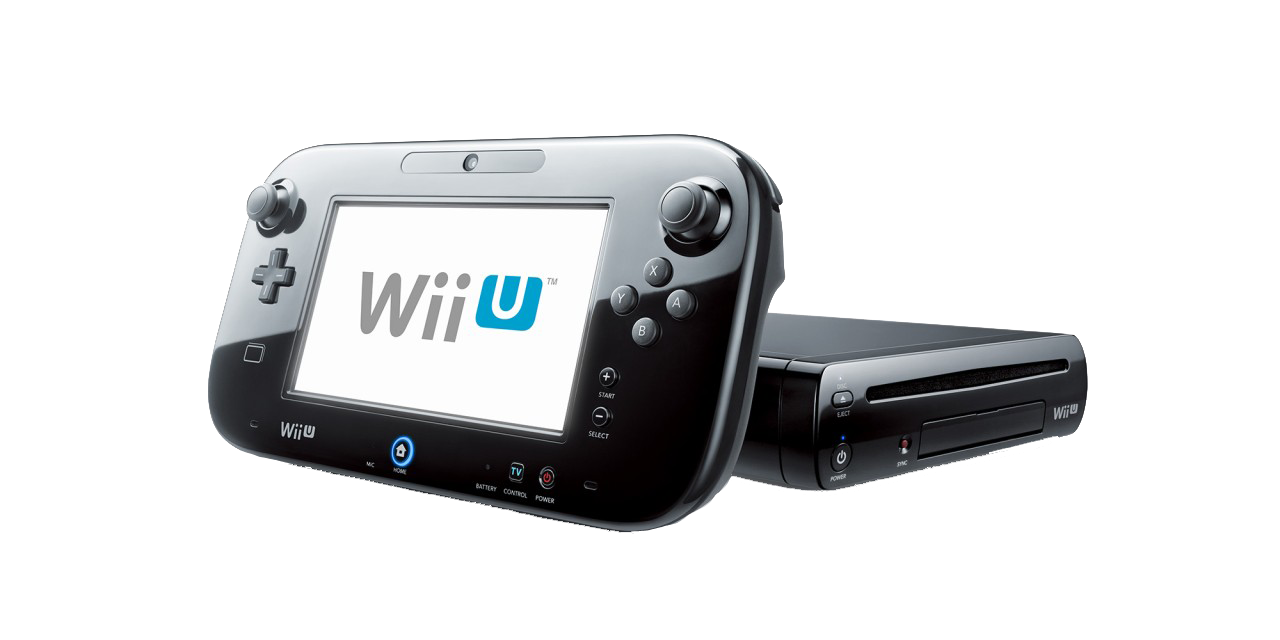
Wii U - In contrast to the 3DS, this one is both narrow and shallow. I actually have like 4 physical games for it that I've never played, and several more digital games that I haven't touched. I mainly used it for the two Zelda HD remakes and playing the Metroid Prime Trilogy. My kids played Smash and Mario Kart 8 on it quite a bit, as well as a few other games, but it wasn't nearly as used as all the other systems we have had.

The Switch is interesting in that I have played a few games (mainly Breath of the Wild and Octopath) quite deeply but I have also bought quite a lot of digital titles when they were on sale. Many of these games I have only played through once and probably won't pick them up again, but I was glad to have played them. During the NES/SNES days, I purchased games I knew would have a high replay value and rented the rest. As there are no rentals these days, what it's become is waiting for a game to go on sale for $5 and buy it digitally. I figure that's what a rental probably would have cost, except that I actually get to keep it. So instead of looking at my library with sadness that I spent money on games I'll never play again, I see it as a long term rental with the option to play it again should I choose to.


