Showing posts with label Game Boy Advance. Show all posts

Saturday, July 3, 2021

Playing Habits


When it comes to hobbies, how one participates will fall somewhere along a spectrum between a wide/shallow mode and a narrow/deep style. For example, I have a friend who has what I call “hobby ADD,” because he finds a new obsession and is super into it and excited to talk about it . . . for like 4 weeks. And then he moves on to a new hobby. The end result is that over time he develops a really wide and diverse set of skills/knowledge that can be useful in future endeavors, but it’s not something that he ultimately becomes a true expert/scholar at. The expression, “Jack of all trades, master of none” applies very much in this case.

Meanwhile, I have another friend who has basically 2 things he likes, and if it’s not those two things then he’s not interested in having a conversation. But he is deeply knowledgeable about them and can answer any question about them.

I fall somewhere in between, where I have a couple of things I do deeply and a lot more that I do superficially. But what I want to apply this analogy to is how I played each system in regards to their games. In this case, playing wide and shallow would mean playing/finishing a wide variety of games once or twice, and playing narrow and deep would be playing the same three games many times over.


With the NES, I feel that I played both widely and deeply. There were about two years between the time when the NES was released widely enough to where the populace was aware of it and the time I got one for Christmas, and during that period I was limited to playing at friends’ houses or convincing my mom to rent one (the whole system) for a weekend from a grocery store. Once we got an NES, I felt like I needed to catch up to my friends who had been playing these games for a while. Because we had access to a video rental store (literally 50 yards out my front door) we could easily rent a large assortment of games for $2, so we often did. We also traded with a few friends to get games that required more than a weekend to finish. So between ultimately owning around 15 games, trading with friends, and renting from stores, I ended up getting quite a few titles under my belt in the roughly two years between getting the NES and the SNES, and felt like I hit all of the major games/series in that time. Of course, once I got the SNES I still played the NES but over time it was used less and less.


When it came to the SNES, I was an early adopter which has both advantages and drawbacks. The obvious advantage is that I have access to the new system and can play it to my heart’s content, and that I was now in the enviable position of owning one and my friends would have to come to my house instead of the other way around. However, the disadvantage is that there’s always a limited number of games at launch, and everything is full price (later adopters might get bundles/discounts and have a better selection of games, by contrast). It also means that I only had one friend with whom I could trade games (Jake), and he already had the one that I owned (SMW), but he was nice enough to let me borrow some (like Ultraman) because he trusted me. 

One other disadvantage to early adoption was that it took a while for the rental stores to catch up and have a selection of SNES titles. They were probably a little annoyed that they had to run out and buy licenses/games for a whole new system and might have been a little hesitant to invest the money. So it meant that for the first year or so, I had a very small library and limited options to play other games and had to play the little library I had over and over. But once the SNES caught on and stores had more titles I could expand my horizons a bit. I don’t think I played as many titles on the SNES as I did the NES (paradoxically while owning it for a longer time period before upgrading) but a lot of the games took longer to finish (I’m thinking specifically about Square's RPGs). One thing that hampered my ability to get some things was that I gave up my paper route after the 8th grade, and didn’t have a replacement source of income until just after 9th grade, so for that year I was somewhat limited on my ability to buy/rent stuff on my own. However, I think I definitely got my money’s worth out of that system and while I did miss a few titles (ChronoTrigger and Super Mario RPG come to mind), I was pretty satisfied. I also invested in a few accessories - the Super Scope and the Mouse, and the Ascii Pad.


With the Game Boy there were several limiting factors in play. Firstly, while we weren’t early adopters (meaning that many games were available by the time we got one), there weren’t really a ton of avenues for playing things outside of our personal library. Stores didn’t rent them (I assume because they were too easy to lose/damage) and I only knew of two other friends who had one with something I wanted to play. 

So while the selection was limited, I didn’t feel like I missed out because a good chunk of the Game Boy games were just ports of NES games that are more easily played on the TV (Tetris, RC Pro-Am, Dr. Mario) or slight adaptations of NES games I already had access to (Mega Man games, Kid Icarus). The few that were considered a legitimate entry/sequel (such as Zelda: LA, Metroid 2, SML2: 6GC, etc.) I either owned or got to play from borrowing.

Looking back, I also feel that we played the Game Boys "wrong," meaning that we mostly used them in our house as the consolation prize when someone was already using the TV that had the NES or SNES. We didn't take them on medium length car rides or keep them on our person for when we would encounter situations where they would be useful (like DMVs, waiting rooms, etc.)


The VB isn’t really worth talking about in this conversation. I ended up with 5 games, which is almost 24% of all titles. From that point of view that’s the highest percent of titles per system I own. But I mainly played Mario Tennis, Red Alarm, and Golf. I didn’t have anyone to trade with (literally - I still don’t know anyone else who has one to this day) and there were no rentals.


But starting with the N64, I felt like I got cheated out of some of my investment. Like the SNES, I was an early adopter and was paying for everything myself (at the time I was also collecting comics and cards, which ate into my game budget). It made it difficult to procure the extra controllers (which were a little spendy) and it took rental stores even longer this time to start getting N64 games. The other problem I ran into is that I knew there was a hard date where things would be interrupted. I had my first year of college and a 2-year trip abroad happening about a year after the N64 released. And that 2.5 year gap is right when the N64 hit its sweet spot in terms of good/popular games. So I felt that I was around for the launch and the first wave of decent games, then got to see the final act, but I missed out on a lot of the good stuff in the middle.

While it’s true that there was less 3rd-party support for the N64 so there was a comparatively smaller list of “essential games,” and it's also true that most of the essentials were 1st-party titles, I still can think of about 10 games that I would have bought without question if I had spent those 2.5 years with a job under more, shall we say, "regular," circumstances. In particular, I missed out on Smash Bros, F-Zero X, Paper Mario, Mario Party, some of the Rare titles (Banjo Kazooie/Tooie and Conker's Bad Fur Day) along with the hours of playing time. It also happened to be the last console that there was really any easy way of rentals. Stores stopped renting out to disc-based consoles because discs aren't as robust as cartridges.


Gameboy Advance - This is definitely a narrow and deep one. I mostly used it as a way to play the Zelda Oracle games and as the "Tingle Buddy" for Wind Waker on the GC, at least until I got the GBA Player for the Gamecube. But basically the Oracle games, and Castlevania: Circle of the Moon, X-Men Mutant Apocalypse and Minish Cap. I didn’t have anyone to trade with except Mitch/Brady (who lived 5 hours away) and like normal GB, there were no rentals. There are definitely a bunch of games that I could have bought, but a lot of them were SNES re-releases and other remasters of games I had already played, so their expense couldn't be justified by a college student with a new family. In that way, these SNES remasters were sort of like the NES ports of the original Game Boy that I didn't feel compelled to own. And like the original Game Boy, I also played this handheld "wrong," in that I mainly played it around the house, and only took it outside on longer trips to California for the most part. 


Speaking of being "poor," the Game Cube spanned a lot of the same time period as the GBA and so it had similar issues. We got it about 3 months after it released, which was roughly a year after getting married. This console was relevant during the majority of the time I was attending college and usually also working in some capacity, and also coincided with moving houses, having a couple of kids, and dealing with a lot of responsibilities in the church we were attending. In other words, there were plenty of things that kept us busy and poor, so I couldn’t buy a lot of games, and had to play the ones I did own multiple times when I got the time. So this was definitely a narrow but deep type of play. There were 5 main games I played - Rogue Leader, Wind Waker, Mario Sunshine, Metroid Prime, and the Lego Star Wars games. Near the end of its life, I did get some more games that were used so it looks like I ended up with a good set, but the collection was pretty meager for most of the time it was relevant. I did get to borrow a game from Brady here and there, but there were no rentals that I could find. 


DS - This one's easy. I didn't get one the whole time it was relevant. I only got one after getting a 3DS and it was only because my daughter decided to upgrade her Christmas present of the red Mario DS to a purple 3DS. And I've never owned a DSi (at least until I started collecting systems). 


Wii - This console came near the end of my time at college, so I ended up with a few more games than the Game Cube, but not by many. Besides the Zelda titles, the main things we had were several Guitar Hero games, several Lego games, and a lot of the things like Wii Play/Wii Sports. So it was a bit wider than the previous console, but we had multiple games in the same series. But one thing that I will say is that we had more accessories for the Wii than other systems - multiple Wii remotes (including Motion Plus and Nunchuks), the Wii Fit Board, and guitars for Guitar Hero. Had we not gotten those accessories we could have put the money to at least 4 other full price titles. This is also the first system where we could download digital games and we had a few of those. 

But on the other hand, once I installed Homebrew on the Wii, it breathed a whole new life into it. We used it to play old NES, SNES, and GB/GBC/GBA games that I never got to play as a kid and as an easy way to play the classic games without having to rely on ageing hardware. Overall, I would classify the Wii as more narrow/deep, but it became more wide/shallow with the Homebrew.


3DS - This one started out sort of narrow and deep but it has evolved into a very wide and deep library. I got it roughly a year after release, so there were several decent games I could have gotten, but at first I used it to catch up on the two DS Zelda games (PH and ST), the DX version of Link's Awakening, and Four Swords Anniversary Edition. For a good while it was only those 4 Zelda games. But over time, I would expand the library (and the number of 3DS systems) with enough titles that my 18 game case was full and so were my kids' cases. These included the DS games we got as well as the 3DS games. In the household, we probably have around 40 game cards, which is pretty decent, besides a lot of digital titles. It felt more like the original NES to me in that we had a lot of the "must haves" and plenty of other games so it's a wide and deep console for me. This console also happened to hit its heyday right when I started earning more money and we were more financially stable, so I was willing to spend a little more money. 

Additionally, when we got Homebrew on our 3DS systems, it opened up avenues to easily play a lot of the retro games without needing to drag the GBA and a case of cartridges around. I still play it quite a bit and hope to keep doing so. 


Wii U - In contrast to the 3DS, this one is both narrow and shallow. I actually have like 4 physical games for it that I've never played, and several more digital games that I haven't touched. I mainly used it for the two Zelda HD remakes and playing the Metroid Prime Trilogy. My kids played Smash and Mario Kart 8 on it quite a bit, as well as a few other games, but it wasn't nearly as used as all the other systems we have had. 
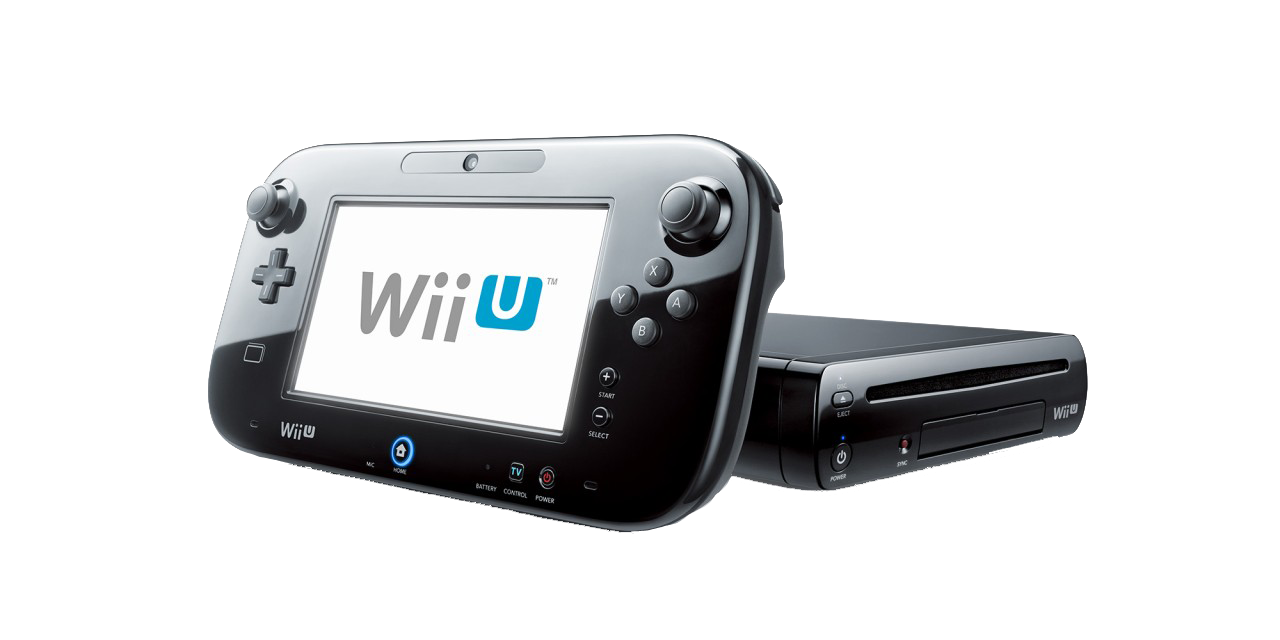


The Switch is interesting in that I have played a few games (mainly Breath of the Wild and Octopath) quite deeply but I have also bought quite a lot of digital titles when they were on sale. Many of these games I have only played through once and probably won't pick them up again, but I was glad to have played them. During the NES/SNES days, I purchased games I knew to have replay value and rented the rest. As there are no rentals these days, what it's become is waiting for a game to go on sale for $5 and buy it digitally. I figure that's what a rental probably would have cost, except that I actually get to keep it. So instead of looking at my library with sadness that I spent money on games I'll never play again, I see it as a long term rental with the option to play it again should I choose to. 


Sunday, September 6, 2015

My Experience with the Game Boy Advance

The thing that started me back into the handhelds was the next installment of the Zelda series: The Oracle games. I bought them on release day, and assumed I could play them in my Super Game Boy. But alas, it was not to be. That night I had to figure out if I wanted to go buy a Game Boy Color, or if I could wait the approximately 3 weeks for the Game Boy Advance. I decided on the latter option, since the GBA could play everything made up until that point plus any future games.


Continuing with what was started in the second run of N64s, 3 color options were available for the GBA. So I got a Glacier-colored GBA on release day at midnight. I played my old games like Metroid II and Link’s Awakening on them because I liked the color upgrades (never having owned a GBC), but not very often. Mostly I played the Oracle games, as that was my only option to play them, while I could play the others on my Super Game Boy on a lit TV screen. That year we spent Christmas at my parents’ house. My younger brother Mitch got Mario Kart Super Circuit, and he also happened to have a GameLink cable, so we were able to play 2 player on GBA a few times.

In the next year or two, I bought a couple of GBA games, mainly because they were heavily discounted at the K-Mart that was closing down (where Anne was working): Castlevania – Circle of the Moon and X-Men – Reign of Apocalypse (I think it was 2 for 1 on top of a discount). But I didn’t play them all that often.  It wasn’t that I didn’t enjoy them, per se; just that I would rather play a console that was lit up and easier to see.


I started playing Castlevania while I was in the hospital waiting for my first child to be born. We had a lot of time to kill so I decided playing that (and Rogue Leader on GameCube) was the best way to spend it.


I bought a few accessories, such as the Worm light and an AC adapter. The light made it easier to play at night or in darker parts of the house, but it left a glare on the screen. The best option was bright but indirect light which was hard to find. There were a couple of places that had good light without the glare (like the bathroom), but most places weren’t optimal. Obviously the AC adapter made it easier to play without having to go through batteries by the case. The adapter took the spot where batteries and the cover were, and had a small port for the cord that could be disconnected.

One thing that made me glad to have bought a GBA was when The Legend of Zelda: The Wind Waker was released. It featured some GBA/GC connectivity, so I bought a cable and started using the GBA to play as Tingle. It would also be useful for some other games later on. 

I mainly played my games on vacation or occasionally around the house, but I didn’t take it with me very often to places like school or when I ran errands. I bought the Game Boy Player, an add-on for the GameCube. It was the first time Nintendo made good on the promise of an add-on using the expansion port in North America. Since it was basically another GBA, I could play all my games I had in color and on a lit and much larger TV screen. This made it much easier to see without needing the worm light or sitting in a particular part of the house to see.


Later I would buy ALttP/Four Swords and The Minish Cap to stay updated on my Zelda games, but I ended up playing them more on the Game Boy Player because the TV screen was illuminated. Just like what I had done with the Super Game Boy, I treated the GBA less as a portable handheld and more of a mini-console.


My brother Mitch had a few games but the one I remember best is the Spider-Man game he had. Interestingly enough, it was the first game that I actually felt kinda like Spider-Man when I played it. Most others didn’t take advantage of how Spider-Man moves. Eventually, Mitch sold off his GBA stuff and didn’t play games as much. But he gave me a nice case to keep my GBA and games in. It was pretty convenient and kept everything portable I owned at the time. It was made to hold both regular Game Boy and GBA games as well as accessories. 

My youngest brother Brady was more into the Game Boy stuff, and got an SP. I liked the light up part of it, but thought that the narrowness of it made it a hassle to hold like the original Game Boy. I preferred the horizontal configuration of the original GBA.


Besides my general lack of interest in portable gaming, my biggest problem was lack of funds (and to some degree, time). By this point, I was a poor, working college student with a small family. So by necessity, I only bought the things I really, really wanted (Zeldas, mainly). Things continued on much this way for about 10 years. I fell behind on keeping up with the latest portable system by missing the GBA SP, the DS, the DS Lite, and the DSi. Even though I knew I was missing out on 2 Zelda Games (Phantom Hourglass and Spirit Tracks), I just couldn’t justify the cost for how little I expected to play them. I think if I lived closer to my brothers, or had a couple of good friends who also had GBAs, I probably would have kept up a bit better.

When the DS came out, I was tempted to get one because it was horizontally oriented and had a GBA slot, but there were two things that kept me from getting one: lack of funds, and the fact that it wouldn’t play GB/GBC games.

One time I borrowed my brother’s copy of ALttP/FS and got to play Four Swords using the GB Player and my GBA with my son Avery. I went through the game once, but didn’t know about having to go through it 3 times to completely finish it. I also used it to play FSA once or twice, but because of an incorrect assumption about how the game worked, I didn’t play it at all for years. In my mind, it was one of those, “someday” things – meaning someday I’ll get around to playing it when I get all the equipment necessary (I eventually did).

As mentioned earlier, I had no one to play with, but Avery was starting to get to the age where he could play with me, so I was looking forward to being able to play certain things with him once he could understand the intricacies of the games. It was different than when I had 4 younger brothers or roommates to play with, because I had motivation to buy multiple controllers for the N64 and such.

Over the years, we took the GBA stuff with us on vacations, but didn’t use them a whole lot otherwise. Years later after both Avery and I got 3DS handhelds, I bought a silver GBA SP and another copy of ALttP/FS from eBay for cheap. I wanted to try playing Four Swords with Avery, but the used SP ended up having connectivity and charging issues, then it broke. We bought my other son Logan a red GBA SP for Christmas, along with another copy of ALttP/FS used from eBay. He played that game a lot, and became quite the expert at only age 3. 

We also ended up buying another SP, two more copies of ALttP/FS, and some more GameLink cables so we could finally play Four Swords with four players. I had the original GBA and wormlight, Avery and Logan each had an SP, and my daughter or wife played on the GB Player. We also used this setup to play The Legend of Zelda: Four Swords Adventures, in which we played the game on our Wii and had to drag the TV/GameCube downstairs to be the fourth GBA.


Logan ended up breaking his SP when he dropped it onto a hard floor (which cracked the screen), so we had to get a replacement. It was blue, and to be unique I swapped some shell pieces with his old red one so his is now multi-colored. We also bought him Link’s Awakening DX, Oracle of Ages, and the GBA re-releases of Zelda 1 and Zelda 2 for Christmas. Most of the time when I bought an SP used, it came with random GB, GBC, and GBA games. In this way we ended up with a bunch of games we never intended to own. However, they ended up being interesting in the context that I can show my kids the difference between regular GB games, GBC games, black-cartridge games, Super GB enhanced games, and GBA games and how they all work differently in the various configurations. Later we would add Mario Kart Super Circuit and Super Mario World: Super Mario Advance 2 to Logan's collection when we bought some used games from the same card shop I used to frequent as a teen. Some of the other games we ended up with from eBay purchases are Advance Wars, a Spongebob game, Sims 2 Pets, and the Cheetah Girls.

I attempted modding the orignal GBA with LEDs using some instructions I found online, but was unsuccessful. However, in early 2018 I was able to get a whole backlit modding kit from eBay and successfully modded it, so now it has a nice backlit screen. The only gripe I have with it is that I couldn't screw the outer shell back together all the way because it flexes the motherboard (or something) enough to make it not turn on. Also, some of the screen elements leave "ghosts" for a few seconds once they're scrolled offscreen. Although I'm happy with the results, I'll just stick with the DS Lite for any GBA games unless they require a Gamelink cable. 

The Game Boy Advance

After dominating the handheld market since 1989, Nintendo finally released a major upgrade to their flagship portable system in 2001. It is true that there had been a couple of small updates in the previous 4 to 5 years, such as the Game Boy Pocket or Game Boy Color, but the design and architecture of the system wasn’t radically changed and had been more or less the same since its release. The Game Boy Advance would be different though.

It had a 32-bit processor, but by this time processors were starting to be made differently, and the "bit count" was less important. What the hardware could do graphically was very comparable to the SNES, and so it represented a major upgrade from the 4 shaded dot-matrix graphics of the original Game Boy. Because of this, many SNES games were ported to the GBA with minor upgrades. Like the SNES, the various sprites had some “special effects” that could be utilized like transparency or rotation/scaling.

The system had a horizontally oriented form factor which made it easier to hold. It had the same buttons as the previous system (B, A, Start, Select), but with the addition of L and R shoulder buttons. It had a jack for a GameLink cable on the top, and the headphone jack, volume dial, and power switch on the bottom.

Like the older GB, it had only one speaker, but would put out stereo when using headphones. It used only 2 AA batteries and had around a 30 hour life. While the sound and music were much better than the original GB, there was a certain, “poppy-ness” to it, almost similar to the Virtual Boy. The GBA had a green light indicating power that would turn red when the batteries were nearing the end of their life.

Continuing with the tradition started on the GBC and the later run of N64 consoles, the GBA was available in multiple colors, including purple, black, white, orange, and clear blue. Later on, more colors and special editions would also be sold.

A major selling point was that it was backwards compatible with every GB and GBC game made up until that point. When it detected a GBC or GB game, it booted up in GBC mode, allowing the player to colorize older games in the same way using the same palettes. When an original GB or GBC game was turned on, the familiar “ding” played, but the word “Game Boy” was displayed in color, during which players could select which palette they wanted to use. But a newer tone with an animated logo was displayed when a GBA game was played. GBA games were actually smaller than the older games and fit perfectly in the GBA, but older games would stick out above the top of the system. It had a wider screen, allowing for more things to be seen at once. When playing an older game, the L and R buttons served to toggle the screen between its original resolution with black bars on the sides, or to stretch the picture.

While the original Game Boy allowed 2 players through the use of a GameLink cable (and more with an additional adapter), the GBA could support 4-player games using 3 cables because each one had a connection point in the middle of the cable allowing another player to link in. Some games also supported download play, meaning that only one copy of the game was required, slightly reducing the amount of equipment needed to play 2-player. 

Later when the GameCube would be released, the use of a different cable allowed players to connect the GBA to the GC and unlock certain features. For example, a GBA with Metroid Fusion hooked up to a GC with Metroid Prime unlocked a special gallery, the Fusion Suit, and a hidden copy of the original Metroid. On The Wind Wakerhooking up a GBA with no cartridge to the GC let a second player assist Link as Tingle. Playing the GBA version of Splinter Cell hooked up to the GC version equipped the player with some additional weapons while the GBA player could scout out locations in advance to warn the other player of enemies. Finally, one of the most promoted uses was The Legend of Zelda: Four Sword Adventures, where the main game took place on screen, but when players went into a house or cave, the action took place on the individual GBA's screen. Essentially, the GBA served as a controller that happened to have its own screen when needed.

It seemed like the GBA to GC connection was emphasized heavily by Nintendo, more so than the N64/GB connection had been. But it would continue the tradition of having a handheld and a console connect together.

The only major criticism of the GBA was the lack of a lit screen. It still required a fairly bright room or being outside to play. Accessories like the Worm Light made things a little better, but would often leave a glare on the screen. Nintendo released a solution in the form of the Game Boy Advance SP.

The SP was a major redesign for the GBA, as it now had a clam shell style case that could be opened and closed via a hinge. The major selling feature was that it had a front-lit screen that could be toggled on and off with a new button. The folding nature of it also made it smaller and easier to carry around. Later models would replace the front-lit screen with a back-lit screen, reducing washed out colors and glare. Another upgrade was the internal rechargeable Lithium-Ion battery. Instead of using AA batteries, it could just be plugged into the wall outlet to charge up the battery for around 10 hours of play with the light on (more with no light, obviously). In addition to the green/red power light, an orange light indicating the battery charging status was added.

But there were a few sacrifices that were made with the SP. Firstly, the design made the SP just as vertically narrow as the original GB/GBC, so it was harder to hold for those with bigger hands. Second, the headphone jack had to be sacrificed and was actually combined with the AC adapter jack. In order to use headphones, a separate adapter needed to be plugged into the jack, meaning that one could not both use headphones and charge the system simultaneously. Another change was that games would be loaded into the front, and not the rear of the system. 


Like the GBA, the GBA SP also came in many colors. The clam shell design also helped save the screen from being scratched up while in a purse, backpack, or pocket. Some games also started including the “Sleep” feature, where a game can be paused and the system closed while conserving battery power. This was especially useful for games that could only be saved at certain times/places, so the player wouldn’t lose any progress. To wake the system up, usually it required a 3-button combination so that it wouldn’t happen accidentally in a pocket. The design would stay and be improved upon in Nintendo’s next handheld, the Nintendo DS.

All together, over 1,000 games were released for the GBA. It was superseded by the DS only 3 years later, but games continued to be developed for it until 2008 because the DS had GBA backwards compatibility. 


Stop Skeletons from Fighting's video on the GBA/GC Link Cable