Showing posts with label 3DS. Show all posts

Saturday, July 3, 2021

Playing Habits


When it comes to hobbies, how one participates will fall somewhere along a spectrum between a wide/shallow mode and a narrow/deep style. For example, I have a friend who has what I call “hobby ADD,” because he finds a new obsession and is super into it and excited to talk about it . . . for like 4 weeks. And then he moves on to a new hobby. The end result is that over time he develops a really wide and diverse set of skills/knowledge that can be useful in future endeavors, but it’s not something that he ultimately becomes a true expert/scholar at. The expression, “Jack of all trades, master of none” applies very much in this case.

Meanwhile, I have another friend who has basically 2 things he likes, and if it’s not those two things then he’s not interested in having a conversation. But he is deeply knowledgeable about them and can answer any question about them.

I fall somewhere in between, where I have a couple of things I do deeply and a lot more that I do superficially. But what I want to apply this analogy to is how I played each system in regards to their games. In this case, playing wide and shallow would mean playing/finishing a wide variety of games once or twice, and playing narrow and deep would be playing the same three games many times over.


With the NES, I feel that I played both widely and deeply. There were about two years between the time when the NES was released widely enough to where the populace was aware of it and the time I got one for Christmas, and during that period I was limited to playing at friends’ houses or convincing my mom to rent one (the whole system) for a weekend from a grocery store. Once we got an NES, I felt like I needed to catch up to my friends who had been playing these games for a while. Because we had access to a video rental store (literally 50 yards out my front door) we could easily rent a large assortment of games for $2, so we often did. We also traded with a few friends to get games that required more than a weekend to finish. So between ultimately owning around 15 games, trading with friends, and renting from stores, I ended up getting quite a few titles under my belt in the roughly two years between getting the NES and the SNES, and felt like I hit all of the major games/series in that time. Of course, once I got the SNES I still played the NES but over time it was used less and less.


When it came to the SNES, I was an early adopter which has both advantages and drawbacks. The obvious advantage is that I have access to the new system and can play it to my heart’s content, and that I was now in the enviable position of owning one and my friends would have to come to my house instead of the other way around. However, the disadvantage is that there’s always a limited number of games at launch, and everything is full price (later adopters might get bundles/discounts and have a better selection of games, by contrast). It also means that I only had one friend with whom I could trade games (Jake), and he already had the one that I owned (SMW), but he was nice enough to let me borrow some (like Ultraman) because he trusted me. 

One other disadvantage to early adoption was that it took a while for the rental stores to catch up and have a selection of SNES titles. They were probably a little annoyed that they had to run out and buy licenses/games for a whole new system and might have been a little hesitant to invest the money. So it meant that for the first year or so, I had a very small library and limited options to play other games and had to play the little library I had over and over. But once the SNES caught on and stores had more titles I could expand my horizons a bit. I don’t think I played as many titles on the SNES as I did the NES (paradoxically while owning it for a longer time period before upgrading) but a lot of the games took longer to finish (I’m thinking specifically about Square's RPGs). One thing that hampered my ability to get some things was that I gave up my paper route after the 8th grade, and didn’t have a replacement source of income until just after 9th grade, so for that year I was somewhat limited on my ability to buy/rent stuff on my own. However, I think I definitely got my money’s worth out of that system and while I did miss a few titles (ChronoTrigger and Super Mario RPG come to mind), I was pretty satisfied. I also invested in a few accessories - the Super Scope and the Mouse, and the Ascii Pad.


With the Game Boy there were several limiting factors in play. Firstly, while we weren’t early adopters (meaning that many games were available by the time we got one), there weren’t really a ton of avenues for playing things outside of our personal library. Stores didn’t rent them (I assume because they were too easy to lose/damage) and I only knew of two other friends who had one with something I wanted to play. 

So while the selection was limited, I didn’t feel like I missed out because a good chunk of the Game Boy games were just ports of NES games that are more easily played on the TV (Tetris, RC Pro-Am, Dr. Mario) or slight adaptations of NES games I already had access to (Mega Man games, Kid Icarus). The few that were considered a legitimate entry/sequel (such as Zelda: LA, Metroid 2, SML2: 6GC, etc.) I either owned or got to play from borrowing.

Looking back, I also feel that we played the Game Boys "wrong," meaning that we mostly used them in our house as the consolation prize when someone was already using the TV that had the NES or SNES. We didn't take them on medium length car rides or keep them on our person for when we would encounter situations where they would be useful (like DMVs, waiting rooms, etc.)


The VB isn’t really worth talking about in this conversation. I ended up with 5 games, which is almost 24% of all titles. From that point of view that’s the highest percent of titles per system I own. But I mainly played Mario Tennis, Red Alarm, and Golf. I didn’t have anyone to trade with (literally - I still don’t know anyone else who has one to this day) and there were no rentals.


But starting with the N64, I felt like I got cheated out of some of my investment. Like the SNES, I was an early adopter and was paying for everything myself (at the time I was also collecting comics and cards, which ate into my game budget). It made it difficult to procure the extra controllers (which were a little spendy) and it took rental stores even longer this time to start getting N64 games. The other problem I ran into is that I knew there was a hard date where things would be interrupted. I had my first year of college and a 2-year trip abroad happening about a year after the N64 released. And that 2.5 year gap is right when the N64 hit its sweet spot in terms of good/popular games. So I felt that I was around for the launch and the first wave of decent games, then got to see the final act, but I missed out on a lot of the good stuff in the middle.

While it’s true that there was less 3rd-party support for the N64 so there was a comparatively smaller list of “essential games,” and it's also true that most of the essentials were 1st-party titles, I still can think of about 10 games that I would have bought without question if I had spent those 2.5 years with a job under more, shall we say, "regular," circumstances. In particular, I missed out on Smash Bros, F-Zero X, Paper Mario, Mario Party, some of the Rare titles (Banjo Kazooie/Tooie and Conker's Bad Fur Day) along with the hours of playing time. It also happened to be the last console that there was really any easy way of rentals. Stores stopped renting out to disc-based consoles because discs aren't as robust as cartridges.


Gameboy Advance - This is definitely a narrow and deep one. I mostly used it as a way to play the Zelda Oracle games and as the "Tingle Buddy" for Wind Waker on the GC, at least until I got the GBA Player for the Gamecube. But basically the Oracle games, and Castlevania: Circle of the Moon, X-Men Mutant Apocalypse and Minish Cap. I didn’t have anyone to trade with except Mitch/Brady (who lived 5 hours away) and like normal GB, there were no rentals. There are definitely a bunch of games that I could have bought, but a lot of them were SNES re-releases and other remasters of games I had already played, so their expense couldn't be justified by a college student with a new family. In that way, these SNES remasters were sort of like the NES ports of the original Game Boy that I didn't feel compelled to own. And like the original Game Boy, I also played this handheld "wrong," in that I mainly played it around the house, and only took it outside on longer trips to California for the most part. 


Speaking of being "poor," the Game Cube spanned a lot of the same time period as the GBA and so it had similar issues. We got it about 3 months after it released, which was roughly a year after getting married. This console was relevant during the majority of the time I was attending college and usually also working in some capacity, and also coincided with moving houses, having a couple of kids, and dealing with a lot of responsibilities in the church we were attending. In other words, there were plenty of things that kept us busy and poor, so I couldn’t buy a lot of games, and had to play the ones I did own multiple times when I got the time. So this was definitely a narrow but deep type of play. There were 5 main games I played - Rogue Leader, Wind Waker, Mario Sunshine, Metroid Prime, and the Lego Star Wars games. Near the end of its life, I did get some more games that were used so it looks like I ended up with a good set, but the collection was pretty meager for most of the time it was relevant. I did get to borrow a game from Brady here and there, but there were no rentals that I could find. 


DS - This one's easy. I didn't get one the whole time it was relevant. I only got one after getting a 3DS and it was only because my daughter decided to upgrade her Christmas present of the red Mario DS to a purple 3DS. And I've never owned a DSi (at least until I started collecting systems). 


Wii - This console came near the end of my time at college, so I ended up with a few more games than the Game Cube, but not by many. Besides the Zelda titles, the main things we had were several Guitar Hero games, several Lego games, and a lot of the things like Wii Play/Wii Sports. So it was a bit wider than the previous console, but we had multiple games in the same series. But one thing that I will say is that we had more accessories for the Wii than other systems - multiple Wii remotes (including Motion Plus and Nunchuks), the Wii Fit Board, and guitars for Guitar Hero. Had we not gotten those accessories we could have put the money to at least 4 other full price titles. This is also the first system where we could download digital games and we had a few of those. 

But on the other hand, once I installed Homebrew on the Wii, it breathed a whole new life into it. We used it to play old NES, SNES, and GB/GBC/GBA games that I never got to play as a kid and as an easy way to play the classic games without having to rely on ageing hardware. Overall, I would classify the Wii as more narrow/deep, but it became more wide/shallow with the Homebrew.


3DS - This one started out sort of narrow and deep but it has evolved into a very wide and deep library. I got it roughly a year after release, so there were several decent games I could have gotten, but at first I used it to catch up on the two DS Zelda games (PH and ST), the DX version of Link's Awakening, and Four Swords Anniversary Edition. For a good while it was only those 4 Zelda games. But over time, I would expand the library (and the number of 3DS systems) with enough titles that my 18 game case was full and so were my kids' cases. These included the DS games we got as well as the 3DS games. In the household, we probably have around 40 game cards, which is pretty decent, besides a lot of digital titles. It felt more like the original NES to me in that we had a lot of the "must haves" and plenty of other games so it's a wide and deep console for me. This console also happened to hit its heyday right when I started earning more money and we were more financially stable, so I was willing to spend a little more money. 

Additionally, when we got Homebrew on our 3DS systems, it opened up avenues to easily play a lot of the retro games without needing to drag the GBA and a case of cartridges around. I still play it quite a bit and hope to keep doing so. 


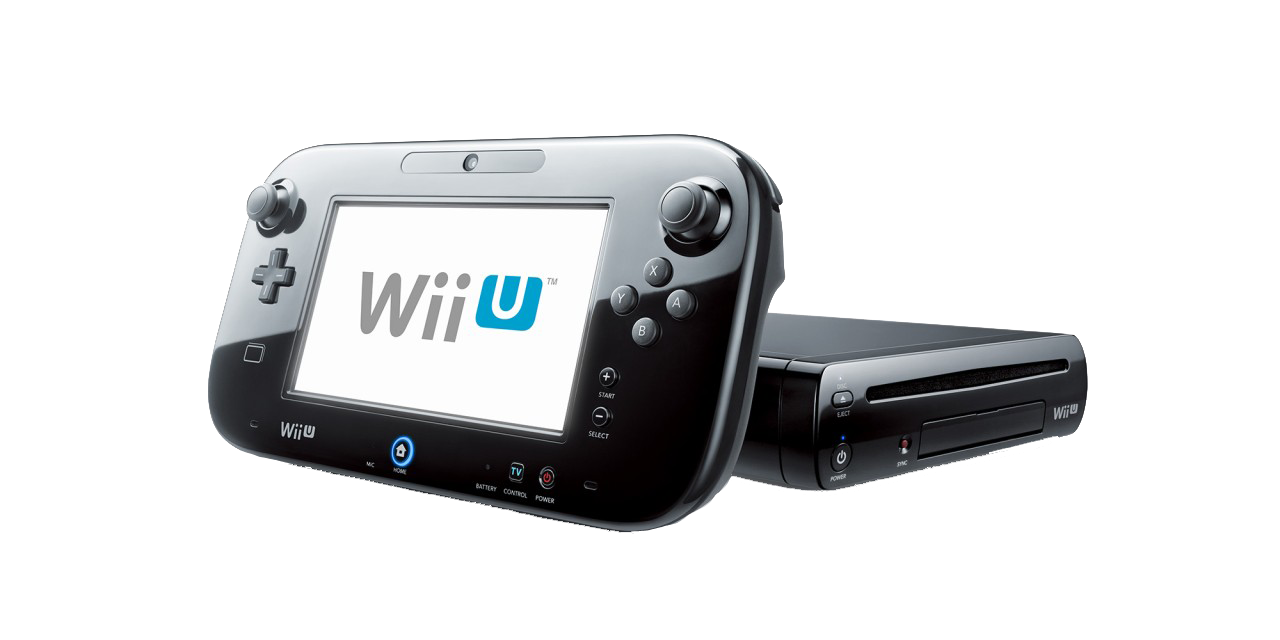
Wii U - In contrast to the 3DS, this one is both narrow and shallow. I actually have like 4 physical games for it that I've never played, and several more digital games that I haven't touched. I mainly used it for the two Zelda HD remakes and playing the Metroid Prime Trilogy. My kids played Smash and Mario Kart 8 on it quite a bit, as well as a few other games, but it wasn't nearly as used as all the other systems we have had. 


The Switch is interesting in that I have played a few games (mainly Breath of the Wild and Octopath) quite deeply but I have also bought quite a lot of digital titles when they were on sale. Many of these games I have only played through once and probably won't pick them up again, but I was glad to have played them. During the NES/SNES days, I purchased games I knew to have replay value and rented the rest. As there are no rentals these days, what it's become is waiting for a game to go on sale for $5 and buy it digitally. I figure that's what a rental probably would have cost, except that I actually get to keep it. So instead of looking at my library with sadness that I spent money on games I'll never play again, I see it as a long term rental with the option to play it again should I choose to. 


Thursday, July 13, 2017

My Experience with the 3DS

After years of missing out on the latest handheld system, I finally decided to get a 3DS. I had never owned a DS, DS Lite, or DSi before, and had hardly even held one. This was mainly due to a lack of funds and my reluctance to play portable systems due to problems like batteries, lack of lighting, and hand cramping. But after reading some things online, I made the choice to get one so I could catch up on 2 of the Zelda games I had never played. Part of what motivated me was the realization that I was now 2 iterations of games behind, and that between my GBA and a 3DS I could still play any portable game Nintendo had made. I had seen some commercials, and had never actually seen the 3D work myself, but I was curious.

I deemed the 3DS to be a reward for getting a little elective surgery done on the Friday before Superbowl Sunday in 2012. We took the family to Wal-Mart and I gave the color choice to Avery, who picked out Aqua Blue (he chose . . . wisely). I took it home, got it set up, and started messing around with it and reading the instruction manual.

I had read online about how 3DS owners got 20 free games, but after a little research I was disappointed that it only applied to those who had bought it before the $80 price drop, so I was about 6 months late (but about $80 richer less poor). I hopped onto eBay and bought myself a new copy of Phantom Hourglass, which wouldn’t be delivered for about a week, but in the meantime I continued to learn more about my new handheld. I also played the included games, such as Face Raiders, the AR games, and the StreetPass Plaza games (Find Mii and Puzzle Swap).

I discovered the eShop, and loved browsing through all the games. I also like watching the Jessie Cantrell videos, Nintendo Direct, and some of the game preview videos. For the first time in a long time, I felt kinda “connected” to Nintendo (more so than I had felt with the Wii), and could keep up on current events. I found Link’s Awakening DX and downloaded it so I could play the one dungeon that had eluded me, but found that the game was much more colorful than I had expected, not a 4-color upgrade like the Super Game Boy. I also found Four Swords Anniversary Edition for free! I got both games and decided to play those while I waited for my first physical game in the mail.

I also downloaded a bunch of demos and tried them out. But finally Phantom Hourglass arrived, and I started playing almost immediately. I loved the innovative controls and interaction, in addition to the fact that it was a direct sequel to one of my top 3 favorite Zelda games. Since I had no other games, I left it in the 3DS all the time. I bought a protective screen cover set that came with a couple of cases and a cleaning cloth. I started leaving the cloth in the system when not in use so it would soften the blow when the two halves were closed, as I think the impact had scratched the inside camera.


Like the Game Boy Advance and Game Boy, I played it mainly at home, treating it almost like a mini-console. My kids and I took turns playing the games, but we slowly came to the realization that there couldn’t be multiple “profiles” on the system – it was meant as a personal system for one person. This meant they would be playing my quest on Find Mii and finishing my puzzles.

I kept the system on my nightstand mostly, except for a few times when I took it to school with me. When I was done playing it, I turned it off like I had done with every game system I had ever owned. It would be some time before I started leaving it on all the time in sleep mode. I didn’t get StreetPass Tags very often, so when I did I was very excited about the fact that I didn’t have to pay with Play Coins to do the StreetPass games. I learned the trick of changing the date and manually shaking it to rack up play coins, but I also started experimenting with taking it with me when I went out in public to see if I could tag someone. While on car trips I would shake the system to rack up coins, and give it to Anne to change the date when necessary (safe driving and all that).

After my 3DS dropped out of my pocket onto a hard tile floor (it only fell a couple inches), I decided to also buy a hard plastic case for it. I picked out a green Ocarina of Time 3D case that had a beautiful painting of Link on Epona riding through Hyrule field. Unfortunately, the picture soon rubbed off in my pocket, but the case kept the system safe and gave it a little more weight and bulk.

I soon found out about 2 others who had a 3DS – a current student of mine, and the father of one of my Cub Scouts. I started bringing it to school to tag my student once each day, and also driving by the Cub Scout’s house to try and tag his dad. Besides wanting tags, I was also curious about how far away the systems needed to be, how much time it took to transfer the data, and how well it went through walls. We discovered that we could tag him by surreptitiously visiting a parking lot behind his house and waiting for 5 or 10 minutes.

My friend James’ son also upgraded his DS Lite to a 3DS so I could run over there and tag occasionally as well and become 3DS friends. In the next few weeks, both James and his daughter would also get a 3DS, as would Avery, bringing our total to 5 between the two families. We started calling what I did, “Ninja Tagging,” where I would sneak around at night and get close enough to their house to tag (they would occasionally do it to me as well). Besides tagging, we would also send SwapNotes with funny messages bragging about how sneaky we were being.

Around this time, I started taking the 3DS with me everywhere I went in an effort to get StreetPasses (and also get play coins). I would get one here and there, but what I started noticing was how convenient it was to have a system to play when I had to sit around and wait for something. Between the physical game, a few downloads, and the demos, I had at least 10 games I could potentially play. And because closing the system put it into sleep mode, I didn’t have to save and turn it off like I would with the GBA (to be fair, games that were released after the SP was out often had some kind of sleep feature but it was cumbersome to get it in and out of sleep mode). Also, I grew to love the convenience of having games on a handheld. One of my main reasons for preferring a console growing up was that I never had to fight anyone for the TV in my house, since the TV I used for the SNES and N64 was a dedicated one for games and wasn’t hooked up for anything else. Unfortunately, now I had several people in the house all vying for TV time, and I couldn’t play my consoles on a whim like I could with the 3DS. Also, the issue of fitting a small handheld in my hands and unlit screens made them seem less attractive to me, but both these issues were resolved with the 3DS.

After a couple months, I bought Spirit Tracks to complete my Zelda collection. I enjoyed it more than Phantom Hourglass, but for some reason I stalled out on playing it 3/4th of the way through (I would later go on to complete it). I also noticed a strange problem with my 3DS – it stopped StreetPassing for some reason. A little research turned up that it happened after the system was completely drained of power, and that somehow this affected the internal clock making it think it had always just StreetPassed someone. The result was that I could get new people, but if I had already tagged them once I wouldn’t get them ever again. I sent in the system to Nintendo for repairs, but they determined it to be caused by the time I dropped it a few inches. They seemed to act oblivious to the fact that lots of people were posting about this online, calling it the “StreetPass bug.” The only solution was to do a complete system reset/restore, which meant I would lose all my progress in Puzzle Swap and Find Mii, but it had to be done. At some point later a system update corrected this bug, and a simple change of Miis will fix the issue should it ever come up again.


Avery’s 3DS also came with a copy of Pilotwings, and I had also bought a Rubik’s Cube game, so we now had 4 physical games, in addition to some of the downloaded games (such as a chess simulator). He also bought a fabric zipper case for his 3DS that held about 20 games, the AR cards, and the 3DS altogether. I started keeping all the games in that rather than the little 1 or 4 game holders I had gotten with the screen protector.

Then a curious thing happened – Phantom Hourglass stopped working, and I was perplexed. I had a student who also had a 3DS and a copy of the game. His worked in both of our systems, and mine didn't work in either system. On a whim, I tried it in the DS Lite, and it worked. I did a little research, and found out that my copy was most likely a bootleg version, and a recent system update had rendered it unplayable. Some of the telltale signs included a badly printed manual, and the game's sticker code doesn't match the code printed on the back of the game card. I found both to be true in my case. Also, as I looked through the manual, I noticed that one of the pages had the Spirit Tracks logo and not the Phantom Hourglass one. Had this been a legitimate copy, there's no way the Spirit Tracks logo could have been printed 2 years before the game came out. To resolve the situation, I bought a used copy from eBay, but kept the bootleg copy as well. 

One day I was looking up stuff about the 3DS online when I stumbled upon a meetup group. Apparently there was a group of Nintendo enthusiasts who meet monthly in SLC. I told James, and both of our families went down to a park in Murray. Never before had I seen my 3DS blink green so much! It was awesome how many puzzle pieces we were able to get, as well as so many free Miis to use on Find Mii. Afterwards we went out to lunch for Philly cheese steak sandwiches. A couple months later, Avery and I went again to one held in a mall, and then after that they started meeting most often in a library. We now go almost every month, and it makes for a great time to talk with everyone about games.

Occasionally at these meetups they will hold a contest to give away a prize. Avery won a used copy of Kid Icaraus: Uprising there by guessing someone’s favorite past Nintendo console. Another time we won a Zelda amiibo in a contest.

Another time Avery and I were seeking tags was at the first ComiCon  FanX in SLC. We drove down expecting to just walk around the exterior of the building, but found an open door. We waltzed in and were amazed at how many tags we were getting. We even got to go in to see Adam West and Shatner for free because they wanted to fill the auditorium.

My brother Brady (who had owned a DSi for some time) got a new DSi for Christmas because his had broken, and they were cheap on the Black Friday. My niece also got one the same year. In the year following, Aurora received a used DS Lite for Christmas along with a Littlest Pet Shop game. She liked it, but traded it in (read: I kept it and gave her the money she would have gotten for it because GameStop wouldn’t take it) and upgraded the present for a 3DS around the New Year. She was excited to have her own Netflix device and some of the other features the 3DS has, and I tried to find a way for the DSi and 3DS to message each other to no avail. Later the 2DS would come out, and I told my brother about them. My niece and nephew looked like they were going to each get one for Christmas, so we could all SwapNote. But less than 2 months before Christmas (Halloween night, actually), Nintendo cancelled the SpotPass features (aka regular internet) so it wouldn’t be possible. My niece opted for a tablet and her DSi instead of a 2DS, but my nephew got one.

When Nintendo re-released Four Swords Anniversary Edition to celebrate the latest Zelda game being named Game of the Year, I made sure that Avery and Aurora downloaded the game, told Brady about it, and informed my brother Matt to get it on their DSi and 2DS. Even though it was a DSi game, they only allowed 3DS/2DS users to get it this time around, so Brady and my niece couldn’t get it. I also realized that the opportunity couldn’t be wasted, so I bought another 3DS and got FSAE intending to give it to Logan for Christmas the following year, but the kids found out about it within the week and we gave it to him. It was probably one of the last 3DS units in town (I checked 5 places to find one), as there were only 2DS or 3DSXL units available. Later I would find out that it was because the “New” Nintendo 3DS would be coming out soon.

Using points from Club Nintendo, I got a hard plastic Zelda-themed case to carry 18 games in it, as well as several games that we share as a family.

We helped my brother Brady upgrade his DSi to a 3DS so he could join in on the fun and play some of the games he had been missing out on. Now that he’s in college, he’s been a little behind while I have been able to catch up.

In early April of 2016, I upgraded to a "New" 3DS XL. The main reason was because the virtual console on this new system could handle SNES games, so I could get A Link to the Past on my 3DS. Anne inherited my old system and she has been playing Phantom Hourglass, Spirit Tracks, and the Oracle games, as well as the Mii Plaza games. The finish on some of the buttons and the D-pad started to crack or wear off, so we replaced them with new purple buttons, giving it a unique look. I also replaced the circle pad in Logan's 3DS, as the wear and tear Logan put into it tore the rubber covering off. 

I got my NN3DSXL some Zelda-themed armor to help protect it, as well as a pouch to carry it in. Additionally, my mom found a good deal on some 3DS cases (which hold 6 games and the system) and purchased them for Aurora and Logan. 

This has been the first system where we have really downloaded a lot of software for it. I would normally rather have the cartridge or disc version of a game because of the potential problem of having a system crash and dealing with transferring games from one NNID to another is a pain from what I've heard. But the biggest reason is that once downloaded, it can be only played on that one system. So, for example, if I want to play Mutant Mudds (which Avery has purchased), I have to use his 3DS. By contrast, we can all share a Zelda game cartridge between us. However, there are a lot of games that are only available digitally, including those games that are given in return for a rewards program. 


But despite that, I have quite a few VC titles, including the first Metroid Trilogy, every Zelda possible, Mega Man 1 through 4, and Super Mario Land 1 & 2. I also have downloaded Angry Video Game Nerd Adventures, Shovel Knight Treasure Trove, The Legend of Dark Witch, and several of the Phoenix Wright: Ace Attorney games. 


Many of the games I end up getting are on sale. I have built up quite a backlog, so if I see something on sale that looks interesting I will get it for cheap, then play it later when I can get around to it. I got a Professor Layton game for $10 new on sale while in St. George on vacation, and Crush3D (used) for $3 in California. 

The final chapter in the 3DS story (at least for now) is hacking it. I had heard about people doing it and put it off until I was reasonably sure that I wouldn't be banned by Nintendo or have the system bricked, and also until we had a spare. Avery had recently upgraded to a NN3DSXL, so I used his old one as a guinea pig. Once I got the hang of it, I hacked all of the 3DS systems in our house, as well as several family members' and friends' systems. This opens up a world of new possibilities, including having digital copies of all my Zelda games so I don't have to bring the game case with me. 

The Nintendo 3DS


The 3DS was the next major upgrade to the DS line of handhelds. In a lot of ways, it is accurate to describe it as an upgraded DSi, but it added a lot of features – most notably the ability to view games in 3D with no additional hardware necessary. It used an autostereoscopic lenticular display that sends a slightly different picture to each eye, but only when viewed from the proper distance and angle. The top half of the 3DS included a slider to adjust the depth of the 3D effect or turn it off entirely. The viewable area of the upper screen is also slightly wider than the bottom screen.


There were several changes from DSi to 3DS, and several changes back to older designs. The microphone was moved back to its original position below the touch screen, and a switch for the Wi-Fi was added where the power button was on a DS Lite. The volume control was changed back to a slider, and the stylus holder was reverted to the back of the system and changed to a telescoping stylus to give the 3DS motherboard a little more room. It uses the same power jack as the DSi, and the headphone jack was moved to the center of the front of the system. The internal camera was moved from the hinge to above the upper screen, and the external camera had a second one added to enable 3D pictures.

Besides the D-pad, the 3DS featured a circle pad that allowed the same kind of control from an analogue stick from a console, but was slim enough to fit inside a handheld. Some games let the user choose the manner of control, while others used the circle pad as the main input and the D-pad as additional buttons (like the GameCube controller).

New features on the 3DS included things like a notification LED that blinked green for a Streetpass Tag, blue for something from the internet (aka SpotPass), red for low power, and orange for friend related content. It also has a pedometer to count steps taken by the owner while in sleep mode to motivate players to take the 3DS with them wherever they go. For every 100 steps taken, the player is rewarded with 3DS Play Coins that can be used to play certain games or unlock content. Besides getting play coins, the other incentive to carry the unit around is to get Streetpass tags from other 3DS owners.

Like the Wii, the 3DS has a Home button to exit to a home menu screen. While it can only run one game at a time, there are several applications that can be used while a game is temporarily paused in the background. These include some of the home screen settings (like screen brightness), checking on friends, using the internet browser, writing game notes, reading notifications, and later the MiiVerse.

The notifications let the user know how many Streetpass tags there are for each game, updates, and announcements from Nintendo. Game Notes lets players keep little digital notes during game play. Each 3DS is given a unique friend code that can be exchanged so that friends can see when and what each other are playing or play online together. The later addition of the Miiverse was basically a Nintendo-sanctioned version of Twitter.

Unlike the DSi menu, the 3DS menu can be arranged in a single line or an array. A system update further gave the user the ability to create folders to organize games and applications. Later system updates would allow background themes, badges for decoration, and additional free applications like Nintendo Video, SwapNote, and Netflix.

Like the DSi, the 3DS comes pre-loaded with a Camera app and a Sound/Music app. However, the pictures are taken in 3D and the Sound app can play MP3s. When a 3DS takes a 3D picture, it actually just takes 2 pictures simultaneously. It stores one as a regular jpeg, but saves the other as a proprietary format not readable by computers. So 3D pictures can be seen in 3D, but only on the actual 3DS itself. The sound application lets the user record sounds but they are now saved to the SD card and are now transferrable to a computer. Users can also load the SD card with MP3s and use the 3DS as an MP3 player. Both applications let the user temporarily alter the media – such as adding color filters to pictures or speeding up and changing the pitch of music playing.

The 3DS does have some internal memory, but it is mostly used for legacy DSi applications. Any 3DS software downloaded is usually stored on the SD card, which can be easily upgraded to a bigger card (up to 32 GB).

Also included in the default applications are Download Play (for both DS and 3DS games), an app that keeps a record of playing time and frequency of use, a dedicated health/safety information app, a Mii Maker (like the Wii), and of course, settings/options. Besides some apps, the 3DS comes with a couple of pre-loaded games. One is Face Raiders, an AR (Augmented Reality) game that uses pictures of friends’ faces as in-game enemies imposed on a real background obtained from the cameras. Another was the AR Card games, which use the AR cards included with the system to interact uniquely with the real environment.

One major game/app that the 3DS’s connectivity was built around is the Streetpass Mii Plaza. When a 3DS StreetPasses (or tags) another 3DS, a copy of each 3DS’s Mii is traded along with a greeting and some pleasantries-type info. The Mii Plaza has Streetpass sub games (Find Mii and Puzzle Swap) that use the various Miis to enable play in these games. Later the plaza would get an upgrade to include more games and features. Rewards from these games were hats and costumes to decorate and accessorize Miis.


It is backwards compatible with all DS game cards and DSi Ware. The eShop is a much upgraded version of the DSi Store that includes not only 3DS games, but DSi Ware and Virtual Console games for the NES, Sega Game Gear, Game Boy, and Game Boy Color. When running a DS game, the system uses a separate "DS-on-a-chip" processor, so some of the 3DS system features aren’t available. 3DS games were white in color (instead of black) and had an additional tab on them preventing them from being inserted into an older DS system.

After the system had been out for a while and not selling as well as Nintendo had hoped, they dropped the price by about $80. Many early adopters were a little miffed about paying a higher price for their system, so Nintendo compensated them by letting them have 20 free Virtual Console games. The systems that were bought before the price drop were known as Ambassador systems.

Later the 3DS XL would debut. Like the DSi XL, it was only really a size upgrade with a few slight cosmetic changes. The next version would be called a 2DS, and was meant as a more kid-friendly system. The hinge had always been the weak point of the DS/SP family, so it was removed and turned into a flat system, and the 3D function removed. 

Because it couldn’t be closed, the sleep function was replaced with a slider button. Also, the wireless slider button was removed and the option to turn the Wi-Fi on or off was added to the home menu screen. While it was more durable without the hinge, it sacrificed the convenience of size and keeping the screens from being scratched.

The “New” Nintendo 3DS (NN3DS) was a slightly upgraded version of the 3DS. It had 2 additional buttons (ZL and ZR) as well as a little nub that acted as a second stick for the right thumb. The internal camera used facial tracking software to adjust the angle of the 3D effect so that it was always displayed at the correct perspective. It also had a slightly upgraded processor (making SNES VC games possible) and a better internet browser. Some hardware changes included getting rid of the Wi-Fi slider switch in favor of controlling it from the menu (like the 2DS does), and the location of the game card slot was moved to the front. But one big addition is the NFC sensor for amiibo. As before, it came in both regular and XL sizes, but the XL is far, far more common. It also uses only MicroSD cards, and the slot for these were moved to the center of the back panel, making taking the back off to access it a requirement, which in turn makes changing it out far less convenient.


The last addition to the 3DS family was the "New" Nintendo 2DS XL (NN2DSXL), which is basically a NN3DSXL that can’t do 3D display, but retains everything else about the NN3DSXL. It's an interesting move, in that it reverted to the hinged design, as the additional durability and low cost was the selling point of the system, and these changes seemed to undermine those concerns.