Showing posts with label NES. Show all posts

Sunday, November 13, 2022

Regional Differences in Hardware (Part 2)


Regional Differences in Games (Part 1)


The Famicom and the NES

Though they played many of the same games, the Famicom and the NES were very different consoles for a variety of reasons. The Famicom was first released in Japan in 1983 as Nintendo’s first console that wasn’t a Pong clone console. It was fairly small in size and featured a maroon and white color scheme. The controller cords were short and hardwired to the rear of the system, and could be stored on the side of the console when not in use. The second controller had a microphone and volume slider instead of a set of Start and Select buttons. The power button slid forward and back, and the cartridge slot had a small flap to cover it which needed to be manually moved. There was a serial port on the front which was used for attaching the light gun and other accessories. Cartridges were plugged into the top of the system, just like the Atari and all consoles had been up till that point, and the carts came in many colors. The Famicom also had an Eject slider that popped the cartridges up.

The Disk System add-on was released in Japan just as the American NES was barely hitting shelves in the West. Though disk-based games added loading times, it also included the ability to save files and have bigger games with more content. It plugged into the cartridge slot of the Famicom and actually added an additional sound channel.


By contrast, the American version came out over 2 years later, so Nintendo redesigned the system to appeal to American consumers and made a few changes to the hardware. For starters, the whole system was changed to be a front-loading console to resemble a VCR in order to make it seem less like a video game machine (which included making the cover flap angled) and changing the color scheme to grey and black. The cartridges were also uniformly grey (except for unlicensed games and both Zelda games). The redesign also entailed reconfiguring the motherboard and making a few convenient upgrades. A lockout chip was added to combat piracy, composite video and audio ports were added to the RF Switch A/V port, and the controllers were made to be removable and their cords lengthened. The power switch was changed to a push-click button and an LED was added. An expansion port was built into the motherboard and could be accessed from the bottom of the system, but it was never used. Instead of having a disk-based peripheral, cartridges with expanded memory capabilities and battery backups were used instead.


The Super Famicom and the SNES


In late 1990, the 16-bit successor to the Famicom was released in Japan – the Super Famicom. And only 9 months later, North America was basking in the 16-bit graphical glory of the SNES, which was a much smaller span of time than the Famicom-NES gap. The regional differences make a rather short list. Internally, the motherboards were identical, and all of the differences were purely cosmetic changes to the outer shell of the system. In fact, the only thing stopping American and Japanese players from using each other’s games (besides the inability to read
a foreign language and the difficulty of obtaining them via mail in a pre-internet era) was the physical shape of the cartridge. Games from other regions could be played by either removing the ROM board from the cartridge and inserting it directly, or by removing the small plastic bumps surrounding the cartridge port.


The Super Famicom’s four controller buttons were all convex and colored with red, blue, green, and yellow. By contrast, the SNES featured two lavender and two purple buttons, with the lavender ones being concave to have a different tactile feel. The rest of the differences in the systems were just the particular shape and coloring in the hunk of plastic surrounding the main board.


The Nintendo 64

Finally, by 1996, the Nintendo 64 was released in North America only 3 months behind the Japanese date, and the only difference between the consoles was the position of two pieces of plastic that straddled the cartridge slot. This form of physical region locking was easily defeated by pliers back in the day, and now can be overcome with a $7 tray ordered from eBay that replaces the stock version in a 5-minute mod job. From this point onward, there have been basically no regional differences and the only thing preventing cross-region gaming is a software lock.


Saturday, July 3, 2021

Playing Habits


When it comes to hobbies, how one participates will fall somewhere along a spectrum between a wide/shallow mode and a narrow/deep style. For example, I have a friend who has what I call “hobby ADD,” because he finds a new obsession and is super into it and excited to talk about it . . . for like 4 weeks. And then he moves on to a new hobby. The end result is that over time he develops a really wide and diverse set of skills/knowledge that can be useful in future endeavors, but it’s not something that he ultimately becomes a true expert/scholar at. The expression, “Jack of all trades, master of none” applies very much in this case.

Meanwhile, I have another friend who has basically 2 things he likes, and if it’s not those two things then he’s not interested in having a conversation. But he is deeply knowledgeable about them and can answer any question about them.

I fall somewhere in between, where I have a couple of things I do deeply and a lot more that I do superficially. But what I want to apply this analogy to is how I played each system in regards to their games. In this case, playing wide and shallow would mean playing/finishing a wide variety of games once or twice, and playing narrow and deep would be playing the same three games many times over.


With the NES, I feel that I played both widely and deeply. There were about two years between the time when the NES was released widely enough to where the populace was aware of it and the time I got one for Christmas, and during that period I was limited to playing at friends’ houses or convincing my mom to rent one (the whole system) for a weekend from a grocery store. Once we got an NES, I felt like I needed to catch up to my friends who had been playing these games for a while. Because we had access to a video rental store (literally 50 yards out my front door) we could easily rent a large assortment of games for $2, so we often did. We also traded with a few friends to get games that required more than a weekend to finish. So between ultimately owning around 15 games, trading with friends, and renting from stores, I ended up getting quite a few titles under my belt in the roughly two years between getting the NES and the SNES, and felt like I hit all of the major games/series in that time. Of course, once I got the SNES I still played the NES but over time it was used less and less.


When it came to the SNES, I was an early adopter which has both advantages and drawbacks. The obvious advantage is that I have access to the new system and can play it to my heart’s content, and that I was now in the enviable position of owning one and my friends would have to come to my house instead of the other way around. However, the disadvantage is that there’s always a limited number of games at launch, and everything is full price (later adopters might get bundles/discounts and have a better selection of games, by contrast). It also means that I only had one friend with whom I could trade games (Jake), and he already had the one that I owned (SMW), but he was nice enough to let me borrow some (like Ultraman) because he trusted me. 

One other disadvantage to early adoption was that it took a while for the rental stores to catch up and have a selection of SNES titles. They were probably a little annoyed that they had to run out and buy licenses/games for a whole new system and might have been a little hesitant to invest the money. So it meant that for the first year or so, I had a very small library and limited options to play other games and had to play the little library I had over and over. But once the SNES caught on and stores had more titles I could expand my horizons a bit. I don’t think I played as many titles on the SNES as I did the NES (paradoxically while owning it for a longer time period before upgrading) but a lot of the games took longer to finish (I’m thinking specifically about Square's RPGs). One thing that hampered my ability to get some things was that I gave up my paper route after the 8th grade, and didn’t have a replacement source of income until just after 9th grade, so for that year I was somewhat limited on my ability to buy/rent stuff on my own. However, I think I definitely got my money’s worth out of that system and while I did miss a few titles (ChronoTrigger and Super Mario RPG come to mind), I was pretty satisfied. I also invested in a few accessories - the Super Scope and the Mouse, and the Ascii Pad.


With the Game Boy there were several limiting factors in play. Firstly, while we weren’t early adopters (meaning that many games were available by the time we got one), there weren’t really a ton of avenues for playing things outside of our personal library. Stores didn’t rent them (I assume because they were too easy to lose/damage) and I only knew of two other friends who had one with something I wanted to play. 

So while the selection was limited, I didn’t feel like I missed out because a good chunk of the Game Boy games were just ports of NES games that are more easily played on the TV (Tetris, RC Pro-Am, Dr. Mario) or slight adaptations of NES games I already had access to (Mega Man games, Kid Icarus). The few that were considered a legitimate entry/sequel (such as Zelda: LA, Metroid 2, SML2: 6GC, etc.) I either owned or got to play from borrowing.

Looking back, I also feel that we played the Game Boys "wrong," meaning that we mostly used them in our house as the consolation prize when someone was already using the TV that had the NES or SNES. We didn't take them on medium length car rides or keep them on our person for when we would encounter situations where they would be useful (like DMVs, waiting rooms, etc.)


The VB isn’t really worth talking about in this conversation. I ended up with 5 games, which is almost 24% of all titles. From that point of view that’s the highest percent of titles per system I own. But I mainly played Mario Tennis, Red Alarm, and Golf. I didn’t have anyone to trade with (literally - I still don’t know anyone else who has one to this day) and there were no rentals.


But starting with the N64, I felt like I got cheated out of some of my investment. Like the SNES, I was an early adopter and was paying for everything myself (at the time I was also collecting comics and cards, which ate into my game budget). It made it difficult to procure the extra controllers (which were a little spendy) and it took rental stores even longer this time to start getting N64 games. The other problem I ran into is that I knew there was a hard date where things would be interrupted. I had my first year of college and a 2-year trip abroad happening about a year after the N64 released. And that 2.5 year gap is right when the N64 hit its sweet spot in terms of good/popular games. So I felt that I was around for the launch and the first wave of decent games, then got to see the final act, but I missed out on a lot of the good stuff in the middle.

While it’s true that there was less 3rd-party support for the N64 so there was a comparatively smaller list of “essential games,” and it's also true that most of the essentials were 1st-party titles, I still can think of about 10 games that I would have bought without question if I had spent those 2.5 years with a job under more, shall we say, "regular," circumstances. In particular, I missed out on Smash Bros, F-Zero X, Paper Mario, Mario Party, some of the Rare titles (Banjo Kazooie/Tooie and Conker's Bad Fur Day) along with the hours of playing time. It also happened to be the last console that there was really any easy way of rentals. Stores stopped renting out to disc-based consoles because discs aren't as robust as cartridges.


Gameboy Advance - This is definitely a narrow and deep one. I mostly used it as a way to play the Zelda Oracle games and as the "Tingle Buddy" for Wind Waker on the GC, at least until I got the GBA Player for the Gamecube. But basically the Oracle games, and Castlevania: Circle of the Moon, X-Men Mutant Apocalypse and Minish Cap. I didn’t have anyone to trade with except Mitch/Brady (who lived 5 hours away) and like normal GB, there were no rentals. There are definitely a bunch of games that I could have bought, but a lot of them were SNES re-releases and other remasters of games I had already played, so their expense couldn't be justified by a college student with a new family. In that way, these SNES remasters were sort of like the NES ports of the original Game Boy that I didn't feel compelled to own. And like the original Game Boy, I also played this handheld "wrong," in that I mainly played it around the house, and only took it outside on longer trips to California for the most part. 


Speaking of being "poor," the Game Cube spanned a lot of the same time period as the GBA and so it had similar issues. We got it about 3 months after it released, which was roughly a year after getting married. This console was relevant during the majority of the time I was attending college and usually also working in some capacity, and also coincided with moving houses, having a couple of kids, and dealing with a lot of responsibilities in the church we were attending. In other words, there were plenty of things that kept us busy and poor, so I couldn’t buy a lot of games, and had to play the ones I did own multiple times when I got the time. So this was definitely a narrow but deep type of play. There were 5 main games I played - Rogue Leader, Wind Waker, Mario Sunshine, Metroid Prime, and the Lego Star Wars games. Near the end of its life, I did get some more games that were used so it looks like I ended up with a good set, but the collection was pretty meager for most of the time it was relevant. I did get to borrow a game from Brady here and there, but there were no rentals that I could find. 


DS - This one's easy. I didn't get one the whole time it was relevant. I only got one after getting a 3DS and it was only because my daughter decided to upgrade her Christmas present of the red Mario DS to a purple 3DS. And I've never owned a DSi (at least until I started collecting systems). 


Wii - This console came near the end of my time at college, so I ended up with a few more games than the Game Cube, but not by many. Besides the Zelda titles, the main things we had were several Guitar Hero games, several Lego games, and a lot of the things like Wii Play/Wii Sports. So it was a bit wider than the previous console, but we had multiple games in the same series. But one thing that I will say is that we had more accessories for the Wii than other systems - multiple Wii remotes (including Motion Plus and Nunchuks), the Wii Fit Board, and guitars for Guitar Hero. Had we not gotten those accessories we could have put the money to at least 4 other full price titles. This is also the first system where we could download digital games and we had a few of those. 

But on the other hand, once I installed Homebrew on the Wii, it breathed a whole new life into it. We used it to play old NES, SNES, and GB/GBC/GBA games that I never got to play as a kid and as an easy way to play the classic games without having to rely on ageing hardware. Overall, I would classify the Wii as more narrow/deep, but it became more wide/shallow with the Homebrew.


3DS - This one started out sort of narrow and deep but it has evolved into a very wide and deep library. I got it roughly a year after release, so there were several decent games I could have gotten, but at first I used it to catch up on the two DS Zelda games (PH and ST), the DX version of Link's Awakening, and Four Swords Anniversary Edition. For a good while it was only those 4 Zelda games. But over time, I would expand the library (and the number of 3DS systems) with enough titles that my 18 game case was full and so were my kids' cases. These included the DS games we got as well as the 3DS games. In the household, we probably have around 40 game cards, which is pretty decent, besides a lot of digital titles. It felt more like the original NES to me in that we had a lot of the "must haves" and plenty of other games so it's a wide and deep console for me. This console also happened to hit its heyday right when I started earning more money and we were more financially stable, so I was willing to spend a little more money. 

Additionally, when we got Homebrew on our 3DS systems, it opened up avenues to easily play a lot of the retro games without needing to drag the GBA and a case of cartridges around. I still play it quite a bit and hope to keep doing so. 


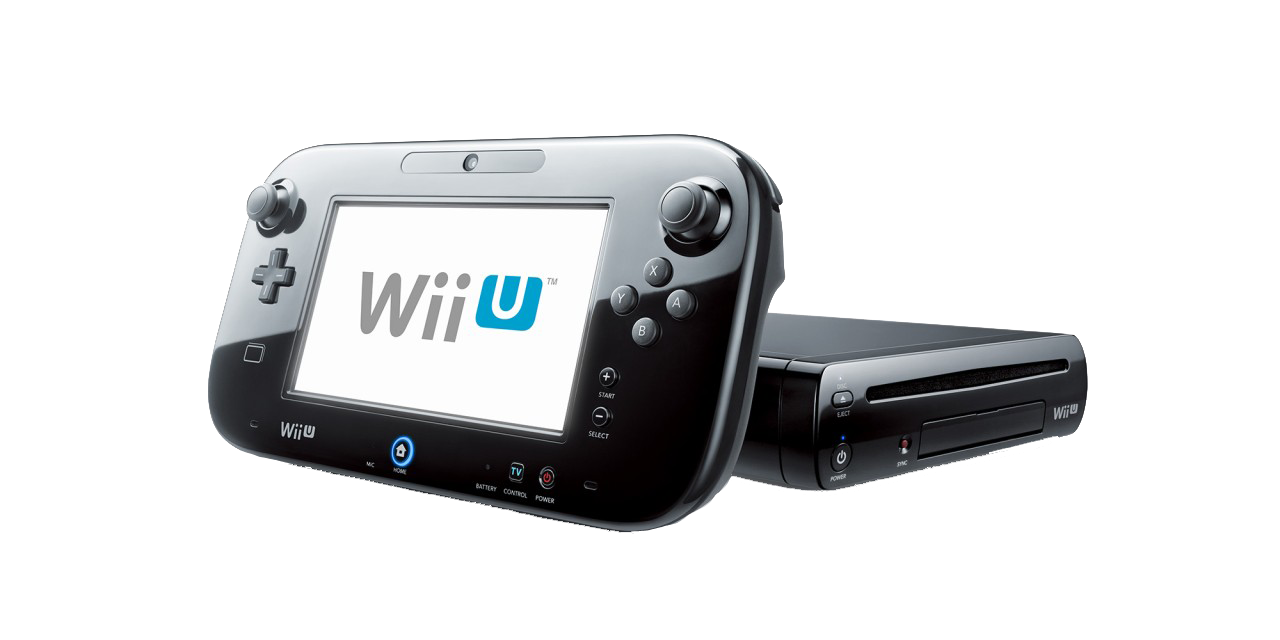
Wii U - In contrast to the 3DS, this one is both narrow and shallow. I actually have like 4 physical games for it that I've never played, and several more digital games that I haven't touched. I mainly used it for the two Zelda HD remakes and playing the Metroid Prime Trilogy. My kids played Smash and Mario Kart 8 on it quite a bit, as well as a few other games, but it wasn't nearly as used as all the other systems we have had. 


The Switch is interesting in that I have played a few games (mainly Breath of the Wild and Octopath) quite deeply but I have also bought quite a lot of digital titles when they were on sale. Many of these games I have only played through once and probably won't pick them up again, but I was glad to have played them. During the NES/SNES days, I purchased games I knew to have replay value and rented the rest. As there are no rentals these days, what it's become is waiting for a game to go on sale for $5 and buy it digitally. I figure that's what a rental probably would have cost, except that I actually get to keep it. So instead of looking at my library with sadness that I spent money on games I'll never play again, I see it as a long term rental with the option to play it again should I choose to. 


Wednesday, August 5, 2015

My Experience with the NES

Christmas Day of 1989 was probably the biggest Christmas I ever had. We got a Nintendo Entertainment System – the Action set, meaning it came with SMB/Duckhunt, 2 controllers, the Zapper, and the required cables. We also got Zelda II: The Adventure of Link as well. We played the crap out of that thing. It also meant that I didn’t have to live at my friends’ houses to play games, nor would we have to bribe my parents to rent a system for a weekend. There were days that it probably wasn't turned off at all during the first few months. 

We only had a B/W 13” TV that had the screws instead of a coaxial jack. The B/W aspect made it hard for some things. For example, during the final boss battle on Zelda 2 it was impossible to tell how much life you had, and the Bubbleman stage on Mega Man 2 caused a static-y sound to come from the speaker. That TV wore out after a few months and we bought a new, cable-ready color TV that lasted until early 2015. At first we had sharing issues. My mom’s solution was to have us take 10-minute turns. Obviously she had never played these games otherwise she would have realized how that wouldn’t work - 10 minutes was not nearly enough time to get somewhere in Zelda, accomplish something of value, and have enough time to save. The same was true of Super Mario Bros. I guess she just assumed the games were like Pac-Man or Donkey Kong - short and restarted often.


I didn’t have any inclination to keep the boxes/manuals in good condition, unfortunately. I did, however, see an idea to use electrical tape to tape the black sleeves together to make a DIY game case. This proved very useful in keeping games where they should be, and we didn't have the sleeves lost all around the house like a lot of people did. 

One time I went to swap games (temporarily) with my friend Chad. Originally the trade was going to be Zelda 2 for Mario 2, but Chad's mom decided that Mario 2 was too valuable to let go, so we got Defender of the Crown instead. My mom had me go trade back because if they weren't going to give us their good game, we weren't either. Another issue I had with game trading is that my mom sometimes took a black sharpie and wrote our last name in BIG letters all over it. I felt it was kinda defacing and devaluing the collectability of the game. For later games she would just put an address label on it instead. 


With the system was an ad for Nintendo Power, and I started subscribing. My first issue was the Super Mario 3 cover. At that time it was only published bi-monthly, but they started sending super in-depth strategy guides on the "off" months, and it just so happened that my third issue was the first strategy guide. After 4 guides it became a monthly magazine. I ended up taking the magazine for 3 years. 
By the end of my subscription run, most of the games weren’t as cryptic as the first ones requiring the maps and hints in the magazine to advance. Plus I could just borrow my friend Michael’s copy from across the street. Like the boxes/manuals, I didn’t keep these in great shape. I read them often when I was bored or on the toilet and didn’t think to keep them nice on a shelf like Michael did.


That year at school, we started a Nintendo Club. We were all given some kind of Nintendo-related code name – I was the Zelda Zapper. We had cards laminated with our names and a picture from a game manual on it. We had meetings at each others' houses on Fridays where we played games we had. Video game talk was the usual fare at the lunch table at school and playground when there wasn’t anything in particular to discuss.


After a few months, we got Super Mario Bros. 2 while on vacation in Utah (we had taken the NES with us an hooked it up to an old spare TV my grandparents had). We had wanted to get Mega Man 2 originally, but due to the box art, my mom deemed it too violent because of Mega Man’s gun (LOL). The following Christmas we got Golf from my aunt/uncle because during a family reunion at their house during the year we had 3 game systems and a computer all playing golf games for some reason. I also got Final Fantasy (the original).


Around this time the Super Mario Bros. Super Show debuted. It was a goofy kids show but it had cartoons featuring the adventures of Mario, Luigi, Princess Toadstool (she wasn’t Peach yet), and Toad. The show was ok, but the main reason I watched it was for the Friday cartoon: The Legend of Zelda, featuring the obnoxious version of Link and headstrong Zelda. Later, on Saturday mornings I would also watch Captain N, featuring Simon Belmont, Mega Man, and others, and later the Super Mario Bros. 3 show – basically the same thing as the first version of the show but with updated power-ups and the Koopa kids as additional bad guys.


Then the movie, The Wizard, came out. It was kind of a crappy movie, but kids didn’t seem to notice because they played games throughout it and name-dropped many more. But the main reason was to see advance footage of Super Mario Bros. 3. The movie was essentially the world’s longest commercial for a video game [EVER] but we watched anyway.


Later on we got a few more games. I bought Maniac Mansion from my cousin Bruce, Ninja Gaiden II from Toys’Я’Us (with a little wheeling and dealing with my mom) while Matt got Punchout!! (the non-Tyson version). We ended up borrowing Tetris from a friend and my dad liked it so later that Christmas I got it for him using a discount I received from Nintendo Power. He played Tetris a lot and finished Super Mario Bros. Most of my friends’ parents didn’t play so when they heard my dad finished SMB they were kinda impressed.


I swapped games with friends many times (never permanently, of course) so I could play a wider variety of games. I kept track of a small network of friends/acquaintances and which games they had so that I could try as many games as I could. One summer we played Castlevania 3 for weeks on end while drinking soda refills (Caffeine-Free Pepsi) we would get from the nearby gas station. On top of that, I had 2 means of game rental relatively close (Video rental store and a grocery store both within walking distance) and did so probably about every other weekend on average. Sometimes we could even convince my mom to rent one while she was at the grocery store when we were at school so that the game was ready and waiting for us when we got home (even Mega Man 2 - since the cover art was different in the rental store). 

I earned a reputation of being able to finish most games I sat down to play, and knowing all there is to know about them. I would have friends call me up out of the blue for advice/help. It was a combination of skill and determination that got me the rep. There were too many games to play them all, and I had a late start to the party. But I feel that I hit almost all the major games that are still remembered today. 


A couple years later we moved the NES downstairs when Matt and I moved into the basement. One night the ladder to our bunk beds got knocked off and shattered one of the controllers. I think we ended up getting another one, and we had to repair the unshattered one using a repair kit. It had parts to replace the rubber pads on the inside and replace worn out buttons. We opted to get neon colored buttons. Speaking of controllers, I never bothered to get any of the other controller styles because none of them were worth it in my eyes. Having the turbo and slow features on the Advantage (arcade style joystick) would be nice on games that required button mashing, but it meant losing the fine motor skill control of the thumb in favor of gross motor skills from a whole left arm. The only one I might have considered getting was the boomerang-shaped NES Max, but even if I had the money for it, I would have rather had a new game. 

We also had to clean the games and system a few times using isopropyl alcohol and special applicators. I also ended up opening up the system and bending the contact pins closer together to get a tighter grip on the games to prevent the blinking grey screen of death. That made it harder to get a game in and out, but we had to blow into it less often. We got a lot of dust in it because we lived in a desert, but also because a rogue basketball broke the door off of the control deck. 

The small cabinet we used as a TV stand held the game systems as well as a stereo/mixer board thing. It was missing one of its wheels, so the back corner was held up by a copy of the Back to the Future 2 novelization and an Encyclopedia Brown book. Looking back it probably seemed a little ghetto to my friends, but I didn't seem to mind. We also took the NES with us on a couple of trips to my grandma's house in Utah. It certainly helped alleviate some of the boredom of being there once we had exhausted all of the usual things we did there. 


Later games we got included: Captain Skyhawk, Time Lord, Iron sword, Kickle Cubicle,  Rescue: The Embassy Mission and Tecmo NBA Basketball. I also traded in the SNES game Contra III to the Card Shop for the original Legend of Zelda. Michael's copy of Zelda 2 had stopped working for some reason, so he borrowed ours one time. When he came to return it, I was playing basketball outside, so I just set it on our front porch, figuring it was out of danger. But the ball hit a corner and made a funny bounce and landed on the game, chipping off a piece of plastic from the cartridge.  


Eventually I got the SNES and had both systems hooked up simultaneously, but at some point we moved the NES upstairs to the kitchen TV because it was the family’s system, while the later ones were mine since I bought them outright. I still played the NES every so often, especially if it was part of a series (like Final Fantasy or Zelda) but my focus shifted to the SNES.

Eventually our NES wore out, between years of play and the percussive maintenance we had used to get it to work right. Even though I had the SNES, I didn't want to sell all our games and lose the ability to play them. So we bought a NESv2, a modified version of the NES that resembled the design of the SNES. It was only $50 at the time, and all of us chipped in to pay for it. It worked a lot better than the old one and survives to this day. 


During my time in Japan and at college, my brothers nearly doubled our collection when they bought some used games cheap from the video rental store, which was getting rid of old inventory. 

When I moved out of my parents' house, I left the NESv2 and games there. But when I got married, my mom was getting rid of things and gave me all the old video game equipment. We hooked it up to the 13" TV in the bedroom for a while. Once we moved to our condo, it was hooked up to the 25" TV in my bedroom while sitting in my top drawer. But now it has been moved to storage and replaced with a broken Wii that has the HomeBrew channel. 


In addition to the HomeBrewed Wii, we now have HomeBrewed 3DS systems that can emulate NES games, as well as the NES Classic Mini that we got and modified to have more games.

Tuesday, August 4, 2015

The Nintendo Entertainment System (NES)

The early roots of the NES were the Japanese Famicom system (short for Family Computer). Internally the systems were similar, but there were a lot of differences. The Famicom was white, maroon, and gold colored. The cartridges were all different colors, and they plugged in vertically (like the SNES and N64) instead of the front loading American NES. Another difference is that the controllers were hard-wired to the system and the cords were very short. In Japan, it’s expected that people are sitting very close to the TV because of the small living quarters. The first player controller was pretty much like the NES, but the second player did not have Start or Select buttons and instead had a microphone. It was used in much the same way the DS microphone was used. The side of the system had holders for the controllers.


A few years later, he console could be upgraded with an add-on peripheral disk system that used disks similar to normal, everyday floppy disks used in computers at the time, but which had proprietary grooves so only official disks could be used. Some games were still released on cartridge, but some were only on disk. The disks made saving files easy and possible, but when the games were translated and ported to the American system some interesting work-arounds had to be made. Most games went with a password system (like Metroid, for example). The problem with passwords is that little kids don’t write down everything legibly and when you lose a letter, all your progress goes with it. The Legend of Zelda was the first game to have save files on the NES, and that required having a battery soldered to the cartridge, but it worked.


Localizing games (the term used for converting Japanese games to an American audience) was a tricky bit. Nintendo of America (NoA) censored every instance of smoking, sex, drinking, swearing, and even most religious references. A lot of times, there were also minor changes to the games themselves when they were localized. One of the best examples is that on Zelda II: The Adventure of Link, the battle music and boss music was changed (for the better, IMO) and a couple of the bosses were switched around. Another one is that in Japan, Super Mario Bros. 2 was just more of Super Mario 1 with newer, harder levels. They included slippery surfaces, wind, and poison mushrooms. It was also only a 1-player game where you could be Mario and have normal abilities, or be Luigi who could jump higher/farther, but had much less stopping traction. The game was deemed too hard for Americans, so they converted another game called Doki-Doki Panikku set in Arabia into Super Mario Bros. 2 by changing a few sprites around. Years later, they released Super Mario USA in Japan and Super Mario Bros: The Lost Levels in the USA so each country would have both versions of the game. 

There were also a lot of Japanese games that never made it at all to the States because they were deemed having too much Japanese culture, too hard, or just not popular enough. Final Fantasy 2 and 3 were never localized, as an example, until years later by popular demand from American/European audiences.

Because of the spectacular failure of the video game crash of 1983, many parents and critics had decided that games had been a fad, and many retailers wouldn’t sell systems or games. The genius of Nintendo was how they dressed up the system and sold it to the retailers and consumers. What they were really showing and promoting were R.O.B. the Robotic Operating Buddy and the Zapper with Gyromite and Duck Hunt. Retailers thought it would sell because of the toy robot aspect of it, but once consumers got ahold of the games, they usually stopped playing with the robot and just focused on the games. These games were actually playable; the graphics and sound were much better than previous home consoles and the controller actually responded like it was supposed to.

The system itself was a dual grey colored box with a black stripe that had 2 buttons and various jacks for plugging in power cords, A/V cords, and controllers. It had red and yellow jacks for the RCA cable hookups on the right side (today they would be white and yellow, and side note - those were rare on TVs in that day), and an RF-to-coaxial jack on the back of it for most television sets. There was also obviously a cord for the power cable. Unfortunately, at this time the transformer was part of the plug so it took up quite a bit of room when plugged in. It wouldn’t be until the N64 until Nintendo figured out to put the transformer away from the plug so it doesn’t clog up the outlets.

The games were inserted into the front by opening a small door, being put into the system, then the games had to be clicked down. There was a very, very common problem where dust would get into the system or the games and it would make the games not work. The main culprit for this was the NES-10 Lockout timing chip that helped prevent piracy, but even the smallest bit of dust or contact corrosion caused it to fail. The two most common solutions were to take the game out and blow into it, and then maybe hit the system itself (percussive maintenance). Kits were sold to clean the games and the system to help prevent this, but it happened a lot and it was a normal part of owning a Nintendo. It was like how in the 90’s, we just accepted that computers running Windows got the Blue Screen of Death every 15 minutes.

The game cartridges were gray (with a few notable exceptions), and came in a black plastic sleeve. Like the boxes and manuals, most of the sleeves were lost/thrown away by most people. Many retail stores sold cases that held 20-30 games so they would be easier to keep track of. The box and label art of the original run of games were all done in the same style, making them easy to identify, but once the system caught on the style was quickly usurped by better box art.

For those who didn’t have a TV new enough to have a coaxial jack (colloquially known as “cable ready” back then), there was a converter that turned the coax into 2 forked connectors that attached to screws.

The controller had a Directional pad (D-Pad) that was capable of 8 directions shaped like a cross instead of a joystick. It worked much, much better than past joysticks (especially the Atari 2600). It also had black rubber Start and Select buttons and hard plastic red B and A buttons (they were alphabetically backwards from what English speakers would have expected).

The Zapper was 2 shades of gray to match the system with a red trigger button. After a law was passed requiring toy guns to be orange tipped, all NES systems were sold with bright orange Zappers. Both the controllers and Zapper had a proprietary jack so that no other controllers would work. This is unlike what SEGA did with their controllers – they used a typical serial port type jack that allowed even Atari controllers to be hooked up to both the Master System (their 8-bit console) and the Genesis (the 16-bit system).

There were a lot of optional controller styles available. The NES Advantage was an arcade style joystick controller with big buttons, but the only real “advantage” was the turbo and slow features. Turbo was useful for games that required button-mashing, and slow was a feature that paused the game repeatedly for those with slower reflexes. The NES Max was a boomerang shaped controller that had a precursor to the 3DS’s circle-pad and regular buttons with turbo options. There were other kinds, like the U-Force that used hand motion in some manner to control the games, but it worked better on some than others. The most well known was the Power Glove, and it was a precursor to today’s Wii Remote. It was a glove that had required sensors on the TV to use, and it really didn’t work that well. My friend Brooks also had the Power Pad – a precursor to today’s Dance-Dance-Revolution pad – for sports games. If nothing else, Nintendo was always looking for innovative ways to interact with the game. If you want to learn more, watch the Angry Video Game Nerd videos about these (warning on language). As I said, none of them were superior to the original controller. The best part was that you could put your thumb on the two buttons so you could use both at once, and the D-pad was near flawless.

Originally, Nintendo presumably intended for the Select and Start buttons to be used mainly for menu purposes, but eventually Select became just another button on a lot of games (like Zelda II). Start was almost always the pause button. It was interesting all the ways that game devs made use of so few buttons (but which seemed plentiful compared to the Atari).

There were 2 different 4-player adapters available, called the NES Four Score and the NES Satellite. The major difference was that the Satellite was wireless and used batteries. My friend Jake had one and we tried to play Super Spike V’Ball with 4 people, but it was difficult to get it to work right. 

At some point the Game Genie came out, and it was basically a hex-editor that let people change the values of certain memory locations in games. The result was that you could get Mario to jump super high or perhaps run really slowly, or a whole bunch of other things. If you had one, you also had to have a guide-book that had lists of codes for games that they had discovered. Nowadays, that kind of information would be posted on a website and crowd-sourced, but back then it was restricted to a book that was occasionally updated.

When you look at the evolution of games, you can see how people discovered new and innovative ways to make games over the years. Original games like Donkey Kong and Mario Bros. were single screen games. Then later they figured out features like side-scrolling, scrolling both ways, having more stuff than what’s on screen, multiple backgrounds, using more color palettes than the system was designed for, digitizing voices, etc.

Something that you would always see on games and their boxes is the Nintendo Seal of Quality. They learned from the mistakes of Atari and in order to release a game you had to pay to be officially licensed, but also the games had to at least be playable. That didn’t guarantee that the game wasn’t mediocre, but it probably weeded out a lot of terrible games. Occasionally you might see an unlicensed game – instantly recognizable by its different cartridge color/shape.

On the bottom of the system was a small, removable cover that 
was labeled as an expansion port. To actually gain access to the port, it required breaking a little plastic piece off of the shell. To my knowledge, it was never used but may have been there to facilitate a Famicom Disk System type of add-on. The Disk System connected to the original Famicom hardware via the cartridge slot, but that would have been a lot harder with the NES design, so a bottom port probably made the most sense. 

Some programming limitations that my friends and I noticed in the early years were corrected later. One in particular was the value of 255. We noticed on a lot of games that often there was a limit of how many missiles, rupees, or other items. We later learned about how that was the biggest 8-bit number one could make, and that the programmers later learned how to exceed that number. We also figured out that the system considered the background, the foreground, and moving sprites as separate things, even though we didn’t know why at the time. We figured out the NES had a limit of about 8 sprites at a time because whenever there were more, they would blink and the NES would slow down.

There was also a distinct sound that each company's games had. You could blindfold me and let me listen to games I had never played, but I could still tell you that the game was made by Konami, Tecmo, Nintendo, or Capcom just by the music and sound effects.

After the SNES had debuted, Nintendo released an updated NES. It was a smaller console designed to look similar to the SNES and was top loading. Other than missing the RCA input jacks, it behaved just like a regular NES, so there was no graphical or sound improvement. The dust problem was greatly lessened though, which was a big bonus. The controller that came with it was similar to the dogbone shaped SNES controller, but they messed up and put the buttons on the wrong angle.


They made games for it for a little while after the SNES was out, but once the SNES caught on development kinda stopped. 


Additional Resources:

The Angry Video Game Nerd plays with ROB (warning: Language)

The Angry Video Game Nerd play with multiple NES accessories (warning: Language)

The Angry Video Game Nerd plays with the Power Glove (warning: Language)

Gaming Historian: The Video Game Crash of 1983


Gaming Historian: Game Genie

Gaming Historian: NES v2


Gaming Historian: The Story of Super Mario Bros. 2