Showing posts with label Zelda. Show all posts

Tuesday, June 23, 2026

Grab-bag Post #6

Grab-bag Post #1

Grab-bag Post #2

Grab-bag Post #3

Grab-bag Post #4 

Grab-bag Post #5


 Addendum to "Future Proofing" from Grab-back Post #3

Innovation is good, in general. It's what lets companies and technology make a leap forward. But sometimes innovation is too far out from the norm and 3rd party developers won’t bend their will to Nintendo’s gimmick unless they are forced to (like with the popularity of the Wii or the Switch). It’s a matter of human/industry momentum where it’s easier to just keep making things for standard controls/standard specs than having to make multiple versions that work with each console. PC, XBox and PlayStation are all similar that it’s easier to port games around, but sometimes porting it to a Nintendo system might be more hassle than its worth in the eyes of developers. It leads Nintendo to make their games revolve around the gimmick instead of the other way around - like Star Fox Zero needing to use the WiiU gamepad in a very specific way in an attempt to teach other developers how to integrate it into the gameplay. 

A few things that should be asked / considered by developers might include things like: 
  • How much is the gimmick informing gameplay, and how much is the gameplay informing the gimmick? 
  • Do we sometimes purposely make sub-par games just to justify the gimmick? 
  • Perhaps the game might be better with traditional standard controls
Adding in a feature like HD rumble or an IR camera is nice, but if 3rd party developers don’t use it properly then it just makes the Joy-Con needlessly more expensive outside of tech demos like 1-2-Switch and Switch 2 Welcome Tour. Getting them to try and integrate the usual “PS4/XBone” style controls to also use a touch screen just adds extra development time/effort unless they’re making the game from scratch with those features in mind. But most often, porting something to a "weird" console just means there is a half-assed effort for a particular feature. For example, if a company were porting a game to both the 3DS and the PSP Vita, the second screen of the 3DS might just be used for a constant mapping feature rather than do something clever with it. 


Some interesting Zelda Stats I Compiled

All of these apply only to North American games/releases/prices/etc.


Game Wait Time for New Canon Games

Longest time between games: 2,261 days (from Breath of the Wild to Tears of the Kingdom)

Shortest time between new games, not counting simultaneous releases: 112 days (from Four Swords to Wind Waker)

Mean and Median time between new games: 677 and 535 days, respectively. 
 

Game Wait Time (remakes included

Longest time between games: 1935 days (from Link's Awakening to Ocarina of Time)

Shortest time between games: 22 days (from Ocarina of Time to Link's Awakening DX

Mean and Median time between new games: 445 and 441 days, respectively. 


Game Wait Time (spin-offs included

Longest time between games, not counting simultaneous releases: 943 days (from Link: Faces of Evil to Zelda's Adventure)

Shortest time between games: 6 days (from Hyrule Warriors Legends to My Nintendo Picross: Twilight Princess

Mean and Median time between new games: 310 and 252 days, respectively. 


System that can play the most Games: Switch 2 (20)

System that can play the fewest Games: Virtual Boy (0)

System that can play the fewest Games (excluding VB): SNES (1)  
 
Longest Localization Time: 687 days (Adventure of Link
 
Games NA got before Japan: 8 (FS, TP, LXBT, ST, SS, BQ, TPHD, ALBW
 
Cheapest game at launch: LA, OoA/OoS, MC - $29.99
 
Most Expensive game at launch: Switch2 versions of BotW/TotK - $79.99
 
Most Expensive game adjusting for inflation: LoZ and AoL - $145 (in 2026 dollars)
 
Japan-only Spin-offs: all 3 Satellaview Games, all Tingle Games except Rosy Rupeeland
 
NA/EU-only Spin-offs: Nelsonic Game Watch, Game&Watch Zelda, the CD-i trilogy, Game&Watch Gallery 4 


The Perfect Zelda Score / Soundtrack


I like a little nostalgia in my games and movies, but sometimes they lay it on too densely or handle it too lazily. An example of 'lazy' is the Superman II soundtrack. The original director was famously fired after making a masterpiece in the original movie, and several actors / crew members didn't want to work with the new director. John Williams was one of those, and so the task fell upon Ken Thorne to handle the music. He was a much more inferior composer, and what he ended up doing is basically just repurposing every track John Williams made for the first one. 

However, there are two examples of what I would call a perfect soundtrack in the Zelda series, and they are Twilight Princess and Wind Waker. In both cases, there was a new, excellent main theme (Hyrule Field and the Great Sea), as well as several other new songs that were totally original (Midna's theme, Dragoon Roost Island, for example). But they also sprinkled in themes from past games sparingly, and at the appropriate points. Hearing a remixed 'Serenade of Water' used as Queen Rutela's theme or the Lost Woods music (both from OoT) was on point, as is the instrument choices for Zora's Domain and Death Mountain making them feel like the music from OoT, even if the notes actually played were a little different. 

There were also some more subtle references, like the Windfall Island music being a heavily remixed Kakariko Village theme, or how Saria's Song is snuck into the Forest Haven music briefly at about a minute into it, or how the metallic beat from the Goron Mines is the same notes as the Goron Lullaby from Majora's Mask

Basically, both soundtracks do an excellent job of balancing new music with subtle and not-so-subtle references to past music. 


Classification of Master Quest / Mode


The Master Quest of Ocarina of Time is in kind of a weird spot as far as classification goes. It's not exactly a remake (since the graphics/sound are exactly the same) and it's not exactly a sequel (since it's the same story), but it's not exactly a spin-off either.  

My understanding is that originally a two different expansions for OoT were in development for the N64-DD: a game code-named "Ura-Zelda" and a game code-named "Zelda Gaiden" ("ura" means 'hidden,' or 'underside,' while "gaiden" means 'side-story' in Japanese). When it became clear that the DD wasn't going to be the hit console add-on they had intended, some of Zelda Gaiden's ideas eventually were used in Majora's Mask. The fact that the game was centered around a 3-day cycle and the DD would be the first Nintendo console to actually keep date and time is probably no coincidence. The other parts of it, namely the remixed and more difficult dungeons, were eventually made inserted into the OoT overworld and released as the Master Quest for the GameCube along with the regular version of OoT (but updated with GC controls). 

So what it is actually more similar to is an alternate-universe version or 'hard mode' of OoT, similar to the Master Mode on BotW, except that it just wasn't included as DLC to the original game (but was included with the 3DS remake). 


Wednesday, July 13, 2022

Zelda Games (Collection Part 2)


Zelda Manga (Collection Part 1)


Once my Zelda Manga series was nearing completion, I turned my sights closer to the original source material: the games themselves. Now, I have (almost) always had all of the games in some form, and some way to play them basically at all times. The few exceptions are getting the original Legend of Zelda after owning A Link to the Past, a 6-month gap between Four Sword Adventures coming out and getting it for Christmas, and not being able to play the DS games due to not having a DS. But what I prioritized was being able to play a game in some fashion, and not necessarily having every version. Like comics, I was less interested in the merch but was into the puzzles and story, so I didn’t rush out and get Ocarina of Time 3D when it first came out just because of some quality-of-life improvements and upgraded graphics. There wasn’t any new content or more Hyrulian history to learn about so I didn't feel compelled. Likewise, if Four Swords hadn’t been included, I might not have gotten the GBA port of ALttP.

As another example, I didn’t really feel the need to own the Zelda Collector’s Edition because it seemed redundant due to still owning the original hardware and cartridges in working condition (and being able to also play them on the Wii VC). Nor did my wallet feel the urge to get both the Wii and GameCube versions of Twilight Princess, because it was basically the same game other than being mirrored. I only bought the GBA re-releases of the NES games because my son had a GBA and I didn’t feel like hooking up the NES.


So once I set my sights on obtaining a complete collection, I started off by making a list and noting the things I was missing. These were things like the GameCube version of Twilight Princess, the Wii U version of Breath of the Wild, a physical version of Wind Waker HD (I only had the digital version up to this point), and the Collector’s Edition disc. All of this would be a bit of spending so I gave myself a $100 per month limit, both to avoid putting us in the poor-house and to make the collection process more fun by spreading it out over several years rather than all at once.


This would complete the games, but to make them a bit more presentable, I found a shop that specializes in making reproductions of the original game boxes as well as the instruction manuals. So I added those to the list of things to buy. Luckily, I still had all of the boxes and manuals from Ocarina onward, so I really only needed to replace the boxes for the NES games, ALttP, both versions of Link’s Awakening, and the GBA re-releases of the NES games.


I figured I might as well do the same for the spin-off games as well, so I imported the 3 Tingle DS games from Japan, got the 3DS and Switch version of Hyrule Warriors, bought a Game & Watch Zelda, and found a seller who made physical copies of the BS-X games along with custom manuals and boxes. Unfortunately, the CD-i games were prohibitively expensive, so I resorted to making my own versions of the discs and jewel cases, knowing full well that they would never be played. My work was . . . adequate, but then I learned of a British place that made much better replicas, so I ordered some. And for the three other games that only got digital releases (FS:AE, TMTP, and MNP:TP), I made custom cases using Photoshop and some cheap cases I got from a used game store.


In addition, I also got Japanese versions of the first six games (including both disk and cartridge versions), the Japanese FSA (because it has Navi Trackers), and a set of the Barcode Battler II cards for ALttP. The only thing that doesn’t have a box is the Nelsonic Game Watch. I could buy one with the packaging, but I’m still a bit too cheap at the moment and would rather spend my money elsewhere. Perhaps in the future, maybe. But all of this wrapped up in April of 2022 with a complete Zelda game collection.


What’s next? I’m glad you asked . . . (Part 3)


Zelda Manga (Collection Part 1)


As I’m writing this, it’s the summer of 2022. For the past couple of years, I’ve aimed my collecting habit in a particular direction, and it should come as no surprise that it ended up pointing at Zelda.

As a side note, I think I’ve always had the collecting bug. When my mom bought my brother Matt and me a baseball card starter pack, I wanted to get all of them, despite not knowing a whole lot about the MLB. Later in life it turned to X-Men Cards and then Comic Books. At one point around 2002, I was collecting Sobe bottles.  
¯\_(ツ)_/¯ 


But about three years ago, I decided to invest into some Zelda stuff. When it comes to branded merchandise, I’m not usually one for stuff like mugs, pillows, keychains, stickers, etc. My love for the series is centered around playing the actual games and the joy of completing quests and solving puzzles, and not around wearing a different Zelda shirt each day of the week to advertise my geeky-ness. While having some of that stuff is nice, it’s not the actual content. As another example, the reason I was reading/collecting X-Men comic books is for the art and the story, not for the merch. So a Wolverine telephone wasn’t something that I would purchase myself, but I got one for Christmas. Truth be told, had the money been spent on 10 back-issues that I didn’t have, I probably would have been more excited.


So even though spending money on a Hyrule Crest window decal wasn’t all that enticing, the thing that caught my eye are the Manga books, specifically the ones by Himekawa. And the difference is that this isn’t just some typical Zelda-themed item of something I already owned – like a T-shirt, drinking glass, or Rubik’s Cube – this is actual new content that, admittedly isn’t canon, but related to and based on the original games.


Once I had made that decision, I started out by making some lists from information I found on a few Zelda fansites and let Anne know about my plan. I asked for a few of them for Christmas and Birthdays for the next few years and have slowly been amassing the ones that have been translated into English. At the moment, I have all of them except for the last two volumes of the Twilight Princess series, as well as the 4-book set of hardcover books made by Dark Horse (Hyrule Historia, Art & Artifacts, Encyclopedia, Creating a Champion).


For nearly all of the other non-translated stuff, I have digital scans that I have found in various places on the internet. It should come as no surprise that in Japan there was a lot more material available that didn’t make it to the West. Maybe someday I’ll get actual prints of these. Despite formerly having a grade 6 reading level in Japanese, I don’t know that I want to spend the time meticulously going through one of these books in its original language, so I’m kinda sticking to the English stuff.


There are a few other adventure books and comics that came out in the 90’s, mostly somewhat based on the Animated series. If I had known about them, known where to buy them, and had money to do so, I might have bought them back in the day. But finding out about these kinds of things in a pre-internet era small town would have been rather difficult, plus I don’t know if I would have kept them in good shape all of these years.


Anyhow, I’ve read all of them except for the Twilight Princess ones – I’m waiting for the series to conclude before diving in so that I don’t forget details along the way.


And that got me started onto something else . . . (Part 2)


Sunday, August 22, 2021

Reflections on the Evolution of Gaming (part 3)


Reflections on the Evolution of Gaming (part 1)


While having a conversation with my son, I found another thing that he didn’t really understand and required explanation due to his being born while the Wii was still in fashion. And that is the concept of the hint guide / player’s guide / gaming magazine. For almost all of the games he’s played, they have either had a tutorial and enough built-in dialogue or hints that there is never a danger of “getting stuck” in a game, or he’s playing something that I know well and can direct him, or it’s something that can be easily looked up online with ease.


What he’s never experienced is getting stuck and having no recourse. With walkthrough websites like GameFAQS, message boards like GBAtemp, and thousands of “Let’s Play” videos on YouTube, it’s really easy to accidentally find the answers to puzzles in any game.


It’s probably a safe bet that games which feature puzzle elements are made by other people who enjoy such puzzles, and the same could be said for adventure games. Part of the challenge in creating such a game is to make the puzzles challenging but still solvable. There’s always a risk that the solution is too obscure, giving the game a bad reputation for being overly difficult. But it’s also possible to make the solutions too obvious, making the game too easy. It’s quite a conundrum when trying to make a game that is accessible to all ages when certain parts of the game might “age-lock” someone out because they’re either too old or young to understand the hints required to solve the puzzle (incidentally, I found out that the Leisure Suit Larry game I got age locks kids out on purpose by requiring them to pass a test that revolves around 80’s cultural references and history, ensuring that younger kids won’t be able to play).


After some of the first puzzle games got a reputation for being impossible, several solutions came about. The first is the gaming magazine, like Nintendo Power. Many (cynically) saw its existence as another way of making additional money by making an impossible game and then charging extra money to get the required info to finish it. The same could be said about Player’s Guides or Hint Guides. Player’s Guides became a thing during the NES-era, and probably peaked around the N64-era. They could be purchased at gaming and retail stores, as well as other places where games could be purchased. Hint books came in several forms, but one such form was a book that had specific questions (such as, “How do I open the red door?”) with hidden answers that were obscured so players didn’t accidentally spoil the answer to something important while looking up a different hint. Some needed a red piece of transparent plastic to see the answer, while others needed a special kind of highlighter (Space Quest’s hint book is one such example). TV Tropes refers to this predicament as "Guide Dang It!"


But I tend to take a more forgiving approach to magazines/guides, and see them not as a soulless cashgrab, but as a measure to meet younger and/or less puzzle oriented people halfway. This allows the developers to put in difficult puzzles, but let players who are unable/unwilling to solve them solo have an avenue to get the answer.


Before these kinds of guides became so popular, sometimes games would include some supplementary material as assistance. The Legend of Zelda famously came with an almost complete map of the overworld as well as the first two dungeons, with additional hints and suggestions on how to make your own map. Maniac Mansion came with a hint sheet that resembled an old-school college campus bulletin board with cleverly disguised clues. A Link to the Past also came with a small “Top Secret” hint guide that was sealed with a Triforce sticker as well as a map with the overworld and first three dungeons. One interview I read stated that the developers were worried that the game was too hard, which is why they included the Top Secret manual. To be fair, some of the solutions like, “lighting all the torches,” weren’t as common then, whereas games these days just include them and everyone just sort of knows to try it. Razbuten has a great video about what gaming is like for non-gamers, which mentions that there are some strategies or knowledge that developers just expect players to know, but Miyamoto wanted to make sure there was an avenue for new players who hadn’t caught on yet.


Another avenue was to write letters or phone the company directly. While playing King’s Quest II: Romancing the Throne, my dad got stuck. I loved watching him play these games and helping him when I could, but when we were stumped, my dad wrote to Sierra Online (snail mail) and got a few answers. Nintendo set up a hotline that players could call to talk with “Game Counselors” to get help. Thankfully it wasn’t a 1-900 number, but just a regular phone number (which was still long distance to everyone outside of the Redmond, WA area). These are who Hailey is talking to on the phone near the end of the movie, The Wizard, while Jimmy is practicing in the arcade. 


The final source of help were peers at school. Before the internet, the only real way of getting help or trying to spread information is to physically talk to people face-to-face. Telling each other about secrets we found dominated the conversations at the lunch table during grade school and even into middle school. It's not as efficient or effective as internet message boards, but it's the best we had back then. I sometimes see posts on gaming forums stating that someone is trying to play an NES game without a walkthrough and finding it impossible. They can't fathom how kids used to do it back then, but aren't aware of how much we crowdsourced tips and secrets like that. 


Once the internet became more established, and games themselves started including more in-game tutorials and ways of obtaining help, the guides were needed less and less, and eventually became more of a collector’s item than a necessity. 


Monday, July 5, 2021

Rewriting A Link Between Worlds


While I really liked A Link Between Worlds, I kinda felt like they (Nintendo's writers) were phoning it in when it came to some of the story elements. They had a good opportunity to connect the storylines between ALttP and the original LoZ and didn't even try. So this is my effort to do that, and other than a couple of cut scenes, mostly all it would take is to amend the text a little.

The backstory - what isn't explicitly mentioned right off the bat is that after the events of A Link to the Past, the remaining people of the Dark World founded Lorule. Once Ganon was gone, the people made a kingdom and turned the Pyramid of Power into a Castle and started to live life again. But because they haven't had the Triforce's power in the realm, after a while the land has been starting to crumble, hence why the map is fractured, and Lorule is slowly dying. These facts come to light in small snippets from Hilda or other Lorule denizens. Also, there never was a Lorule Triforce - only the normal one that Ganon had used to transform the Golden Land into the Dark World all those years ago. 


The game starts off the same - Link wakes up, gets the sword, takes it to the captain, goes through the graveyard tunnel, fights Yuga, meets Ravio, etc. After that he goes to the castle to inform Zelda what's going on and there's a lot of commotion and that's because not only is there graffiti on the castle walls, but the people are panicking because the Triforce has disappeared and they don't know what happened to it. Inside the castle while he waits for Zelda, Link reads the history of Hyrule but the fifth panel of the story is going to be changed a little bit to be a little more in line with the events of ALttP, specifically that the Triforce was never split into 3 parts and that it's kept by the royal family in a secure place, only to be used in the most dire of circumstances. As Link is led to meet Zelda, she's talking with a captain and mentions that she can't figure out how the intruder slipped past the guards while we are shown a view of the Triforce location, which has vines lining the walls in the same way that the Palace of Darkness did (see pic above) hinting that Yuga flattened himself and slid along the wall under the vines. Zelda’s theory is that someone is trying to resurrect Ganon, but it’s a red herring. 


Then Zelda gives the Pendant of Courage to Link and sends him to see Sahasrahla. He doesn't believe that Ganon is returning anytime soon, but that they should trust Zelda's intuition just to be on the safe side and sends Link to fetch Osfala. After that, all the normal stuff happens, he gets the Master Sword and goes back to Hyrule Castle. As Link is confronting Yuga, he turns Zelda into a painting and slips into Lorule thinking that Link won't be able to follow. Link enters Lorule and after poking around the castle a bit, he sees the ceremony Yuga performs with the portraits of the Seven Sages. It’s revealed that Yuga has the Triforce of Power and that he tried to grab the whole Triforce, but it split and two of the pieces are missing (mirroring what happened to Ganon in Ocarina of Time).


Yuga (correctly) assumed that Zelda has the Triforce of Wisdom, and that one of the descendants of the Seven Sages was the most likely candidate to have the Triforce of Courage so that’s why he turned all of them into paintings and kidnapped them. However, none of them have it, so in his frustration he scatters them across Lorule. He then begins the process of extracting the Triforce of Wisdom from Zelda’s painting when Link shows up in a triumphant entrance and sees that Hilda is attempting to “stop” Yuga, and tells Link that she can hold him for a while, but needs the help of the Seven Sages to aid her in completely stopping Yuga, as her magic isn't strong enough. This is a ruse done as a way to keep Link occupied while they do the ritual to get the Triforce from Zelda. We will later find out that Link was a bit noisy (probably breaking pots or something) and Hilda had caught onto his presence, hence the fake-out "binding" of Yuga to send Link away.


So then the rest of the game goes on like normal with Hilda telling Link small bits of Lorule back history whenever he reaches a new area or completes two dungeons and then Link finally recovers all of the portraits and goes back to Lorule Castle sooner than Hilda expected. He walks in on Hilda (without being seen/heard this time), and sees that Hilda has been successful in extracting the Triforce of Wisdom from Zelda by showing her hand with the Triforce symbol on it while gloating to the painting of Zelda. Then it becomes apparent that Hilda and Yuga are in cahoots when she says to Yuga (who surprisingly isn’t being restrained in any way), “Okay now give it to me,” and Yuga tells her ‘no.’ It turns out that Yuga kinda admired Ganon and when he got the Triforce of Power decided to follow in Ganon’s footsteps and try to get the whole thing. Hilda is bewildered and angered at this betrayal because he’s double crossing her and ruining the plan they had. Hilda was supposed to get the whole Triforce and Yuga was the backup agent she hired when Ravio had chickened out.


Then Yuga senses the Triforce of Courage in the room and notices Link, who has been watching this play out. It turns out that in rescuing the sages, Link demonstrated the courage to be worthy of the Triforce of Courage, and Hilda realizes that by sending Link on what she believed to be a wild goose chase, she inadvertently caused Link to gain the Triforce of Courage. Yuga lashes out at Link and the first phase of the fight ensues. When he is beaten, Yuga takes the Triforce of Wisdom from Hilda and phase 2 begins. When Link is successful, he takes the Triforces of Power and Wisdom away from Yuga, frees Zelda, then gives her the reunited Triforce willingly. Ravio runs in and tries to stop the madness, reporting that most of Lorule has been destroyed, that the fighting over the Triforces has accelerated the destruction process, and the remaining good people are all gathered in front of the castle wondering what they should do.


Hilda surrenders herself to Zelda for her crimes, fully expecting to be executed for her plot, but also admitting that she was desperate. Zelda then uses the Triforce and after a flash of light, Zelda, Link, Hilda, Ravio, Sheerow, and all of the people from Lorule (but not Yuga) are standing in Hyrule. Zelda announces that the people of Lorule are offered refuge, and that she won’t execute Hilda. However, her titles, magic, wealth, and political powers are revoked and that she will be just a regular citizen in Hyrule. Zelda expresses sympathy for Hilda trying to save her people, misguided as it was.


The epilogue has Zelda deciding that the completed Triforce is too tempting of a target to be kept at the castle, and it can’t be destroyed lest Hyrule ends up like Lorule. They decide that one of the pieces should be hidden far away in a palace just in case. It’s also decided that the people of Lorule will take up living in the forest because they would feel more comfortable there than in places like Kakariko, and it wouldn't be a smart idea to have them so close to the sacred grove and the Master Sword's resting spot, so Link leaves the sword in the care of Damp
é (someone they know they can trust), whose descendants will watch over it until the next hero needs use of it.


Wednesday, June 23, 2021

Being a Zelda Loremaster


This post is going to be similar to my write up on the review of the storyline and the consistency post. It’s basically an, “if I could remake the Zelda series in my own image,” type of post. I have a list of about 10 things that I would go back in time and change, if I could. Most of it isn’t personal - things like telling Archimedes to use the radius instead of the diameter when calculating π or telling Benjamin Franklin that it’s the negative charges that move in an electrical circuit - not the positive charges. As it pertains to Zelda, I wouldn’t want to change too much about it - I would want the games to be mostly as they already are with only slight tweaks and changes to the in-game text and manuals (other changes to reduce tedium would be nice, but we’re focusing on just story and lore for now).


It would be nice to have the Lore of Zelda be as deep as that of Tolkien’s, where it’s easy to tell that they [Nintendo's R&D4 group] had some of the history worked out beforehand instead of just making it up as they go, and when a new group of writers comes in they don’t throw out what was written before (something that happens in comic books far too often). Along with that would come some geographical consistency, and landmarks that wouldn’t be constantly moving around.


I would love the idea of having all of this pre-planned out years in advance, and having each game serve as revealing one small chapter of the entire over-arching tale of Hyrule, kinda like how the game show Classic Concentration displayed an entire picture once all of the cards were removed. And as part of that, it might not seem like each game is connected entirely or seems to have wildly different geography until a future game explains exactly what happened that serves as a bridge between games, and at some point the entire story would suddenly come into focus, making Miyamoto/Aonuma seem like geniuses (I suppose Breath of the Wild or its sequel would be a perfect story to do so).


So, if I could magically transport myself back to 1980’s Kyoto, Japan (speaking perfect Japanese, of course) and serve as a special advisor to Shigeru Miyamoto and whatever team was working on the Zelda games, here’s what I would do.


The first thing is to inform Mr. Miyamoto that while it might not seem like it now, the lore of the series is going to be scrutinized so it would behoove him to get some of the facts straight before writing up the backstory in the first game’s manual. Realizing that he cares far more about the world he’s creating than the reason behind why someone would want to play there, I would offer to serve as Loremaster of the series, and mostly work with advanced knowledge of the games to make small adjustments to what they (the designers) create. This advanced knowledge would come in handy for things like coming up with explanations about small inconsistencies such as the sudden disappearance of Gorons in the downfall timeline (I could write that the destruction forced them all to Labrynna/Holodrum), or why there were no towns/castles in the first game’s map (the actual answer being technical limitations but it’s easy enough to come up with a story-based reason as well).


As it stands now, the symbology throughout the games is frustrating when there could be some really great lore that shows the evolution of the symbols with their associated peoples/groups. For example, the three symbols for the three time songs from Oracle of Ages somehow became associated with the Triforces in Wind Waker and it has been that way ever since. The fact that they were used in Skyward Sword (first in chronology, mind you) means that it’s all kinds of screwed up for when/how the symbols are used. The Hylian shield showing up in Link’s Awakening HD and the Master Sword in the Oracle games is kinda the same thing - instead of the items retaining special meaning/value, it is just the “Zelda version of ‘best’ shield/sword”. The way the goddess symbol combines with the bird and Triforce can be kinda cool if they did it consistently/correctly. Symbology done correctly would be really interesting and meaningful.


I like the idea of a cyclical tale - even the Matrix did it (poorly, admittedly), and that each incarnation is a bit of a different tale. What I would really like is if they planned out a major release with a new incarnation of Link/Zelda who saves Hyrule, then that particular Link does 2 or 3 "gaiden" games that slightly reference the first one - sorta like how they retroactively made the GBC games all sequels to Link to the Past. In fact, between the handhelds and the consoles, that could work out pretty well. Release a 3D console game (like Ocarina of Time or Wind Waker) that deal with Hyrule/Ganon/Triforce and then have two or three 2D handheld games (like Minish Cap or Phantom Hourglass) that have the followup side-story of that particular incarnation of Link/Zelda that doesn’t involve Ganon or the Triforce. I realize that consoles and handhelds don’t line up as well as they need to be for this to happen, but it’s a nice thought.


The music is somewhat consistent - like how Zora’s domain and Goron City have always had similar music, and Princess Zelda’s theme is always on point. But the main Hyrule overworld theme has been used haphazardly - how it was absent in Ocarina of Time but present in Majora’s Mask, etc. If it was the overworld theme only when the adventure was in Hyrule it would be more consistent. As with the various symbols, name places, etc., there should be thought into why these musical choices were made and not just shameless fan-service callbacks.


While I appreciated the BotW map showing “regions” that were named after past Zelda places/people, it doesn’t really make sense in the timeline, unless it’s intended for the merging of the three timelines to happen (TBD). Otherwise it’s just fan-servicey callbacks.


Basically, all it would have taken is a little forethought - which is the difference between how the MCU succeeded (at least through Endgame) and Star Wars shat the bed recently. Like even Lucas had a plan when he “wedgied out” the capital ships in Episodes 2 and 3 of Star Wars to seem like a progression from those to the Star Destroyers of the OT. Precursors of TIE fighters and X-Wings were present and their evolution is easy to deduce, whereas the Disney sequels are just a mess with no internal logic or consistency. Meanwhile, the MCU treated each movie almost like it’s one episode of a series, and despite having different directors/producers on each movie, they all remain consistent with each other to a high degree. We could think of individual games as chapters in the history of Hyrule and weave a grand tapestry of lore.


Monday, June 21, 2021

My Experience with Zelda Part 5


Previous Entries:

My Experience with Zelda Part 1


My Experience with Zelda Part 2

My Experience with Zelda Part 3

My Experience with Zelda Part 4


For Christmas 2017, Anne got me a Breath of the Wild blanket, featuring an image of Link shooting an ancient arrow. It was warm and soft and I soon started using it whenever I was on the couch and cold. She started calling it my "magic blanket," since whenever I laid down with it on me I fell asleep fairly quickly. 

The third entry of the Dark Horse Zelda books came out in June of 2018 - the Zelda Encyclopedia. I pre-ordered it clear back in December, but it took 6 months to finally become available. The colors and release order of these books coincidentally match the boxes of the Extended Editions of the Lord of the Rings movie sets. 


Over the summer of 2018 Anne, Aurora, Logan and I played through Four Swords Adventures using the 3 GBA SPs we have between us and the modified backlit GBA hooked up to the Wii emulating a Gamecube. This marks the game where Anne has now completed the same number of Zelda games as Avery. Logan, on the other hand, has finished them all (at least in one form or another). She finished Twilight Princess HD next and then Tri-Force Heroes. This only leaves Skyward Sword and Breath of the Wild for her to finish. 


In the fall of 2018 I finally figured out how to get Custom Firmware on my 3DS thanks to the fine people of /r/3dshacks, which allowed me to do a couple of things I've wanted for a while. First, I finally have a copy of Minish Cap on my 3DS, and second, I have digital versions of all my favorite games so I don't have to carry around a case with gamecards. So what that means is that I have all Zelda games except 5 on my 3DS (WW, FSA, TP, SS, and BotW). 

But beyond that, it has opened up a whole new avenue for some of the spin-off games that I either never could play before or had to jump through a whole bunch of hoops and/or pay a lot of money to play. It wasn't too long until I also had BS-TLoZ Map 1, BS-TLoZ Map 2, and BS-TLoZ: AST installed onto my system. I followed them up with the 4 Tingle games (which admittedly, I only did for the completionist in me): Tingle's Rosy Rupeeland, Tingle's Balloon Fight, Too Much Tingle Pack, and Tingle's Balloon Trip of Love. I also got the 3DS version of Hyrule Warriors and a Twilight Princess themed Picross game, and a GBA port of the Zelda Game & Watch game. Which is to say that with the exception of Link's Crossbow Training and the actual Zelda wristwatch, I had all of the (official) Zelda spin-off games on my 3DS. 


3DS CFW also allowed me an experience that I didn't think I would ever have. By installing the Japanese version of the original Legend of Zelda, I was able to finally yell into a microphone to kill a Pol's Voice. The original Famicom's controller 2 had a microphone instead of Start/Select buttons, and a few games integrated this feature. The manual for TLoZ mentioned that they were afraid of sound, and most people assumed it referred to the Recorder (flute), similar to how Digdogger is weakened. But since the US version of the NES didn't have a microphone, the programmers altered the monster with the weakness of being killed by arrows without updating the manual.


Around this same time, the Nintendo Switch Online launched, and came with a feature to play old NES games. I made a Japanese account so I could also download the Famicom equivalent, and was able to play Japanese versions of both Zelda 1 and 2. The only real difference in Zelda 1 was a few sound effects (the FDS had an additional sound channel available) and more accurate hints from the old man (i.e., no Engrish transrations). But Zelda 2 had several interesting changes - a few in the graphics/sound area but mostly in the leveling up system. Later I learned how to emulate the FDS on my 3DS including the startup BIOS and having to switch to the B side of a disk (and sitting through the loading wait time). 


Just after Christmas, I happened to spot Creating a Champion, the fourth Zelda book from Dark Horse, while perusing the store. I wasn't really planning on getting it, but I had some Christmas money to spend and so I got it and now have all four volumes displayed on some nicer bookshelves in our living room. 

After playing a few of the Tingle games, I decided I might as well play all of the spin-off and non-canon games, even the unholy trilogy that we normally do not speak of (*shudders*). This involved downloading two different emulators for the PC. One emulator (MESS) could play two of the games and had controller support, but wouldn't play the cut scenes, so I had a YouTube video of them pulled up and would watch them at the proper time. It supported Save States, so I could get through some of the frustrating parts without having to start whole levels over. The other emulator (TinyCDi) could play the other game using a keyboard but wouldn't do Save States and would crash every time Zelda died. But I got through them finally. 

The next big news for the Zelda world was the announcement of another spin-off game called Cadence of Hyrule. In a similar vein to Hyrule Warriors, this was a game was a coat of Zelda paint on another style of game. In this case, it was Crypt of the Necrodancer, which I had never heard of before. I got excited for it and pre-purchased it (as well as the original CotN game) but it turns out that we were supposed to be in Vegas on a family vacation when it was to be released. So I couldn't really play it upon release and it took a little while to get back into it. 


In the process of finishing the latest spin-off game (CoH), I came across another one that I hadn't played - Navi Trackers. It was a process to get it working. Because it was only released in Japan (and Korea, strangely), I could either try getting a Japanese GameCube and disc, or hard-modding my American GameCube (and still buy the disc). But I found option #3: getting Custom Firmware on my Wii U. So after doing all the work to get it working, I got everything set up and ready to play only to find out that there isn't the "hardware handshake" protocol between the Wii U and the GBA when emulating the Gamecube. So that meant option #4: getting it working on the CFW Wii (which worked, thankfully). I played a few levels with each of my family, but only in pairs (meaning, never with 3 or 4 people). Having to teach them how it works because they can't understand Japanese was kinda neat, too. 


In September of 2019, the second Link's Awakening remake was released for the Switch. It's not officially called Link's Awakening HD, but most people on the internet refer to it that way to distinguish it from the original b/w Link's Awakening and the GBC remake (DX). I was very glad to get to play one of my favorite games in glorious, gorgeous HD with the harder difficulty. And the new dungeon maker mode of play is . . . okay. I think the game should have been more like $40 instead of full price, but apparently I'm a sucker for anything Zelda. Avery and I both got a copy from GameStop on the midnight release (along with a poster). 

After seeing a copy of it at a used game store, it occurred to me that the manual inside of the plastic case for my copy of Four Sword Adventures has been missing its cover ever since I bought it. I had never seen the cover until that day and it bummed me out. Fortunately I devised a solution - use a hi-res scan PDF of the manual and the color copier at work to reproduce it. It took a few tries to get the exact dimensions and to get the front and back sides to match up exactly on a 2-sided print, but I eventually succeeded and restored the manual to its former glory. Along those same lines, I occasionally see the Gamecube Collector's disc, which has LoZ, AoL, OoT, and MM on one disk along with previews of other games. I'm tempted to get it but unwilling to pay the high price at the moment. Perhaps when the house is paid off . . . 

Then after some months of looking at one, I finally bit the bullet and purchased a 30-year-old digital watch just to play the Legend of Zelda Game Watch. I put more details in the Spin-off post, but while I'm glad to own a piece of Zelda history, the experience of playing it isn't anything to write home about. But I at least persevered through it so I could honestly claim that I have finished it. 


Anne reached the point where she only had Skyward Sword and Breath of the Wild to finish, and I decided that she should do Skyward first. I also took it as an opportunity to finally get around to playing it through a second time. While it wasn't quite as bad as I had been touting all these years, there were still many frustrations and problems that bothered me. I wrote more about this experience in its own post. Logan also decided that he wanted to complete all of the spin-off games as well, so he slogged through the CD-i games on our computer and did the rest on his 3DS. I think the only one he didn't finish is Tingle's Rosy Rupeeland. 


While I obviously have all of the games, I'm not usually one for merch. I need it to provide me with lore, backstory, or some other kind of content. After buying the four Dark Horse books, I decided to try the Mangas. I let Anne know of my plans and so I started getting them for birthdays/Christmases starting in 2019. The first ones were Twilight Princess vol.1-3 and then the version of ALttP that was in Nintendo Power along with ALttP/MM. I've slowly amassed all of the Legendary Editions of the Himekawa books, and am now only needing to finish the Twilight Princess books. As I'm very much an, "In for a penny, in for a pound," kind of collector, I looked into all of the older mangas/books as well. Using online resources, I found a fairly good list of publications, including various comics, mangas, guidebooks, sheet music, and novels based on the games. For now, I managed to find digital scans of almost everything, which will be enough for now. Perhaps in the future I might hunt down these elusive pieces of Zelda history. 


I did a few of projects on the computer to kill some time. The first was to complete my Musical Journey Through Hyrule edit. It was something that I started while anticipating Breath of the Wild but I got distracted once it (and the Switch) came out. The second was to make desktop wallpaper of the various Zelda game logos. It was easy enough to do the various spin-offs as well, so I did. Once I finished that, I got the idea to use Photoshop to make a somewhat realistic version of the LoZ title screen, using real textures. I had so much fun that I decided to do it for all of the main games. 


Another way I flexed my Photoshop skills was to make a Zelda poster. I had previously made one for Avengers: Infinity War that had the various MCU movie posters based off of one my brother saw online. The problem with the one he saw was that the movies were out of order and some of them were the international release posters. I recreated it in Photoshop with the correct posters and added things like the Netflix shows. After Endgame came out I made an updated one with the newer movies and took out some of the TV stuff. But I had the idea to also make a Zelda one. The problem was that unlike movie posters, the game boxes were sometimes vertically oriented (NES, and Gamecube on), sometimes horizontal (SNES, N64), and sometimes square-ish (handhelds). My solution was to make them all squarish and just expand the picture as needed. It turned out pretty well and I spent weeks going over minutia to eliminate mistakes that would only be a couple of pixels in size. We got a few misprints and were informed that they wouldn't refund anything, unfortunately, but we had enough to cover the orders from ourselves and friends/family. Later I made one for the spin-off games, but never got it printed since I'm probably the only one who would appreciate such a thing. 

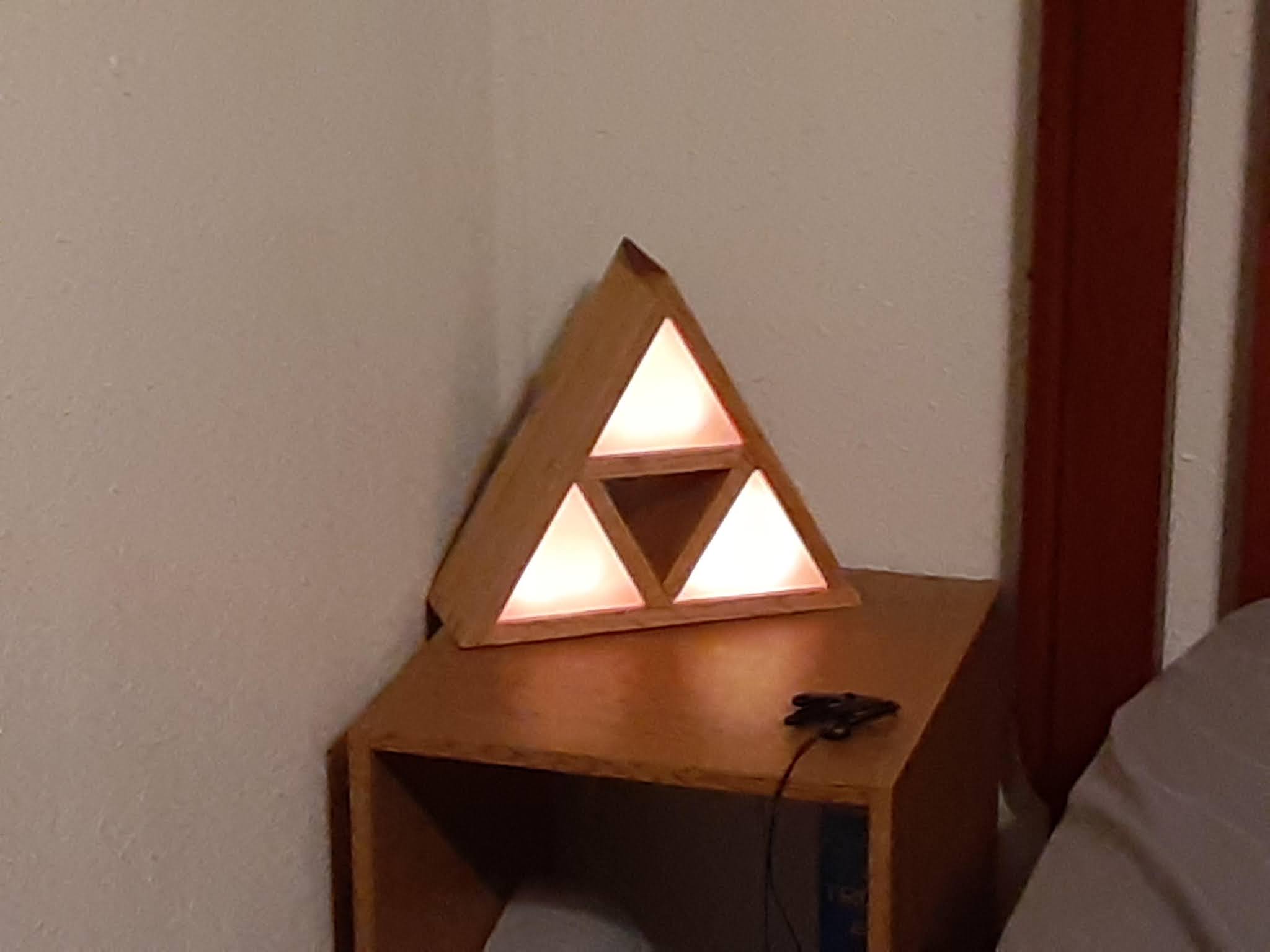
During the Spring 2020 when everything went tits up because of the 'rona, we spent some of the time doing home improvement projects and I decided to make myself a lamp like one I've seen people make on Reddit. Using a piece of oak and some very precise calculations, I got the wood frame all done, then finished it with some plexiglass and rice paper, some LED light strips, and some leftover fabric to make a lamp that can change colors and is dimmable. 

While I enjoyed the 3DS version of Majora's Mask for the updated graphics and portability, there were quite a few changes they made that I wasn't too keen on, such as the Zora swimming nerf and the boss battles. Thankfully, a group of people who know how to patch such things made a patch available for those of us who have custom firmware. It fixes many of the problems that crept into the remake and makes it more like the original N64 version. 

Over the summer, the big thing I was looking forward to was the release of Hyrule Warriors: Age of Calamity. Truth be told, I wasn't the biggest fan of the first game, but this one looked more like Breath of the Wild so I was a little more excited. Avery picked up our copies on release day (along with a keychain). However, it happened to release right when I was in the middle of a few games so I put it off and didn't play it for a few weeks. However, I found myself rather enjoying the game, as Aonuma-san had given Koei Tecmo some direction and insight to making it feel more Zelda-like. This article articulates a lot of what I thought and felt about it


To complement my lamp I made, Brady found a Triforce tree topper on clearance at GameStop and sent it my way. Anne also finished Breath of the Wild just after Christmas 2020, making 19 out of 19 Zelda games completed for her. She practiced her profanity skills and learned some patience along the way, but for now she can claim to have at least completed all of the games (for now). Convincing her to do the spin-offs or 100% them . . . that's a different story. 
[Disclaimer - the information was accurate as of the publication date, but has been made less accurate as future events/developments have happened since publication]

Sunday, April 11, 2021

My final list of changes to Breath of the Wild


It's funny how I hold Breath of the Wild in such high regards while at the same time making the largest list of changes I would make to the game. I think it's because it came so close to absolute perfection that all of these ideas occurred to me. It should be noted that almost all of these are very minor fixes/upgrades.

Quality of Life upgrades - making things involving tedious menus and such easier


  • There ought to be a way to switch whole outfits at once on the quick menu. The down button of the D-Pad could have been used for this instead of whistling for horses, and some other button combo could have been used for whistling. Being able to change between the Climbing Gear with another set that is needed for the environment (like the Fire, Rubber, or Snow sets) would be very convenient. They could make it so the pause menu has 4 slots for whole sets of clothes that can be pre-loaded. I would choose the climbing set, the Barbarian/Fierce Deity set, the stealth set, and then depending if I’m in Zora’s Domain or Goron City, the Zora or Goron set. Alternatively, whole sets could be equipped all at once in the menu (see below for more).
  • The ability to repeat recipes provided the requisite materials were available. Pretty self explanatory. 

  • The ability to arrange weapons/shields/bows/armor/ingredients however you want rather than having 2 auto-sort options. Also self explanatory. 

  • Ability to choose which elements of the HUD to display (like if you want the weather but not the stealth meter) and choices of where to put them on the screen, kinda like how phones give you the ability to choose where widgets go. This would include the stamina meter - I would prefer it go to the right of the life meter and not be attached to Link's person, so to speak.


Systems
  • Making outfits have 4 pieces of clothing (pants, shirt, helmet, earrings/circlet/ring). It would make some of the armors less redundant, and would make mixing/matching combos more interesting. The earrings could be just added elemental bonuses if things like fire/ice/stealth/etc., or have it just add extra armor for sets like the barbarian clothes. 
  • To add to the 4-piece clothing set idea, since the clothing sub-menu is a 5 x whatever grid, once the player has all 4 pieces of clothing the first option in the menu should be to equip all 4 at once, making switching whole armor sets a single button press. So for example, once Link has acquired the Topaz Earrings, Rubber Helm, Rubber Armor, and Rubber Tights, those 4 items should appear on the menu together on the same line, with the 5th slot being a button to put on all four of the shock-resistant pieces on at once.
  • Upgrading armor should come in 2 parts - each one can be upgraded 4 times with its armor rating by infusing it with horns, bones, and other monster parts. It should then have its effect/magic abilities (like stealth, fire resistance, swim speed, etc.) be upgraded 4 times separately with elemental things like the Safflina plants, chuchus, minerals, etc. Since this would effectively double the amount of times each piece of armor is upgraded, I would also give Link the ability to upgrade it several times at once - like to upgrade it from brand new to level 4 armor/level 4 magic could be done in one step if you have the materials to spare. It would make it interesting to have highly effective armor that doesn’t protect against the cold, or vice versa. 

  • The Snow Boots and the Sand Boots should have been part of the Rito/Voe sets so that you don't lose the set bonus when choosing faster travel. The Zora set had non-set bonuses for the hood (better water attack) and the armor (swimming up waterfalls). The ability to run faster in snow/sand could have just been added to the already existing sets, or have it be one of the "effect" upgrades I mentioned in the above paragraph.

  • Add in water, earth, and poison elementals, and make them work in pairs. Fire and Ice weapons/armors/arrows already work great as opposing elements, but there was nothing to serve that function to lightning. I would suggest adding a green earth elemental thing to enemies like Keese/Chuchus/Wizzrobes, and make its corresponding stone be Emerald. Water could be the 5th element and its stone is Opal [already present in the game], then add a purple stone like Amethyst for poison and have it counteract the Water elementals. Let Amber be a non-elemental gemstone that is related to armor.

  • Make some vertical surfaces impossible/harder to climb, kinda like what they did with the shrine walls. Or at least put something that makes climbing look feasible, like vines or a brick texture, on vertical things. 

  • Make the amiibo exclusives unlockable by some other method, however tedious it might be. Rogue Squadron let the player unlock the Naboo Starfighter by either doing 4 perfect tutorials (which takes more than an hour) or by entering a code. Something like this could let players either grind for these outfits or use amiibo. (Note - they actually did do this in Tears of the Kingdom)
  • Add a museum in Link’s house for weapons/clothing or at least more spots to store stuff at home. The “shed” out back could be the entrance to his basement storage or something. Maybe Link can have fewer things to carry around, but have more at some kind of storage facility (like pouches in Skyward Sword). (Note - they did make the sheds explorable in Tears of the Kingdom, but there wasn't anything of note in any of them, unfortunately)

  • Reduce the total number of Korok Seeds to find a bit and up the varieties, with a counter of how many are left in each area (after you find Hestu in the Lost Woods) kinda like the Maiamai map from ALBW. Two additional heart containers for 100 Korok seeds each to motivate finding at least 650 seeds.


Difficulty

  • Get some harder Boss battles, and have 4 harder dungeons (like super shrines) that require at least 15, 30, 45, and 60 completed shrines to get to (kinda like Mario 64’s locked gates) in order to unlock the Master Sword. 
  • Make the beast mode Ganon harder. 

  • Add more enemy variety - mix up some of the enemy camps with some leevers, tektites, goriyas, likelikes, and a few other types, with Iron knuckles and Darknuts in the shrines or super shrines. 

  • Make the Master Sword a requirement to defeat Ganon instead of just a good idea.  I realize that would kill the speedrunning community, but in-universe lore suggests that Link needs it. 


Story/Lore

  • Include a few more memories to flesh out the story a little more. (I originally said this before some of the DLC memories were added, but even more still wouldn’t be a bad idea. Along with that, have some more books lying around stables/broken homes or talk to NPCs to tell some of the lore. Examples of things that could be fleshed out are items such as  who the forgotten sage is, or more on how the Yiga clan happened, and filling in some of the missing history between BotW and any of the other games (and if Age of Calamity weren’t an alternate timeline thing, this spin-off game would have been the perfect vehicle to tell some of the backstory).
  • Have a final mode where no more blood moons happen and Link can eliminate all of the enemies in the game (as sort of a post-game optional quest - it would need some sort of tracker letting you know there are 200 enemies left to kill in the Hebra region or whatever).

  • Add in a couple more small towns (not as elaborate as Hateno or Kakariko – maybe smaller ones more like Lurelin) and another fortress ruins similar to Akkala somewhere where the approach is harder and guarded by enemies.