Showing posts with label Wii. Show all posts

Saturday, July 3, 2021

Playing Habits


When it comes to hobbies, how one participates will fall somewhere along a spectrum between a wide/shallow mode and a narrow/deep style. For example, I have a friend who has what I call “hobby ADD,” because he finds a new obsession and is super into it and excited to talk about it . . . for like 4 weeks. And then he moves on to a new hobby. The end result is that over time he develops a really wide and diverse set of skills/knowledge that can be useful in future endeavors, but it’s not something that he ultimately becomes a true expert/scholar at. The expression, “Jack of all trades, master of none” applies very much in this case.

Meanwhile, I have another friend who has basically 2 things he likes, and if it’s not those two things then he’s not interested in having a conversation. But he is deeply knowledgeable about them and can answer any question about them.

I fall somewhere in between, where I have a couple of things I do deeply and a lot more that I do superficially. But what I want to apply this analogy to is how I played each system in regards to their games. In this case, playing wide and shallow would mean playing/finishing a wide variety of games once or twice, and playing narrow and deep would be playing the same three games many times over.


With the NES, I feel that I played both widely and deeply. There were about two years between the time when the NES was released widely enough to where the populace was aware of it and the time I got one for Christmas, and during that period I was limited to playing at friends’ houses or convincing my mom to rent one (the whole system) for a weekend from a grocery store. Once we got an NES, I felt like I needed to catch up to my friends who had been playing these games for a while. Because we had access to a video rental store (literally 50 yards out my front door) we could easily rent a large assortment of games for $2, so we often did. We also traded with a few friends to get games that required more than a weekend to finish. So between ultimately owning around 15 games, trading with friends, and renting from stores, I ended up getting quite a few titles under my belt in the roughly two years between getting the NES and the SNES, and felt like I hit all of the major games/series in that time. Of course, once I got the SNES I still played the NES but over time it was used less and less.


When it came to the SNES, I was an early adopter which has both advantages and drawbacks. The obvious advantage is that I have access to the new system and can play it to my heart’s content, and that I was now in the enviable position of owning one and my friends would have to come to my house instead of the other way around. However, the disadvantage is that there’s always a limited number of games at launch, and everything is full price (later adopters might get bundles/discounts and have a better selection of games, by contrast). It also means that I only had one friend with whom I could trade games (Jake), and he already had the one that I owned (SMW), but he was nice enough to let me borrow some (like Ultraman) because he trusted me. 

One other disadvantage to early adoption was that it took a while for the rental stores to catch up and have a selection of SNES titles. They were probably a little annoyed that they had to run out and buy licenses/games for a whole new system and might have been a little hesitant to invest the money. So it meant that for the first year or so, I had a very small library and limited options to play other games and had to play the little library I had over and over. But once the SNES caught on and stores had more titles I could expand my horizons a bit. I don’t think I played as many titles on the SNES as I did the NES (paradoxically while owning it for a longer time period before upgrading) but a lot of the games took longer to finish (I’m thinking specifically about Square's RPGs). One thing that hampered my ability to get some things was that I gave up my paper route after the 8th grade, and didn’t have a replacement source of income until just after 9th grade, so for that year I was somewhat limited on my ability to buy/rent stuff on my own. However, I think I definitely got my money’s worth out of that system and while I did miss a few titles (ChronoTrigger and Super Mario RPG come to mind), I was pretty satisfied. I also invested in a few accessories - the Super Scope and the Mouse, and the Ascii Pad.


With the Game Boy there were several limiting factors in play. Firstly, while we weren’t early adopters (meaning that many games were available by the time we got one), there weren’t really a ton of avenues for playing things outside of our personal library. Stores didn’t rent them (I assume because they were too easy to lose/damage) and I only knew of two other friends who had one with something I wanted to play. 

So while the selection was limited, I didn’t feel like I missed out because a good chunk of the Game Boy games were just ports of NES games that are more easily played on the TV (Tetris, RC Pro-Am, Dr. Mario) or slight adaptations of NES games I already had access to (Mega Man games, Kid Icarus). The few that were considered a legitimate entry/sequel (such as Zelda: LA, Metroid 2, SML2: 6GC, etc.) I either owned or got to play from borrowing.

Looking back, I also feel that we played the Game Boys "wrong," meaning that we mostly used them in our house as the consolation prize when someone was already using the TV that had the NES or SNES. We didn't take them on medium length car rides or keep them on our person for when we would encounter situations where they would be useful (like DMVs, waiting rooms, etc.)


The VB isn’t really worth talking about in this conversation. I ended up with 5 games, which is almost 24% of all titles. From that point of view that’s the highest percent of titles per system I own. But I mainly played Mario Tennis, Red Alarm, and Golf. I didn’t have anyone to trade with (literally - I still don’t know anyone else who has one to this day) and there were no rentals.


But starting with the N64, I felt like I got cheated out of some of my investment. Like the SNES, I was an early adopter and was paying for everything myself (at the time I was also collecting comics and cards, which ate into my game budget). It made it difficult to procure the extra controllers (which were a little spendy) and it took rental stores even longer this time to start getting N64 games. The other problem I ran into is that I knew there was a hard date where things would be interrupted. I had my first year of college and a 2-year trip abroad happening about a year after the N64 released. And that 2.5 year gap is right when the N64 hit its sweet spot in terms of good/popular games. So I felt that I was around for the launch and the first wave of decent games, then got to see the final act, but I missed out on a lot of the good stuff in the middle.

While it’s true that there was less 3rd-party support for the N64 so there was a comparatively smaller list of “essential games,” and it's also true that most of the essentials were 1st-party titles, I still can think of about 10 games that I would have bought without question if I had spent those 2.5 years with a job under more, shall we say, "regular," circumstances. In particular, I missed out on Smash Bros, F-Zero X, Paper Mario, Mario Party, some of the Rare titles (Banjo Kazooie/Tooie and Conker's Bad Fur Day) along with the hours of playing time. It also happened to be the last console that there was really any easy way of rentals. Stores stopped renting out to disc-based consoles because discs aren't as robust as cartridges.


Gameboy Advance - This is definitely a narrow and deep one. I mostly used it as a way to play the Zelda Oracle games and as the "Tingle Buddy" for Wind Waker on the GC, at least until I got the GBA Player for the Gamecube. But basically the Oracle games, and Castlevania: Circle of the Moon, X-Men Mutant Apocalypse and Minish Cap. I didn’t have anyone to trade with except Mitch/Brady (who lived 5 hours away) and like normal GB, there were no rentals. There are definitely a bunch of games that I could have bought, but a lot of them were SNES re-releases and other remasters of games I had already played, so their expense couldn't be justified by a college student with a new family. In that way, these SNES remasters were sort of like the NES ports of the original Game Boy that I didn't feel compelled to own. And like the original Game Boy, I also played this handheld "wrong," in that I mainly played it around the house, and only took it outside on longer trips to California for the most part. 


Speaking of being "poor," the Game Cube spanned a lot of the same time period as the GBA and so it had similar issues. We got it about 3 months after it released, which was roughly a year after getting married. This console was relevant during the majority of the time I was attending college and usually also working in some capacity, and also coincided with moving houses, having a couple of kids, and dealing with a lot of responsibilities in the church we were attending. In other words, there were plenty of things that kept us busy and poor, so I couldn’t buy a lot of games, and had to play the ones I did own multiple times when I got the time. So this was definitely a narrow but deep type of play. There were 5 main games I played - Rogue Leader, Wind Waker, Mario Sunshine, Metroid Prime, and the Lego Star Wars games. Near the end of its life, I did get some more games that were used so it looks like I ended up with a good set, but the collection was pretty meager for most of the time it was relevant. I did get to borrow a game from Brady here and there, but there were no rentals that I could find. 


DS - This one's easy. I didn't get one the whole time it was relevant. I only got one after getting a 3DS and it was only because my daughter decided to upgrade her Christmas present of the red Mario DS to a purple 3DS. And I've never owned a DSi (at least until I started collecting systems). 


Wii - This console came near the end of my time at college, so I ended up with a few more games than the Game Cube, but not by many. Besides the Zelda titles, the main things we had were several Guitar Hero games, several Lego games, and a lot of the things like Wii Play/Wii Sports. So it was a bit wider than the previous console, but we had multiple games in the same series. But one thing that I will say is that we had more accessories for the Wii than other systems - multiple Wii remotes (including Motion Plus and Nunchuks), the Wii Fit Board, and guitars for Guitar Hero. Had we not gotten those accessories we could have put the money to at least 4 other full price titles. This is also the first system where we could download digital games and we had a few of those. 

But on the other hand, once I installed Homebrew on the Wii, it breathed a whole new life into it. We used it to play old NES, SNES, and GB/GBC/GBA games that I never got to play as a kid and as an easy way to play the classic games without having to rely on ageing hardware. Overall, I would classify the Wii as more narrow/deep, but it became more wide/shallow with the Homebrew.


3DS - This one started out sort of narrow and deep but it has evolved into a very wide and deep library. I got it roughly a year after release, so there were several decent games I could have gotten, but at first I used it to catch up on the two DS Zelda games (PH and ST), the DX version of Link's Awakening, and Four Swords Anniversary Edition. For a good while it was only those 4 Zelda games. But over time, I would expand the library (and the number of 3DS systems) with enough titles that my 18 game case was full and so were my kids' cases. These included the DS games we got as well as the 3DS games. In the household, we probably have around 40 game cards, which is pretty decent, besides a lot of digital titles. It felt more like the original NES to me in that we had a lot of the "must haves" and plenty of other games so it's a wide and deep console for me. This console also happened to hit its heyday right when I started earning more money and we were more financially stable, so I was willing to spend a little more money. 

Additionally, when we got Homebrew on our 3DS systems, it opened up avenues to easily play a lot of the retro games without needing to drag the GBA and a case of cartridges around. I still play it quite a bit and hope to keep doing so. 


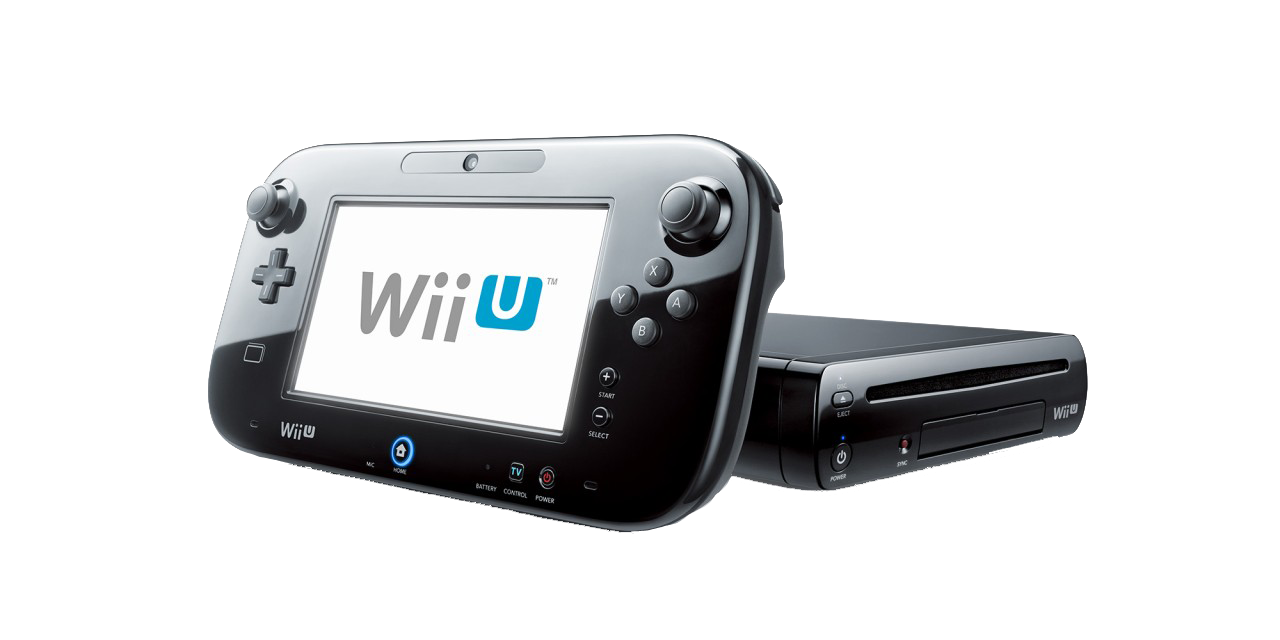
Wii U - In contrast to the 3DS, this one is both narrow and shallow. I actually have like 4 physical games for it that I've never played, and several more digital games that I haven't touched. I mainly used it for the two Zelda HD remakes and playing the Metroid Prime Trilogy. My kids played Smash and Mario Kart 8 on it quite a bit, as well as a few other games, but it wasn't nearly as used as all the other systems we have had. 


The Switch is interesting in that I have played a few games (mainly Breath of the Wild and Octopath) quite deeply but I have also bought quite a lot of digital titles when they were on sale. Many of these games I have only played through once and probably won't pick them up again, but I was glad to have played them. During the NES/SNES days, I purchased games I knew to have replay value and rented the rest. As there are no rentals these days, what it's become is waiting for a game to go on sale for $5 and buy it digitally. I figure that's what a rental probably would have cost, except that I actually get to keep it. So instead of looking at my library with sadness that I spent money on games I'll never play again, I see it as a long term rental with the option to play it again should I choose to. 


Thursday, July 13, 2017

My Experience with the Wii


I wasn’t exactly planning on getting the Wii on launch day for a few reasons. There wasn’t a “killer app” that I really needed or wanted, and I felt like I hadn’t put as much time into the GameCube, but it was mainly because funds were low. I was in college and we were surviving on my student loans and my wife’s paper-route wages, and slowly adding debt to a credit card but then paying it off every year with our tax return. My friend Michael emailed me about how excited he was for the new system (back when it was going to be called The Revolution). Launch day came and went and I wasn’t too concerned about it. I was more focused on my take-home math final that was going to be rather difficult (thanks, Dr. Ghoreishi).

But we went to visit my parents for Thanksgiving, and I decided it would be fun to wait with my brother at GameStop for Black Friday (roughly 5 days after the official launch). The word on the street was that they’d have a few to sell. We were numbers 3 and 4 in line, and it was frickin’ freezing. I tried to work on my math but it was too cold to write or for the batteries in my calculator to work properly. My high school friend and former roommate Edgar showed up a few hours later and was number 6 in line. At some point, I just decided to get one despite telling Anne that I wasn’t going to. I figured if we decided we couldn’t afford it or didn’t really want it after playing Brady’s, I’d sell it for a little profit. When the store finally opened, the guy told us he had 5 Wiis in stock. Brady and I each bought one. Edgar was out of luck, unfortunately; but I told him that if we decided not to keep ours I’d sell him the one I bought. We both also bought Twilight Princess, which was the real reason I wanted a Wii.

We took it home and I kept mine in the car. Brady hooked his up to the upstairs TV and we started trying out Wii Sports. After a few hours, Anne asked if I liked it and wanted to get one. I answered in the affirmative, and she gave me permission, thinking that Wiis would be sold out for the next couple of months. I nonchalantly went out to the car and got mine and brought it in to show her how I’d outsmarted her. But I only really opened it for the Wii Remote and Nunchuk so Brady and I could try out 2-player boxing.

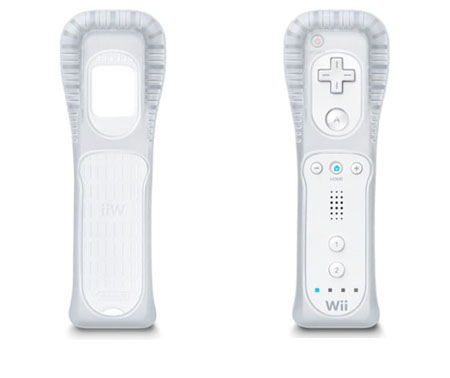
The Wii kinda became a minor cultural phenomenon, and several prominent videos showing people losing grip on the Wiimote and shattering TVs or light fixtures caused a little concern. Nintendo responded by making rubber jackets available (for free) which cushion the front of the Wiimote and add grip to it. I ordered 4 of them anticipating having 4 Wiimotes in the near future.


(the one I had was slightly different)
I really wanted to hook up the Wii to the internet. We didn’t have a wireless router at the time, so I was looking for some cheaper alternatives (see aforementioned poor, starving college student sob story). We ended up trying the Nintendo Wi-Fi connection USB dongle. It required the computer to be on, dongle plugged in, and the stars to be in the correct alignment. The reliability of it was bad, and the probability of it working the first time each use was pretty low. Whenever I wanted to use some kind of connectivity it was usually at least 10 minutes before I could be up and running. Eventually we just bought a regular router that also had wireless capability because I was going to hook up 2 computers to each other. Since then there have been very few problems with it or other systems being online.

For the next couple of months, I scoured the local stores for a second Wiimote, and was having serious flashbacks of what happened with the N64’s initial controller shortage. I could find the plastic controller attachments everywhere (that made them feel like a racquet or bat), but not the Wiimotes themselves. Eventually I got wind of ShopKo getting a small shipment and secured one. A while later I was able to buy its accompanying Nunchuk. We didn’t have any games that were more than 2 player at the time, so this was fine. Later I would buy Wii Play in order to get more small games that Avery and Aurora could easily play (sorta like what Wii Sports was) but mostly to get another Wiimote, bringing the total to 3.

At nights when Anne and the kids were in bed, I would play around with the Wii’s settings, menus, and channels to see how everything worked. I would browse the News Channel and really liked the global way it showed the stories. The Weather Channel wasn’t as interesting, but I mostly liked it for the quick forecast it would give on the home screen. Once the Check Mii Out channel was released, I used it mainly to make a lot of celebrity Miis by copying what everyone else had already done. I messed around with some of the other channels (Internet, YouTube, Everybody Votes, Nintendo) but ultimately the only ones I really used were the Disc Channel (to play games) and the shopping channel (not that I bought a ton of stuff from it – I just liked to browse).

We ended up getting a few games for the Virtual Console, including Zelda 1, Zelda 2, Metroid, and Mario Kart 64. In order to play 4 player Mario Kart, we bought some white 3rd-party GameCube controllers from Family Dollar for cheap. We also got some demos and a few other things like Metroid Prime 3 previews.


I loved watching Avery and Aurora play the boxing game in Wii Sports. Avery would try to block and time his punches, but Aurora would just thrash the controllers around and usually win. I was even able to get my grandma to play the baseball game with Avery a year or so before she died.


At some point later, we bought a third Nunchuk. We eventually also got Wii Play Motion, which came with a Motion Plus extension and a longer jacket. We also bought a separate Motion Plus attachment so we had 2 that could do that. Finally we got a fourth Wiimote with Wii Sports Resort, but this one was black and it had the Motion Plus built into it. I used a RC Willey gift card to get Avery’s birthday present (Zelda: OoT3D and used the remaining bit to get a black Nunchuk to go with it. At last we had 4 complete sets and could do 4 player things (unless it required Motion Plus). Later when I got a second Wii for hacking purposes, I made one of the older Wiimotes (which didn’t work as well) the main controller for the second Wii, and replaced it with another black Wiimote with built in Motion Plus.

For some reason, the Wii started being loud when in use. From the internet I got some suggestions of what to do, so I took it apart and tightened some screws to fix it. That seemed to solve the issue for a while, but later it stopped reading discs altogether. We sent it in for repairs, but they just replaced it so we lost all the save data (including my perfect game of bowling, grrr). I should have learned to just fix it myself. 

We got Link’s Crossbow Training for Christmas a year later, which was a Zelda-themed on-rails arcade style shooter that came with an attachment to make the Wiimote feel like a real crossbow. And, of course, when it came out in November of the next year, we got The Legend of Zelda: Skyward Sword, but I had to wait until Christmas to play it. Anne wouldn't even let me rip the music CD that came with it to mp3 beforehand. 


After playing Guitar Hero at my friend James’ house, I really wanted it so we got Guitar Hero 3. All of us played it and loved it. Later we would get Guitar Hero Aerosmith (at midnight on launch no less to take advantage of a discount) so we could do 2 players as well as have more songs. Later we would buy a used disc of Guitar Hero 4 for more songs (even though we didn't have the drums or microphone). 

We had some friends/neighbors down the street that had boys the same age as Avery, and so we hung out occasionally. We played couples Mario Party 8, as well as Guitar Hero 3 with them. 

Another peripheral we got was the Wii Fit Board – a pressure sensitive board to assist with games that dealt with fitness, balance, and yoga. 


Some neighbor kids Anne was watching brought over New Super Mario Bros Wii and played it with our kids, and afterwards they just HAD to have it, so my kids spent their money they had saved up to get it. Unfortunately, Logan ended up breaking our copy of the game. He was being careless and stepped on it (I think), so we had to use his money to buy a used replacement copy.


Some of the other games we got over the years were several of the Lego games (Batman, Indiana Jones, and Harry Potter), a Ben 10 game for Avery (who was into the cartoon, but the game was less than mediocre), Super Mario Galaxy, and Goldeneye 007 - a modern remake of the classic N64 game but with pointer controls, though I didn't play it very much. We got some other games used from Gamestop that were just discs (no cases) that we still haven't played, but they were only a buck or two. 


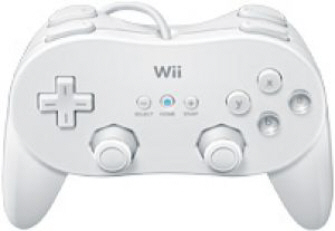
Once Nintendo announced that they were no longer updating the Wii’s firmware, I felt ok about doing a little hacking. With the help of Brady, I installed the HomeBrew Channel and then I had access to pretty much any NES, GB, GBC, GBA, SNES, and N64 game from a menu. To facilitate playing the older games I bought a used white Classic Controller from a used gaming store called Gamer’s Asylum in town.

The HomeBrew Channel was so cool that I ended up buying a second Wii from eBay that did not read discs (purposefully as that would make it cheaper). I again hacked it and now have it hooked up to our secondary TV. We also got a Classic Controller Pro to go with it so that playing all these games felt more like the original. I also did the same for my brother Mitch for a birthday present for him. On a trip to Oregon I also hacked my brother Matt’s Wii for his family, and then Chad also bought one to be hacked, so we all have hacked Wiis that are used for playing older games.


Once the Wii U came around, a lot of people upgraded and transferred their Wii stuff to the Wii U. I didn’t, as I planned on keeping both systems. But since both used Wiimotes, I originally designated that the black ones be used for the Wii U (since mine was black) and the white ones be left for the Wii. But we have to pair them back and forth because the kids will play 3- and 4-player games on both still. 


The Wii

In the years leading up to 2006, Nintendo had been trying to maintain a balance between being kid/family friendly while appealing to more serious gamers with the GameCube, and the strategy hadn’t been working so well. So when the next round of consoles came around, Nintendo had a little trick up their sleeve. Instead of merely beefing up the number of polygons, the frame rate, and sound quality, they decided instead to change the way games are played.

Originally code-named The Revolution, the new innovation was the motion controller that resembled a TV remote more than a traditional game controller. The console would be renamed Wii, as a way of implying that it was meant for multiple players. Other than using standard sized DVDs as game media, the Wii wasn’t a huge upgrade over the previous Nintendo console in terms of graphics and sound. Overall, it was about 1.5 times as powerful as the GameCube, which seemed paltry compared to the other Seventh Generation consoles that boasted 7 or 8 times the power of their predecessors. Like other consoles of the era, it came with a stand to put it upright, but could also be placed horizontally if preferred. Its size was about the same size as 3 standard plastic DVD cases stacked together. 

The console had 3 buttons on the front face. One for power (though it's far easier to turn it off and on with the Wii Remote), one to eject a disc, and one to reset the system. A small flap near the disc slot concealed an SD card slot as well as a red button to sync a Wii Remote to the system.

The top (when standing upright) had 2 panels that hid GameCube parts. The larger panel has 4 GameCube controller ports, while the smaller panel has 2 slots for GameCube memory cards. The rear of the console featured the standard A/V cord port (though the connector is different from the previous three consoles), a power cable port, and 2 USB ports for future accessory use, which can be used to connect an external hard drive to store additional games. 

But the real story was the controller, called the Wii Remote (or as many call it, the Wiimote). Compared to most controllers, it featured fewer buttons but included both motion controls and point/click functionality. When held normally, the A button is easily accessed by the thumb and the B button on the bottom can be pressed by the index finger (similar to the Z button on an N64 controller). With a little reach, the thumb can get to the D-Pad, the +, Home, and – buttons, and with a bigger reach, the 1 and 2 buttons on the bottom. But the layout prevents pressing more than one button at a time with the thumb, usually. The other button is the power button, so the console can be turned off and on easily. The Wiimote communicates with the console via BlueTooth radio frequencies so it is completely wireless.

Besides the AV and power cables, the Wii comes with a wired sensor bar that is placed either above or below the TV. It functions as a simple IR signal for the Wiimote’s sensor to read to make pointing possible. Interestingly, while most people think the sensor bar is tracking the Wiimote, it’s actually the other way around. Early adopters experimented with the Wii and found that 2 ordinary wax candles (under the right lighting conditions) can replace the sensor bar. The point and click aspect of the Wii made navigating menus very easy, and enabled games that used to have a Light Gun feature (like arcade on-rail shooters or Duck Hunt) to work, but with much greater precision.

The Wiimote also had built-in rumble features as well as a speaker, allowing for some additional audio features. Lights at the bottom of the Wiimote would indicate which Player 1, 2, 3, or 4. Any Wiimote could be paired with any console by a simple push of a pairing button on the console and a similar button near the batteries of the Wiimote.

At the bottom of the controller is a port where an extension can be plugged in. Included with the Wiimote is the Nunchuk extension – a wired secondary controller for the left hand that added 2 more buttons (C and Z) as well as a control stick. The Nunchuk could also detect some motion as well. The Wiimote can also be held sideways and it effectively becomes an NES controller, with the + and – buttons replacing the Start and Select buttons. Several games used this configuration as the default.


Sold separately was the Wii Classic Controller, a controller that was similar to a SNES controller but with 2 control sticks (à la the PS2 controller) and 2 additional buttons (ZL and ZR). It connected to the end of the Wiimote with a cord just like the Nunchuk. Later the Wii Classic Controller Pro was released – basically the same idea but it had GameCube-style grips on the side for easier handling.

One new feature for a Nintendo console was the Home Button, which was similar to the “Back” button on an iPhone. It allowed players to instantly pause any game and access online instruction manuals, check battery power, or close the software to access the Wii Menu. While the GameCube had a built-in menu (which could be accessed by either starting the system with no game or by holding Z), beyond the initial set up it was rarely needed or used. However, the Wii had a home menu array with various “channels” that could be arranged in any order (except for the Disc channel).

The Disc Channel was for whatever game was inserted currently (and shows an animated disc being inserted). Included were the (Weather) Forecast Channel and the News Channel, where players could access weather and news updates by clicking around a globe (provided the Wii was connected via Wi-Fi). The Mii Channel is used to create a Mii, a personalized Avatar for use in some games, and the Photo Channel is used to display photos on the SD card, effectively making it a photo slideshow program (the photos would have had to have been transferred to the SD card via PC before use, or some games allowed screenshots to be saved to the SD card). The Shopping Channel allowed players to buy Virtual Console games – NES, SNES, and N64 games that were emulated by the Wii, and even some demos or preview videos. Another kind of game software, WiiWare, are games specifically designed for the Wii (including many by indie developers) was available and was similar to the DSiWare games. Additional channels were made available in subsequent updates, like the Everybody Votes channel where users voted on preferences, the Check Mii Out Channel where popular Miis of celebrities are displayed, or the Internet Channel which featured a version of the Opera web browser. Later additional features such as Netflix and other channels were added.

The system featured internal memory for game saves and software updates, making buying memory cards unnecessary for storing regular game save files or smaller sized downloaded content. It also had an SD card slot to expand additional memory (if needed) or to transfer data saves between systems. If the SD card happened to have photos taken by a digital camera or transferred via PC, they could also be displayed on the screen for audiences in the Photo Channel.

This was the first Nintendo console to feature Parental Controls, as well as a daily record keeping function of which games were played and for how long.  It was also the first Nintendo home console to feature online connectivity via Wi-Fi. As Wi-Fi was somewhat new, Nintendo offered a USB dongle (purchased separately) to give those without standard Wi-Fi routers online capabilities for both the Wii and the DS with minimal hook-up hassle. The online features weren’t as robust as other consoles on purpose to curb unethical/immoral involving kids, who were the primary audience.

Around the disc port was a blue LED that indicated that some new message had been received, there was an update to a game, or some other system notification needed to be addressed. The Wii also had a friend system to allow "Wii-Mail" messages to be sent between each other or send screenshots. In-game accomplishments were also saved and displayed using this Wii-Mail feature. Each Wii had a unique 20-character code that needed to be exchanged and entered by both parties for it to work - something Nintendo did to prevent online predators from gaining access to kids, though this didn't prevent people from exchanging them over the internet. 

Bundled with the system was Wii Sports (at least in North America), which was more of a tech demo really, but still very fun and included simple versions of Golf, Baseball, Tennis, Bowling, and Boxing. There were a few other games available at launch, but the biggest one was The Legend of Zelda: Twilight Princess.

The Wii featured GameCube backwards compatibility and had 4 GC controller ports and 2 memory card slots hidden under panels on the top of the console (assuming it’s in the upright position). Because it was essentially running as a separate console inside of the Wii, the Wii Menu features and use of Wiimotes weren’t available when playing a GC title. Later versions of the Wii omitted these features to save on cost and size.


After a few weeks of people losing grip on the Wiimote and smashing their TV or light fixtures, Nintendo released a new rubber jacket and thicker wrist strap to protect both the Wiimote and household furnishings. They were given away for free via Nintendo’s Website. 


Additional Wiimote accessories could be purchased, such as the Sports Pack – plastic shells that made the Wiimote feel more like a tennis racket, baseball bat, or golf club. Others were the Mario Kart steering wheel or the Link’s Crossbow Training Crossbow. While these weren’t necessary, it added to the charm of the Wiimote.


Along with Wii Sports, the “Wii” series included Wii Sports Resort (a deeper and more robust version of the original), Wii Music, Wii Play & Wii Play Motion (both came with either an additional Wiimote or the Motion Plus adapter), and Wii Fit. Wii Fit came with a balance board and was designed as a light work-out and Yoga tutor game to help keep people in shape. For the first time, games were being used to get people active instead of on the couch without buying extra equipment (like a DDR pad, for example).


Later Nintendo would release an update to the hardware – the Wii Motion Plus. It allowed for greater precision in controlling things. Not pictured is the extended rubber jacket that it comes with. Originally it was a small add-on to the bottom of the Wiimote, extending its length a little (it included a pass-through port for a Nunchuck so it didn’t lose the external controller functionality). It locked in the back to prevent it from falling off. Soon all Wiimotes were manufactured in normal size with this additional feature built-in.


The Wii was a hit and quickly became something of a cultural phenomenon. It was the best selling console of its generation because it was more modestly priced than the others, but mostly because it captured the casual gamer market better. For example, grandparents and other traditionally non-gamers could pick up a Wiimote and play tennis without having to learn complicated button schemes. In response to the success of the Wii, Microsoft released the Kinect, while Sony released the Playstation Move Motion, neither of which really captured the market the way the Wii did. While it was a "normal" gaming console that could play regular games like Call of Duty and Guitar Hero and had all the other functions of a console, many of the older generation only used it to play Wii Sports and probably didn't realize that it did more than that. Hardcore gamers look back on the Wii as a toy with gimmicky motion controls, but Nintendo’s dedication to innovative ways to play games has lived on in various formats through the Wii U, the Switch, and even in some motion control features in controllers for other consoles. 


Some years after the original release, two different revisions of the Wii were made. The first was called the Wii Family Edition, which was intended to lay horizontally and had the GameCube ports and functionality removed with a lowered price. Two years later it was made smaller with the Wii Mini, which had a flip-top lid similar to the GameCube as a bargain for people who hadn't had a Wii during its seven year lifespan. It is noteworthy that this came out a year after the debut of the Wii U.