Showing posts with label SNES. Show all posts

Sunday, November 13, 2022

Regional Differences in Hardware (Part 2)


Regional Differences in Games (Part 1)


The Famicom and the NES

Though they played many of the same games, the Famicom and the NES were very different consoles for a variety of reasons. The Famicom was first released in Japan in 1983 as Nintendo’s first console that wasn’t a Pong clone console. It was fairly small in size and featured a maroon and white color scheme. The controller cords were short and hardwired to the rear of the system, and could be stored on the side of the console when not in use. The second controller had a microphone and volume slider instead of a set of Start and Select buttons. The power button slid forward and back, and the cartridge slot had a small flap to cover it which needed to be manually moved. There was a serial port on the front which was used for attaching the light gun and other accessories. Cartridges were plugged into the top of the system, just like the Atari and all consoles had been up till that point, and the carts came in many colors. The Famicom also had an Eject slider that popped the cartridges up.

The Disk System add-on was released in Japan just as the American NES was barely hitting shelves in the West. Though disk-based games added loading times, it also included the ability to save files and have bigger games with more content. It plugged into the cartridge slot of the Famicom and actually added an additional sound channel.


By contrast, the American version came out over 2 years later, so Nintendo redesigned the system to appeal to American consumers and made a few changes to the hardware. For starters, the whole system was changed to be a front-loading console to resemble a VCR in order to make it seem less like a video game machine (which included making the cover flap angled) and changing the color scheme to grey and black. The cartridges were also uniformly grey (except for unlicensed games and both Zelda games). The redesign also entailed reconfiguring the motherboard and making a few convenient upgrades. A lockout chip was added to combat piracy, composite video and audio ports were added to the RF Switch A/V port, and the controllers were made to be removable and their cords lengthened. The power switch was changed to a push-click button and an LED was added. An expansion port was built into the motherboard and could be accessed from the bottom of the system, but it was never used. Instead of having a disk-based peripheral, cartridges with expanded memory capabilities and battery backups were used instead.


The Super Famicom and the SNES


In late 1990, the 16-bit successor to the Famicom was released in Japan – the Super Famicom. And only 9 months later, North America was basking in the 16-bit graphical glory of the SNES, which was a much smaller span of time than the Famicom-NES gap. The regional differences make a rather short list. Internally, the motherboards were identical, and all of the differences were purely cosmetic changes to the outer shell of the system. In fact, the only thing stopping American and Japanese players from using each other’s games (besides the inability to read
a foreign language and the difficulty of obtaining them via mail in a pre-internet era) was the physical shape of the cartridge. Games from other regions could be played by either removing the ROM board from the cartridge and inserting it directly, or by removing the small plastic bumps surrounding the cartridge port.


The Super Famicom’s four controller buttons were all convex and colored with red, blue, green, and yellow. By contrast, the SNES featured two lavender and two purple buttons, with the lavender ones being concave to have a different tactile feel. The rest of the differences in the systems were just the particular shape and coloring in the hunk of plastic surrounding the main board.


The Nintendo 64

Finally, by 1996, the Nintendo 64 was released in North America only 3 months behind the Japanese date, and the only difference between the consoles was the position of two pieces of plastic that straddled the cartridge slot. This form of physical region locking was easily defeated by pliers back in the day, and now can be overcome with a $7 tray ordered from eBay that replaces the stock version in a 5-minute mod job. From this point onward, there have been basically no regional differences and the only thing preventing cross-region gaming is a software lock.


Saturday, July 3, 2021

Playing Habits


When it comes to hobbies, how one participates will fall somewhere along a spectrum between a wide/shallow mode and a narrow/deep style. For example, I have a friend who has what I call “hobby ADD,” because he finds a new obsession and is super into it and excited to talk about it . . . for like 4 weeks. And then he moves on to a new hobby. The end result is that over time he develops a really wide and diverse set of skills/knowledge that can be useful in future endeavors, but it’s not something that he ultimately becomes a true expert/scholar at. The expression, “Jack of all trades, master of none” applies very much in this case.

Meanwhile, I have another friend who has basically 2 things he likes, and if it’s not those two things then he’s not interested in having a conversation. But he is deeply knowledgeable about them and can answer any question about them.

I fall somewhere in between, where I have a couple of things I do deeply and a lot more that I do superficially. But what I want to apply this analogy to is how I played each system in regards to their games. In this case, playing wide and shallow would mean playing/finishing a wide variety of games once or twice, and playing narrow and deep would be playing the same three games many times over.


With the NES, I feel that I played both widely and deeply. There were about two years between the time when the NES was released widely enough to where the populace was aware of it and the time I got one for Christmas, and during that period I was limited to playing at friends’ houses or convincing my mom to rent one (the whole system) for a weekend from a grocery store. Once we got an NES, I felt like I needed to catch up to my friends who had been playing these games for a while. Because we had access to a video rental store (literally 50 yards out my front door) we could easily rent a large assortment of games for $2, so we often did. We also traded with a few friends to get games that required more than a weekend to finish. So between ultimately owning around 15 games, trading with friends, and renting from stores, I ended up getting quite a few titles under my belt in the roughly two years between getting the NES and the SNES, and felt like I hit all of the major games/series in that time. Of course, once I got the SNES I still played the NES but over time it was used less and less.


When it came to the SNES, I was an early adopter which has both advantages and drawbacks. The obvious advantage is that I have access to the new system and can play it to my heart’s content, and that I was now in the enviable position of owning one and my friends would have to come to my house instead of the other way around. However, the disadvantage is that there’s always a limited number of games at launch, and everything is full price (later adopters might get bundles/discounts and have a better selection of games, by contrast). It also means that I only had one friend with whom I could trade games (Jake), and he already had the one that I owned (SMW), but he was nice enough to let me borrow some (like Ultraman) because he trusted me. 

One other disadvantage to early adoption was that it took a while for the rental stores to catch up and have a selection of SNES titles. They were probably a little annoyed that they had to run out and buy licenses/games for a whole new system and might have been a little hesitant to invest the money. So it meant that for the first year or so, I had a very small library and limited options to play other games and had to play the little library I had over and over. But once the SNES caught on and stores had more titles I could expand my horizons a bit. I don’t think I played as many titles on the SNES as I did the NES (paradoxically while owning it for a longer time period before upgrading) but a lot of the games took longer to finish (I’m thinking specifically about Square's RPGs). One thing that hampered my ability to get some things was that I gave up my paper route after the 8th grade, and didn’t have a replacement source of income until just after 9th grade, so for that year I was somewhat limited on my ability to buy/rent stuff on my own. However, I think I definitely got my money’s worth out of that system and while I did miss a few titles (ChronoTrigger and Super Mario RPG come to mind), I was pretty satisfied. I also invested in a few accessories - the Super Scope and the Mouse, and the Ascii Pad.


With the Game Boy there were several limiting factors in play. Firstly, while we weren’t early adopters (meaning that many games were available by the time we got one), there weren’t really a ton of avenues for playing things outside of our personal library. Stores didn’t rent them (I assume because they were too easy to lose/damage) and I only knew of two other friends who had one with something I wanted to play. 

So while the selection was limited, I didn’t feel like I missed out because a good chunk of the Game Boy games were just ports of NES games that are more easily played on the TV (Tetris, RC Pro-Am, Dr. Mario) or slight adaptations of NES games I already had access to (Mega Man games, Kid Icarus). The few that were considered a legitimate entry/sequel (such as Zelda: LA, Metroid 2, SML2: 6GC, etc.) I either owned or got to play from borrowing.

Looking back, I also feel that we played the Game Boys "wrong," meaning that we mostly used them in our house as the consolation prize when someone was already using the TV that had the NES or SNES. We didn't take them on medium length car rides or keep them on our person for when we would encounter situations where they would be useful (like DMVs, waiting rooms, etc.)


The VB isn’t really worth talking about in this conversation. I ended up with 5 games, which is almost 24% of all titles. From that point of view that’s the highest percent of titles per system I own. But I mainly played Mario Tennis, Red Alarm, and Golf. I didn’t have anyone to trade with (literally - I still don’t know anyone else who has one to this day) and there were no rentals.


But starting with the N64, I felt like I got cheated out of some of my investment. Like the SNES, I was an early adopter and was paying for everything myself (at the time I was also collecting comics and cards, which ate into my game budget). It made it difficult to procure the extra controllers (which were a little spendy) and it took rental stores even longer this time to start getting N64 games. The other problem I ran into is that I knew there was a hard date where things would be interrupted. I had my first year of college and a 2-year trip abroad happening about a year after the N64 released. And that 2.5 year gap is right when the N64 hit its sweet spot in terms of good/popular games. So I felt that I was around for the launch and the first wave of decent games, then got to see the final act, but I missed out on a lot of the good stuff in the middle.

While it’s true that there was less 3rd-party support for the N64 so there was a comparatively smaller list of “essential games,” and it's also true that most of the essentials were 1st-party titles, I still can think of about 10 games that I would have bought without question if I had spent those 2.5 years with a job under more, shall we say, "regular," circumstances. In particular, I missed out on Smash Bros, F-Zero X, Paper Mario, Mario Party, some of the Rare titles (Banjo Kazooie/Tooie and Conker's Bad Fur Day) along with the hours of playing time. It also happened to be the last console that there was really any easy way of rentals. Stores stopped renting out to disc-based consoles because discs aren't as robust as cartridges.


Gameboy Advance - This is definitely a narrow and deep one. I mostly used it as a way to play the Zelda Oracle games and as the "Tingle Buddy" for Wind Waker on the GC, at least until I got the GBA Player for the Gamecube. But basically the Oracle games, and Castlevania: Circle of the Moon, X-Men Mutant Apocalypse and Minish Cap. I didn’t have anyone to trade with except Mitch/Brady (who lived 5 hours away) and like normal GB, there were no rentals. There are definitely a bunch of games that I could have bought, but a lot of them were SNES re-releases and other remasters of games I had already played, so their expense couldn't be justified by a college student with a new family. In that way, these SNES remasters were sort of like the NES ports of the original Game Boy that I didn't feel compelled to own. And like the original Game Boy, I also played this handheld "wrong," in that I mainly played it around the house, and only took it outside on longer trips to California for the most part. 


Speaking of being "poor," the Game Cube spanned a lot of the same time period as the GBA and so it had similar issues. We got it about 3 months after it released, which was roughly a year after getting married. This console was relevant during the majority of the time I was attending college and usually also working in some capacity, and also coincided with moving houses, having a couple of kids, and dealing with a lot of responsibilities in the church we were attending. In other words, there were plenty of things that kept us busy and poor, so I couldn’t buy a lot of games, and had to play the ones I did own multiple times when I got the time. So this was definitely a narrow but deep type of play. There were 5 main games I played - Rogue Leader, Wind Waker, Mario Sunshine, Metroid Prime, and the Lego Star Wars games. Near the end of its life, I did get some more games that were used so it looks like I ended up with a good set, but the collection was pretty meager for most of the time it was relevant. I did get to borrow a game from Brady here and there, but there were no rentals that I could find. 


DS - This one's easy. I didn't get one the whole time it was relevant. I only got one after getting a 3DS and it was only because my daughter decided to upgrade her Christmas present of the red Mario DS to a purple 3DS. And I've never owned a DSi (at least until I started collecting systems). 


Wii - This console came near the end of my time at college, so I ended up with a few more games than the Game Cube, but not by many. Besides the Zelda titles, the main things we had were several Guitar Hero games, several Lego games, and a lot of the things like Wii Play/Wii Sports. So it was a bit wider than the previous console, but we had multiple games in the same series. But one thing that I will say is that we had more accessories for the Wii than other systems - multiple Wii remotes (including Motion Plus and Nunchuks), the Wii Fit Board, and guitars for Guitar Hero. Had we not gotten those accessories we could have put the money to at least 4 other full price titles. This is also the first system where we could download digital games and we had a few of those. 

But on the other hand, once I installed Homebrew on the Wii, it breathed a whole new life into it. We used it to play old NES, SNES, and GB/GBC/GBA games that I never got to play as a kid and as an easy way to play the classic games without having to rely on ageing hardware. Overall, I would classify the Wii as more narrow/deep, but it became more wide/shallow with the Homebrew.


3DS - This one started out sort of narrow and deep but it has evolved into a very wide and deep library. I got it roughly a year after release, so there were several decent games I could have gotten, but at first I used it to catch up on the two DS Zelda games (PH and ST), the DX version of Link's Awakening, and Four Swords Anniversary Edition. For a good while it was only those 4 Zelda games. But over time, I would expand the library (and the number of 3DS systems) with enough titles that my 18 game case was full and so were my kids' cases. These included the DS games we got as well as the 3DS games. In the household, we probably have around 40 game cards, which is pretty decent, besides a lot of digital titles. It felt more like the original NES to me in that we had a lot of the "must haves" and plenty of other games so it's a wide and deep console for me. This console also happened to hit its heyday right when I started earning more money and we were more financially stable, so I was willing to spend a little more money. 

Additionally, when we got Homebrew on our 3DS systems, it opened up avenues to easily play a lot of the retro games without needing to drag the GBA and a case of cartridges around. I still play it quite a bit and hope to keep doing so. 


Wii U - In contrast to the 3DS, this one is both narrow and shallow. I actually have like 4 physical games for it that I've never played, and several more digital games that I haven't touched. I mainly used it for the two Zelda HD remakes and playing the Metroid Prime Trilogy. My kids played Smash and Mario Kart 8 on it quite a bit, as well as a few other games, but it wasn't nearly as used as all the other systems we have had. 


The Switch is interesting in that I have played a few games (mainly Breath of the Wild and Octopath) quite deeply but I have also bought quite a lot of digital titles when they were on sale. Many of these games I have only played through once and probably won't pick them up again, but I was glad to have played them. During the NES/SNES days, I purchased games I knew to have replay value and rented the rest. As there are no rentals these days, what it's become is waiting for a game to go on sale for $5 and buy it digitally. I figure that's what a rental probably would have cost, except that I actually get to keep it. So instead of looking at my library with sadness that I spent money on games I'll never play again, I see it as a long term rental with the option to play it again should I choose to. 


Monday, August 17, 2015

The Super Game Boy


The Super Game Boy was an adapter that let users play Game Boy games on the SNES. It was great for a few reasons.

Firstly, playing it on a TV obviously gave it a bigger screen. Multiple people could watch without crowding. Plus, it was lit up instead of needing sunlight or good indoor light to see so it was easy to play at night or in the dark.

Secondly, and this was probably the biggest advantage, is that the SNES controller was easier to hold than the Game Boy. For those with larger hands, finding a comfortable way to hold the vertically oriented Game Boy without overlapping fingers was difficult. Plus, it was possible to change the button orientation to \ instead of / . That might not seem like a big deal, but it’s much more comfortable to get both buttons with a single thumb.

Thirdly, adding color just made them seem better. It removed the “puke green” background, and colorizing them almost (sorta) made them seem like a regular NES game.

Every game could be given 4 different colors, since the Game Boy could display black, 2 shades of gray, and white (meaning clear, or where no dot was displayed). There were 32 preset palettes, or users could customize their own. Some of the other features like custom borders, animated borders, and being able to draw added some nice touches, albeit unnecessary ones for gameplay.


To duplicate the correct dimensions of the GB, the SGB didn’t display games in full screen. Instead, it had a border around the game. The default border looked like a Game Boy, but there were about 8 other choices. If left alone for long enough, the borders became animated.

At this point, there were 3 kinds of Game Boy games:

Type 1: Regular, ordinary, 3rd party games - of which there were literally hundreds (like Mortal Kombat, Castlevania: The Adventure or Pac-Man).

Type 2: Regular games that Nintendo knew were popular, in-house games made by Nintendo themselves (like Kid Icarus, Kirby, or Yoshi). The list of these games is probably fewer than 40 games.

Type 3: Games that were specifically optimized for the Super Game Boy (like Donkey Kong ‘94 or Space Invaders).


For normal games (type 1), after the SGB booted up, the game played like normal. The SGB selected the default palette, which had black, white, and two shades of orange. Once the game loaded, additional palettes could be selected, or one could be custom created. Some of the pre-made palettes had higher contrast or specific combinations (blue/red or green/brown, etc.) and most had some shade of white and black.


For games like Type 2, the SGB loaded like normal, except that it picked a particular built-in palette for the game. So when loading Link’s Awakening, it picked a color scheme with green/brown, or a red/yellow/green palette for Metroid II. This was a feature built into the SGB to recognize that a specific game had been inserted.


Games like Type 3 had a specific logo on the box/game that indicated that it was optimized. These had a custom border that would come up, and would often be in full color. The game was able to use some of the SNES hardware to improve sound. For example, in Donkey Kong ’94 Pauline screams when being taken by DK. On a Game Boy, it just sounds like a high pitched computer bleep. However, on the SGB, she actually screams, “HELP!” in English.


The SGB would let you change the borders and palettes from the optimized ones if you wanted to, but it was best to just use those because of the improved quality. 
   
4 years after the Super Game Boy was released, the Game Boy Color came out. Along with the newer hardware came 2 kinds of games, distinguishable by the color of the plastic of the GamePak.

Type 4: Game Boy Color games (in clear plastic)

Type 5: Cross Compatibility Game Boy Color Games (in Black Plastic)


Game Boy Color games (type 4) could only be played on a Game Boy Color (duh), and were in full color. Because they lacked the little notch in the corner, it prevented people from turning them on in a regular Game Boy. If a GBC game (type 4) is put into the SGB, it displays a nice message that informs the player that the game must be played on a GBC.


But the black ones (type 5) could be played in either system. If played in a GB, it had a black/white four color palette as expected. But if played in a GBC, they would be displayed in full color. Black cartridge games were optimized for the SGB with custom borders, but depending on the game, it would either display full color or just pick one of the preset palettes.

Games that were optimized for the SGB were treated like a type 1 or type 2 game by the GBC, unfortunately, and didn't have any kind of enhancements. 

Additional Resources:


Wednesday, August 5, 2015

My Experience with the SNES

(note: the Gameboy came out before the SNES, but I didn't own one until after I owned a SNES, hence the order of the posts. All others should be in release/chronological order.)

I first heard about the SNES in Nintendo Power. I still remember trying to explain some of the details to my mom, who didn’t think it was a good idea because the games weren’t backwards compatible. Later she told me something one of her friends had seen on the news saying that they’d be boycotting the new system because it cost twice as much.


I started saving what I could and could hardly wait. Finally in the end of the summer of 1991, not even a full 2 years after finally getting my NES, I was upgrading. That’s not to say that I completely dumped my old games and hardware. On the contrary, I kept playing them quite often. In fact, on several occasions I traded my SNES with the 1 game for a friend’s entire collection of NES games for a week or so. But many people sold their entire NES collection for cheap to get money to buy the new and shiny system.


Originally my brother was going to pay for half, since we had a paper route we had been doing together for a few years. He was excited to play Final Fight, an arcade game he liked. But he decided to quit the paper route so I ended up paying for the whole thing myself. Very early on I toyed with the idea of charging a quarter per day for my brothers to play, but that never happened. I saw the SNES display box at K-Mart (probably the only place in town that sold them) at the end of summer, and ended up putting one on layaway in September, and finished paying it off in October.


I knew of only one other friend who adopted the SNES so early - the one for whom I got the hammer on Zelda II (Jake). But he was often given stuff like that on a whim and didn’t have to earn it so I wasn’t surprised. I had gone to his house to play Super Mario World once to verify that I really wanted one, along with playing the demo at K-Mart. I also got to try out F-Zero and Ultraman. Since I was an early adopter, all of a sudden the tables were turned. Where I had always had to go to friends’ houses to play games until very recently, now they were coming to my house. Friends invited other friends who I only knew in a tertiary fashion, but I didn’t mind; I enjoyed the attention. It was even enough to convince my cousin Drew to stay the night once. Normally my family went over to Boise, and we only had family at our house on certain occasions (like Thanksgiving). We had fun playing Super Mario World, and I also rented Drakkhen, something I had seen my cousin from the other side of the family play on PC. But it didn't really appeal to Drew, so we stuck with SMW


One particular memory was when some older boys were in my room and someone asked why even the fireballs in SMW had eyes. The response was, “You’ve got 16 bits. You gotta use them somewhere!” That kinda became a running joke for us. One of my little idiosyncrasies was to insist that the protective plastic sleeves be put on top of the game while it was inserted into the system so they wouldn't get lost. That worked really well for years, but they were all lost when I was in Japan, unfortunately.  

After the initial luster of the SNES had worn off a little, I wanted to spread the joy of Nintendo around a little. I (temporarily) traded the entire system to a friend for their entire NES library on no fewer than three occasions, but only for like a week or so. My hope was that the friends who weren't able to secure an upgraded system might show their parents and convince them to get one as well. Though, on one of the times that I did this one of the controllers came back with a small nick in the rubbery select button because a younger brother had tried to bite it or something. 

It wasn’t long before stores started renting SNES games. There wasn’t as wide of a selection, unfortunately, and they were more expensive (twice the money for twice the bits, I suppose, even though the games themselves cost roughly the same amount as NES games to buy), so I did it less often. At first I had a harder time finding people to trade games to, so I had to stick to my own library for a while. One thing that was nice about being a little older and maintaining my own game library was that my mom didn't write our last name in permanent marker all over my games when I traded them with friends. 


I bought SimCity, a city-planning simulation that kept me busy for a long time. A funny story about that game is that I was at my friend Michael’s house talking about it with him when his mom heard and asked what game we were playing. We told her and she heard, “SiNCity” (which wasn’t a comic/movie yet) and got concerned until we explained to her what it really was.  


In the summer of the next year I bought The Legend of Zelda: A Link to the Past at Toys’Я’Us in Boise, as well as a non-Nintendo Power game magazine that was highlighting it (my subscription had run out by this time). It seemed like it took forever to finish all the errands my mom had to do that day before we started home. I read the manual in the car on the way home, and was dismayed to find my dad playing Tetris in my room on NES, further delaying my playing time. While I waited I went and got Michael who ended up staying the night while we played non-stop until noon the next day.


Michael had wanted to get an SNES, but his dad was against the idea as they had a perfectly functional system already. He would later get a used system and F-Zero without his parents knowing with money from his paper route and kept it hidden (but hooked up) in a desk drawer. Fortunately, they never paid enough attention to notice how much better the graphics/sound were to catch on.

I continued trying to wake up early on most Saturday mornings because that’s when they showed the new Super Mario World cartoon – basically a continuation of the Super Mario Bros Super Show and SMB3 animated series, except now there was Yoshi and cave people. But it often didn’t happen because I stayed up so late the night before, probably playing the SNES. 

We got Contra III: The Alien Wars used from the card shop and played that a quite a lot. I also got the Super Scope, the SNES version of the Zapper. I only ever played it with the 6 mini games that came with it because I never saw any other game that used it. But it was a pain to keep it in batteries since it was wireless. I traded that to an acquaintance for StreetFighter II for a few weeks. Now THAT was a game we played the heck out of. We had tournaments and everything between neighborhood kids where we drew up brackets and fought to the death.


I also got Final Fantasy IV (but it was called Final Fantasy II in the U.S. – long story) for Christmas, and it was a vast improvement over the original. My brothers bought a few games for it as well – sports games that I usually didn’t like very much. I’ll admit I was a little anti-sports at the time, but mostly because I figured one could go out and play soccer or basketball instead of playing it on TV. I did like the games that added fun and/or unrealistic elements, like NBA Jam or Super High Impact Football, but the usual simulators didn’t impress me. One of the constant arguments my brothers and I had was that they would argue that they should be able to play it since it was their game, but my argument was that it was MY system, so good luck playing it without my equipment.


Later I took advantage of the fact that the SNES allowed both the RF jack and the Multi-out to work simultaneously by hooking up the system to a stereo using the RCA jacks. I could get quite a lot of sound output and it was in stereo, which made things nice. The stereo I used was one that mom had won in a raffle, but since she was in charge she read my name. It was more of a mixer board/receiver than a stereo but it worked just fine to enhance my SNES.


I bought a controller, and what I consider to be the best controller ever made for the SNES. It was called the Ascii Pad, and had individual turbo and auto switches for all 6 regular buttons and a “slow” feature. Unfortunately it met its demise at the hands of my brothers who bashed it with their bat controller (a early version of a motion controller). I guess while I was in Japan they were playing Ken Griffy Jr. and one of them hit the Ascii Pad with the bat. RIP, old buddy. 


And just like the NES before it, I took the SNES with me on vacation once to Utah so we had something to do during down time at my grandparents' house.  


The other accessory I bought was the Super Game Boy, an adapter that let me play Game Boy games on my SNES and colorize them. More on that in the Super Game Boy section. At some point I took the controller apart out of sheer curiosity. It turns out that the L and R button pivots were a separate metal rod, and I lost one of them in the carpet because I wasn't being careful. I ended up sacrificing the axle from my model Batmobile to make a replacement, as it happened to be the exact diameter. The next day I found the controller pivot in the carpet, but to this day, the Batmobile has been missing a wheel (I suppose I should take full responsibility for the Joker getting away). 
 
I also saved up some of my paper route money to buy Mario Paint, but when I went to the store my mom railroaded me into the back of the store instead of the electronics department. It turns out she already had it on layaway and partially paid for. I drew some stuff here and there, but my best work was a Batmobile picture I drew practically pixel by pixel. I recorded some of my better drawings onto a VHS tape by hooking the SNES into the VCR. I still have and use the plastic mouse pad that came with it. The text tools happened to have Hiragana and Katakana on them (the Japanese Alphabet), and I told my friend about it. He apparently got the wrong idea that it was some kind of program for learning Japanese, and since we happened to be in 9th grade Japanese class together, he pestered his mom into buying him a SNES with Mario Paint. After he got it he found out he was mistaken and returned Mario Paint but got other games. Some time later, the mouse stopped working so well. Cleaning the ball (yes, before optical mice were a thing) and the rollers was something I did regularly, but it was the click buttons that weren't working. I took it apart and fixed it by making the purple plastic striker plate of the button a little thicker by simply putting a few pieces of masking tape on the bottom, and it's worked perfectly ever since. 


I bought Final Fantasy VI (FF III in the U.S. – same long story) a few days after Christmas when I didn’t get it as a gift. I put many, many hours into that game. The web was new at that time and I used the local community college’s computers to find FAQs about the game and get weapons and enemy lists and all kinds of information, and probably used a ream of paper printing it all (and it's still available!).


Nintendo and RARE found a way to make games look even better, and showed it off with Donkey Kong Country. I was blown away at the realistic motion and textures. I rented the game over Thanksgiving as entertainment for my cousins, and I got quite far but didn’t finish it. Months later at a career fair at the aforementioned community college there was a tent for jobs in programming. As a display they had DKC going, and the presenter was asking for volunteers to play the game. A couple of guys had tried it but didn’t know what to do, and neither did the presenter. By coincidence I happened to enter the tent and everyone immediately started encouraging me to play. I took the controller and flew through the first 3 levels in an impressive fashion, which is what the presenter was hoping to get. I felt like a hero for a couple of minutes. I ended up buying the game used a little while later. 


The other game I bought was Mega Man X3 used from the card shop. Good game, but I ended up giving it to Michael after I was home from Japan because he was a Mega Man collector and had been unable to find that game. I just found out it’s going for like $300 on eBay. Dammit. The only game I have ever sold is Contra III – which I traded to the card shop for the original Legend of Zelda with a manual. I still consider that a good trade. 


I took the SNES and all non-sports games with me when I moved out of my parents' house. I had it hooked up while I lived in Orem, but I probably only played it once or twice, as the N64 was the current system and I had a backlog of games to play at the time. When we moved to Ogden after getting married, I had it hooked up to the 13" TV until we got a bigger 25" TV as a wedding present. When we moved to our condo and got a big screen TV, we moved the 25" TV up to my bedroom and the SNES has been hooked up there until very recently, where it has been replaced with a broken Wii that has the HomeBrew channel. 


In addition to the HomeBrewed Wii, we now have HomeBrewed 3DS systems that can emulate SNES games, as well as the SNES Classic Mini that we got and modified to have more games. 

The Super Nintendo Entertainment System (SNES)


The Super Nintendo Entertainment System (SNES) was released in August of 1991 in North America. I think Nintendo would have continued to improve and develop games for the NES and given the 8-bit era a longer life span had there not been competition from Sega and a few other companies. Sega had lost the 8-bit console war and released their 16-bit offering, the Genesis, in 1989, which gave them a nearly 2-year head start into the 16-bit era.

Unlike the Japanese Famicom, the SNES was identical to the Super Famicom other than a few minor cosmetic details in the outer plastic shell. Nintendo’s region locking was easily defeated by simply removing a plastic piece that mechanically prevented games from being inserted, thus allowing Japanese games on an American system and vice-versa.


The system was a very light gray in color, with a
couple of darker gray spots and purple accents (the Power and Reset buttons). Games were top-loaded into a slot that had a spring-loaded door to prevent dust from getting in when not in use. That plus a few other advancements prevented the blinking “Gray Screen of Death.” Unlike the NES, I can only count on a handful of times where a SNES game hasn’t worked correctly. Using my analogy from the NES section on Windows, it’s like comparing how stable Windows XP or 7 is to Windows 95. 


To eject the games, there was a button that acted as a lever to pop the games out of place. Earlier games had a small oval recess in the cartridge, and when the power button was pressed a plastic tab mechanically inserted itself into the recess to prevent the game from being ejected or pulled out during play. Later cartridge design changed the shape of the recess in response to (what I can only guess is) tabs breaking because someone ejected a game forcefully during play and broke something. The new design helped keep the game in, but also allowed for it to be pulled out without breaking if it happened.


The aesthetics of the system were more symmetrical than the
NES, and other than the printed words of “Power,” “Reset,” and “Eject,” the only thing that made the system asymmetrical was the power light on the left side.  The games came with a small hard-plastic cover that only protected the bottom of the game.

Like the NES, the system had two controller ports in the front, and connection ports in the back. The power cord was shaped differently than the NES, but the RF/coaxial jack was exactly the same. Instead of RCA jacks, there was a new “multi-out” jack that was used for TVs with those kinds of hookups which were more common by 1991. Like the NES, the power cord had the transformer on the plug so having the NES and SNES plugged in simultaneously was hard to do, as those two plugs would take up a whole power strip. It was possible to daisy-chain the coaxial inputs, but whichever one was plugged directly into the TV could override the other one.


The redesigned controller was one of the new features of the SNES. The NES controller had 4 buttons if you counted Start and Select, but the SNES boasted 8. The new buttons were X and Y for the thumb, and R and L on the top of the controller for the index fingers. Start and Select were still black and rubber like before, but they were angled to save space. The 4 main buttons (A, B, X, and Y) were set in a diamond pattern which made playing easier because it’s more natural for the thumb to be at an angle than totally horizontal. The result was that B and Y were the two most commonly used buttons. The “dogbone” shape of the controller itself was rounded to feel more comfortable. Instead of the multi-color button design of the Famicom controller, NoA opted to have purple and lavender buttons for some reason. But one thing they did was make X and Y concave while A and B were convex. Supposedly this was to help the player feel the difference between the buttons without having to look down, but in reality very few probably noticed the difference.

There were quite a few graphical, audio, and other technical updates. Graphically, it could show many, many more colors (nearly 33,000 compared to 56 on the NES) and a lot more simultaneous colors (up to 256 from the NES's 20), so sprites could have some shading added to the edges. Larger sprites (and more of them) could be utilized without blinking, and having multiple backgrounds and foregrounds was standard. Other effects included transparent sprites, more animation frames, Mode 7 (used on games like Pilotwings or Super Mario Kart for rotating the background), and accurate scaling (zooming in/out). All of these combined together to give the feel and illusion of a more 3-D environment. After getting used to this, I went back and played Super Mario 3 one time and it caught me off guard how flat everything looked in comparison.

Originally the system came with Super Mario World, which was a big selling point. The game expanded upon ground broke in SMB3 and added Yoshi with a cohesive world where any level could be replayed endlessly and some had multiple exits creating different paths. Later, a smaller, cheaper SNES package could be bought that only included 1 controller and no game giving the consumer the option of buying the game they wanted if Mario wasn’t their thing.


About this time the “Bit Wars” were in full swing. The major players were Nintendo and Sega (and to a lesser extent, Atari), though there were other failed consoles who tried to play (TurboGrafix16, for example). Though Sega had a 2 year head start and had been running on a “Genesis does what Nintendon’t” campaign, the SNES was superior in every way except for pure processing speed. It could display more colors, more simultaneous colors, greater resolution, more sprites, and had a vastly superior sound chip. Sega pushed its greater processing speed in a “blast processing” ad that worked like a charm. Kids didn’t know what that meant, they just knew that the Genesis had it. Looking back, the Genesis console was more aesthetically pleasing and less kiddy looking, had more sports games, didn’t censor violence as much as NoA, and the fact that their boxes were plastic cases were plusses, but in terms of gameplay, controllers, franchises, graphics or sound the SNES was superior.

Later in its life, games like Donkey Kong Country and StarFox
added graphical capabilities that wowed everyone. By comparison, the Genesis had add-ons like the 32X and SegaCD to accomplish what the SNES was already doing. Games like StarFox and Stunt Racer FX had an added on chip that was hard-wired to the game to help with the polygon graphics. Games like Donkey Kong Country used a different technique to make graphics. Rather than draw everything by hand, sprites were created by making animated 3-D models and using flattened versions to make frames. The result is a fairly realistic-looking character with incredibly smooth animation.

Like the NES, there were several controllers available for the SNES. But I think in general fewer were made and sold because most people just used the included controller. I always thought the standard controller was the best with one exception: the Ascii Pad. It was like a regular controller except that it had separate Turbo and Auto functions for each button as well as slow. The top of it was slightly sloped so reaching the L and R buttons was a little easier as well. 


There was also a mouse made for the SNES that came with Mario Paint. As far as I know it only worked with one other game, but it worked great for Mario Paint. The NES came with a Zapper light gun, but the SNES equivalent was called the Super Scope, and it didn’t rely on light gun technology. Instead, there was a sensor that plugged into controller port #2 that was placed on top of the TV, much like today’s Wii remote sensor. It was a bazooka style gun that required 6 batteries, and it came with 6 mini-games to play. There were
a few other games that were compatible with the gun, but none of them were very popular. Most peripherals were and are that way; in fact, the only one that was wildly successful is the guitar from Guitar Hero/Rockband for the Wii/PS3/XB360.

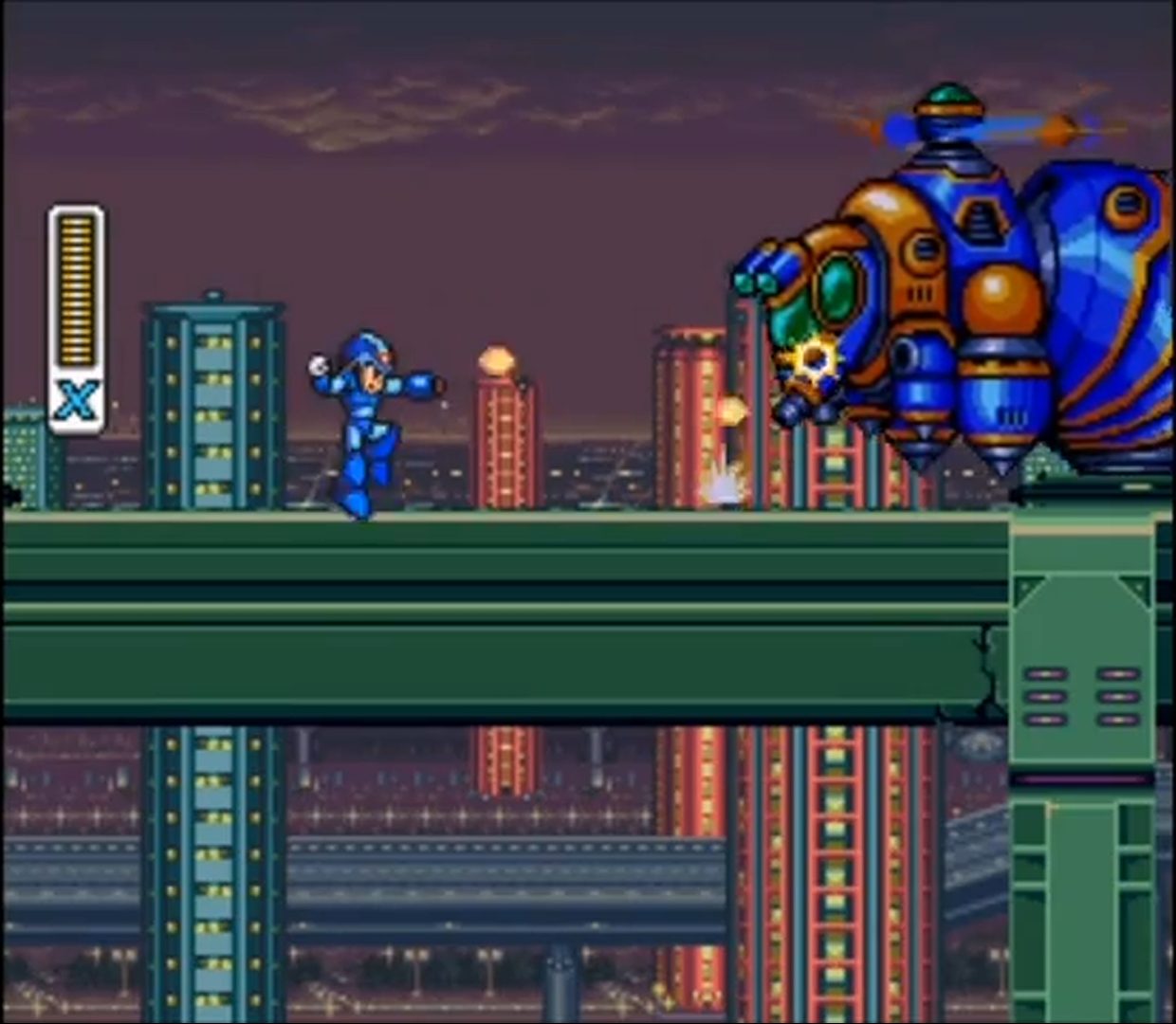
Many of the first wave of games were designed to show off capabilities, such as Pilotwings’ scaling, F-Zero’s Mode 7 abilities, and Mario World showed off the colors. The new addition of L and R buttons added different things to different games – screen scrolling for Mario, leaning for better turning in F-Zero, and weapon scrolling for Mega Man X. Later they would become just regular buttons, like the Fierce Punch and Kick buttons for Street Fighter II.


On the bottom of the system was a little expansion port, just like the NES had. It wasn't used outside of Japan, though. Japanese players had the option to buy something called a Sattelaview add-on, which let players download games and receive news via satellite radio broadcast. It was a primitive predecessor of today's Wi-Fi connection, and required having the SNES, the Satellaview, and a subscription to the service. A little more on it can be found on the BS-Legend of Zelda information. The expansion port would have also been how a CD add-on would have been used, but the project was canceled and eventually became the Sony Playstation

Many of the SNES games were 16-bit updates of older games (essentially remakes) of 8-bit games (Super Offroad, Super Star Wars, and Super Castlevania IV, for example), while others were continuations of past series (Zelda: LttP, Metroid III, Mega Man X, etc.), while others were updates of older games with newer features and rosters, such as sports games. Many of these games perfected their formulas during the 16-bit era. After years of making games for the NES with its limitations, the SNES let platformers shine since they had the superior hardware and years of experience for the programmers to build on.

A few years after being released, Nintendo made the Super Gameboy. It was an adapter to play Gameboy games on the SNES. There were several advantages to doing this, including bigger screen, easier to hold, and adding color. For more details, see the Super Gameboy section.


The SNES was the most powerful console of its generation, and (like its predecessor) the most popular, but it didn’t dominate the way the NES had. The Sega Genesis gained ground on Nintendo from its PR department’s ad campaigns and (mainly) because it was released earlier. It remained the main console until the N64 came out in 1997, even though the Virtual Boy was released in 1996 and died a quiet death less than a year after its debut. 


Additional Resources: