Wednesday, June 23, 2021

Being a Zelda Loremaster


This post is going to be similar to my write up on the review of the storyline and the consistency post. It’s basically an, “if I could remake the Zelda series in my own image,” type of post. I have a list of about 10 things that I would go back in time and change, if I could. Most of it isn’t personal - things like telling Archimedes to use the radius instead of the diameter when calculating π or telling Benjamin Franklin that it’s the negative charges that move in an electrical circuit, not the positive charges. As it pertains to Zelda, I wouldn’t want to change too much about it - I would want the games to be mostly as they already are with only slight tweaks and changes to the in-game text and manuals (other changes to reduce tedium would be nice, but we’re focusing on just story and lore for now).


It would be nice to have the Lore of Zelda be as deep as Tolkien’s, where it’s easy to tell that they had some of the history worked out beforehand instead of just making it up as they go, and when a new group of writers comes in they don’t throw out what was written before (something that happens in comic books far too often). Along with that would come some geographical consistency, and landmarks that wouldn’t be constantly moving around.


I would love the idea of having all of this pre-planned out years in advance, and having each game serve as revealing one small chapter of the entire over-arching tale of Hyrule, kinda like how the game show Classic Concentration revealed an entire picture once all of the cards were removed. And as part of that, it might not seem like each game is connected entirely or seems to have wildly different geography until a future game explains exactly what happened that serves as a bridge between games, and at some point the entire story would suddenly come into focus, making Miyamoto/Aonuma seem like geniuses (I suppose Breath of the Wild or its sequel would be a perfect story to do so).


So, if I could magically transport myself back to 1980’s Kyoto, Japan (speaking perfect Japanese, of course) and serve as a special advisor to Shigeru Miyamoto and whatever team was working on the Zelda games, here’s what I would do.


The first thing is to inform Mr. Miyamoto that while it might not seem like it now, the lore of the series is going to be scrutinized so it would behoove him to get some of the facts straight before writing up the backstory in the first game’s manual. Realizing that he cares far more about the world he’s creating than the reason behind why someone would want to play there, I would offer to serve as Loremaster of the series, and mostly work with advanced knowledge of the games to make small adjustments to what they (the designers) create. This advanced knowledge would come in handy for things like coming up with explanations about small inconsistencies such as the sudden disappearance of Gorons in the downfall timeline (I could write that the destruction forced them all to Labrynna/Holodrum), or why there were no towns/castles in the first game’s map (the actual answer being technical limitations but it’s easy enough to have a story-based reason as well).


As it stands now, the symbology throughout the games is frustrating when there could be some really great lore that shows the evolution of the symbols with their associated peoples/groups. For example, the 3 symbols for the 3 time songs from Oracle of Ages somehow became associated with the Triforces in Wind Waker and it has been that way ever since. The fact that they were used in Skyward Sword (first in chronology, mind you) means that it’s all kinds of screwed up for when/how the symbols are used. The Hylian shield showing up in Link’s Awakening HD and the Master Sword in the Oracle games is kinda the same thing - instead of the items retaining special meaning/value, it is just the “Zelda version of ‘best’ shield/sword”. The way the goddess symbol combines with the bird and Triforce can be kinda cool if they did it consistently/correctly. Symbology done correctly would be really interesting and meaningful.


I like the idea of a cyclical tale - even the Matrix did it (poorly, admittedly), and that each incarnation is a bit of a different tale. What I would really like is if they planned out a major release with a new incarnation of Link/Zelda who saves Hyrule, then that particular Link does 2 or 3 gaiden games that slightly reference the first one - sorta like how they retroactively made the GBC games all sequels to Link to the Past. In fact, between the handhelds and the consoles, that could work out pretty well. Release a 3D console game (like Ocarina of Time or Wind Waker) that deal with Hyrule/Ganon/Triforce and then have two or three 2D handheld games (like Minish Cap or Phantom Hourglass) that have the followup side-story of that particular incarnation of Link/Zelda that doesn’t involve Ganon or the Triforce. I realize that consoles and handhelds don’t line up as well as they need to be for this to happen, but it’s a nice thought.


The music is somewhat consistent - like how Zora’s domain and Goron City have always had similar music, and Princess Zelda’s theme is always on point. The main Hyrule overworld theme has been used haphazardly - how it was absent in Ocarina of Time but present in Majora’s Mask, etc. If it was the overworld theme only when the adventure was in Hyrule it would be more consistent. As with the various symbols, name places, etc., there should be thought into why these musical choices were made and not just shameless fanservice callbacks.


While I appreciated the BotW map showing “regions” that were named after past Zelda places/people, it doesn’t really make sense in the timeline, unless it’s intended for the merging of the three timelines to happen (TBD). Otherwise it’s just fanservicey callbacks.


Basically, all it would have taken is a little forethought - which is the difference between how the MCU succeeded (at least through Endgame) and Star Wars shat the bed recently. Like even Lucas had a plan when he “wedgied out” the capital ships in Episodes 2 and 3 of Star Wars to seem like a progression from those to the Star Destroyers of the OT. Precursors of TIE fighters and X-Wings were present and their evolution is easy to deduce, whereas the Disney sequels are just a mess with no internal logic or consistency. Meanwhile, the MCU treated each movie almost like it’s one episode of a series, and despite having different directors/producers on each movie, they all remain consistent with each other to a high degree. We could think of individual games as chapters in the history of Hyrule and weave a grand tapestry of lore.


Grab-bag Post #1

This post is going to be a random collection of easily digestible opinions and ideas that might not be fully formed, but most contains thoughts that don't have enough substance to warrant its own post. 


"Impossible Mode"

I'm not a fan of games that include some kind of extremely difficult mode. Two examples that jump to mind are Hollow Knight's steel soul mode, and Shovel Knight's trophy of finishing the game without falling into a hole. I know, I know, I should just "git gud." But the thing that bugs me is that it's like they [the developers] don't realize I have a backlog of games a mile long. I like 100%-ing games, and when I see those kinds of modes/trophies I just lose interest because in order to do it I would have to dedicate all of my gaming time to this one game for months on end and it just doesn't seem worth it. Maybe if I was a kid who only had 3 games or was somehow stranded on an island with only 1 game to play, then sure.


"Console Generations"

I've remarked that assigning consoles to "generations" post-hoc is somewhat arbitrary, just like how we label different eras of comic books (Golden Age, Silver Age, etc.). But I kinda do like the idea for organizational purposes. But what would be really nice is if the major console manufacturers got together and had a gentlemen's agreement to only release a new console every 7 years (and all within a few months of each other) with a minor hardware revision somewhere in year 4 (like the New 3DS or X-Box One X). That would make it easier to classify generations but it would also let programmers/designers fully flesh out the capabilities of each machine and get the most out of the hardware before we move onto bigger/better. Look at how much better games like Batman: Return of the Joker looked on the NES compared to something like CluClu Land, or compare DKC and Star Fox to Super Mario World. I realize the major drawbacks are that if someone produces a flop they have to sit on it for 6 years before fixing their mistake (see Wii U to Switch era for some lessons Nintendo learned) and that it would have completely eliminated Sega's hardware strategy in the 90's. But it's a nice thought to have just so I can more easily label things and put them in their proper boxes. 


Star Wars Transmission Errors

One thing I've heard about culture is that it's passed on from one generation to the next, and over time some things stick while other things evolve, and still others are pruned off. But as part of that, I see a lot of parents transmit their hobbies or love of a particular thing to their kids, like sport team affiliation. I've certainly done that in the case of video games and superheroes to my kids to a certain extent. But what's interesting to me is how I was able to get Avery on board with Star Wars when he was young but Logan has very little interest. And I think I can point to the Sequel Trilogy (and Disney's acquisition of LFL in general) as the culprit. Before the dark times, I would watch the various movies regularly, but not so much once the ST came out. Avery was also young during the post PT/Clone Wars times when there were a lot of good Star Wars things coming out. I also think to a certain extent that I've not been wanting to pass it on as much, now that I know the ending sucks (similar to how I won't recommend someone start watching Game of Thrones because the ending is so awful). 


Using up all the good stuff


I feel like there needs to be years of comics to tell a coherent story and for some editing/retconning to make it good before it graduates to a movie. Comics being the visual medium that it is, it necessarily follows that one issue can't be the source plot/dialogue for a whole movie, or even an episode of a TV show. It takes several issues to tell a story arc, and not all story arcs are created equally. When you take a property like the X-Men, for example, there are decades of stories from which to draw inspiration to either create a somewhat original patchwork story (like the first movie) or major stories that were particularly well done (like how God Loves, Man Kills was adapted into X2 or Days of Future Past was adapted into, well, Days of Future Past). The animated series tended to burn through major stories too quickly, and this continued with X-Men '97, where it seemed like they were trying to do a whole X-over, like "Fall of the Mutants" in one episode rather than make it, say, a 3-part story arc and show all the nuance that the original comic had, and essentially ran through 15 years of highlights over 10 episodes. 

But it seems to me that Hollywood doesn't share these concerns with keeping the product pure and of high quality. Adapting more recent things like the Kamala Kahn Ms. Marvel seems premature because we don't have the benefit of hindsight to see if it made a lasting impact on the franchise. In addition, seeing more recent comic stories being the focal points of movies/shows feels like they’re rushing things and will soon run out of source material - just like Game of Thrones when it surpassed GRRM’s books or how The Walking Dead caught up to the comic plot. It's safer to use an animated series as test waters to see how well a particular story works before sending it to the big screen. Also, in their rush to get their newer, more woke characters which only entered the comics as early as 6 years ago, Marvel Studios is skipping past stories that sold hundreds of thousands of copies in order to adapt stories that sell just hundreds of copies. 


Monday, June 21, 2021

My Experience with Zelda Part 5


Previous Entries:

My Experience with Zelda Part 1


My Experience with Zelda Part 2

My Experience with Zelda Part 3

My Experience with Zelda Part 4


For Christmas 2017, Anne got me a Breath of the Wild blanket, featuring an image of Link shooting an ancient arrow. It was warm and soft and I soon started using it whenever I was on the couch and cold. She started calling it my "magic blanket," since whenever I laid down with it on me I fell asleep fairly quickly. 

The third entry of the Dark Horse Zelda books came out in June of 2018 - the Zelda Encyclopedia. I pre-ordered it clear back in December, but it took 6 months to finally become available. The colors and release order of these books coincidentally match the boxes of the Extended Editions of the Lord of the Rings movie sets. 


Over the summer of 2018 Anne, Aurora, Logan and I played through Four Swords Adventures using the 3 GBA SPs we have between us and the modified backlit GBA hooked up to the Wii emulating a Gamecube. This marks the game where Anne has now completed the same number of Zelda games as Avery. Logan, on the other hand, has finished them all (at least in one form or another). She finished Twilight Princess HD next and then Tri-Force Heroes. This only leaves Skyward Sword and Breath of the Wild for her to finish. 


In the fall of 2018 I finally figured out how to get Custom Firmware on my 3DS thanks to the fine people of /r/3dshacks, which allowed me to do a couple of things I've wanted for a while. First, I finally have a copy of Minish Cap on my 3DS, and second, I have digital versions of all my favorite games so I don't have to carry around a case with gamecards. So what that means is that I have all Zelda games except 5 on my 3DS (WW, FSA, TP, SS, and BotW). 

But beyond that, it has opened up a whole new avenue for some of the spin-off games that I either never could play before or had to jump through a whole bunch of hoops and/or pay a lot of money to play. It wasn't too long until I also had BS-TLoZ Map 1, BS-TLoZ Map 2, and BS-TLoZ: AST installed onto my system. I followed them up with the 4 Tingle games (which admittedly, I only did for the completionist in me): Tingle's Rosy Rupeeland, Tingle's Balloon Fight, Too Much Tingle Pack, and Tingle's Balloon Trip of Love. I also got the 3DS version of Hyrule Warriors and a Twilight Princess themed Picross game, and a GBA port of the Zelda Game & Watch game. Which is to say that with the exception of Link's Crossbow Training and the actual Zelda wristwatch, I had all of the (official) Zelda spin-off games on my 3DS. 


3DS CFW also allowed me an experience that I didn't think I would ever have. By installing the Japanese version of the original Legend of Zelda, I was able to finally yell into a microphone to kill a Pol's Voice. The original Famicom's controller 2 had a microphone instead of Start/Select buttons, and a few games integrated this feature. The manual for TLoZ mentioned that they were afraid of sound, and most people assumed it referred to the Recorder (flute), similar to how Digdogger is weakened. But since the US version of the NES didn't have a microphone, the programmers altered the monster with the weakness of being killed by arrows without updating the manual.


Around this same time, the Nintendo Switch Online launched, and came with a feature to play old NES games. I made a Japanese account so I could also download the Famicom equivalent, and was able to play Japanese versions of both Zelda 1 and 2. The only real difference in Zelda 1 was a few sound effects (the FDS had an additional sound channel available) and more accurate hints from the old man (i.e., no Engrish transrations). But Zelda 2 had several interesting changes - a few in the graphics/sound area but mostly in the leveling up system. Later I learned how to emulate the FDS on my 3DS including the startup BIOS and having to switch to the B side of a disk (and sitting through the loading wait time). 


Just after Christmas, I happened to spot Creating a Champion, the fourth Zelda book from Dark Horse, while perusing the store. I wasn't really planning on getting it, but I had some Christmas money to spend and so I got it and now have all four volumes displayed on some nicer bookshelves in our living room. 

After playing a few of the Tingle games, I decided I might as well play all of the spin-off and non-canon games, even the unholy trilogy that we normally do not speak of (*shudders*). This involved downloading two different emulators for the PC. One emulator (MESS) could play two of the games and had controller support, but wouldn't play the cut scenes, so I had a YouTube video of them pulled up and would watch them at the proper time. It supported Save States, so I could get through some of the frustrating parts without having to start whole levels over. The other emulator (TinyCDi) could play the other game using a keyboard but wouldn't do Save States and would crash every time Zelda died. But I got through them finally. 

The next big news for the Zelda world was the announcement of another spin-off game called Cadence of Hyrule. In a similar vein to Hyrule Warriors, this was a game was a coat of Zelda paint on another style of game. In this case, it was Crypt of the Necrodancer, which I had never heard of before. I got excited for it and pre-purchased it (as well as the original CotN game) but it turns out that we were supposed to be in Vegas on a family vacation when it was to be released. So I couldn't really play it upon release and it took a little while to get back into it. 


In the process of finishing the latest spin-off game (CoH), I came across another one that I hadn't played - Navi Trackers. It was a process to get it working. Because it was only released in Japan (and Korea, strangely), I could either try getting a Japanese GameCube and disc, or hard-modding my American GameCube (and still buy the disc). But I found option #3: getting Custom Firmware on my Wii U. So after doing all the work to get it working, I got everything set up and ready to play only to find out that there isn't the "hardware handshake" protocol between the Wii U and the GBA when emulating the Gamecube. So that meant option #4: getting it working on the CFW Wii (which worked, thankfully). I played a few levels with each of my family, but only in pairs (meaning, never with 3 or 4 people). Having to teach them how it works because they can't understand Japanese was kinda neat, too. 


In September of 2019, the second Link's Awakening remake was released for the Switch. It's not officially called Link's Awakening HD, but most people on the internet refer to it that way to distinguish it from the original b/w Link's Awakening and the GBC remake (DX). I was very glad to get to play one of my favorite games in glorious, gorgeous HD with the harder difficulty. And the new dungeon maker mode of play is . . . okay. I think the game should have been more like $40 instead of full price, but apparently I'm a sucker for anything Zelda. Avery and I both got a copy from GameStop on the midnight release (along with a poster). 

After seeing a copy of it at a used game store, it occurred to me that the manual inside of the plastic case for my copy of Four Sword Adventures has been missing its cover ever since I bought it. I had never seen the cover until that day and it bummed me out. Fortunately I devised a solution - use a hi-res scan PDF of the manual and the color copier at work to reproduce it. It took a few tries to get the exact dimensions and to get the front and back sides to match up exactly on a 2-sided print, but I eventually succeeded and restored the manual to its former glory. Along those same lines, I occasionally see the Gamecube Collector's disc, which has LoZ, AoL, OoT, and MM on one disk along with previews of other games. I'm tempted to get it but unwilling to pay the high price at the moment. Perhaps when the house is paid off . . . 

Then after some months of looking at one, I finally bit the bullet and purchased a 30-year-old digital watch just to play the Legend of Zelda Game Watch. I put more details in the Spin-off post, but while I'm glad to own a piece of Zelda history, the experience of playing it isn't anything to write home about. But I at least persevered through it so I could honestly claim that I have finished it. 


Anne reached the point where she only had Skyward Sword and Breath of the Wild to finish, and I decided that she should do Skyward first. I also took it as an opportunity to finally get around to playing it through a second time. While it wasn't quite as bad as I had been touting all these years, there were still many frustrations and problems that bothered me. I wrote more about this experience in its own post. Logan also decided that he wanted to complete all of the spin-off games as well, so he slogged through the CD-i games on our computer and did the rest on his 3DS. I think the only one he didn't finish is Tingle's Rosy Rupeeland. 


While I obviously have all of the games, I'm not usually one for merch. I need it to provide me with lore, backstory, or some other kind of content. After buying the four Dark Horse books, I decided to try the Mangas. I let Anne know of my plans and so I started getting them for birthdays/Christmases starting in 2019. The first ones were Twilight Princess vol.1-3 and then the version of ALttP that was in Nintendo Power along with ALttP/MM. I've slowly amassed all of the Legendary Editions of the Himekawa books, and am now only needing to finish the Twilight Princess books. As I'm very much an, "In for a penny, in for a pound," kind of collector, I looked into all of the older mangas/books as well. Using online resources, I found a fairly good list of publications, including various comics, mangas, guidebooks, sheet music, and novels based on the games. For now, I managed to find digital scans of almost everything, which will be enough for now. Perhaps in the future I might hunt down these elusive pieces of Zelda history. 


I did a few of projects on the computer to kill some time. The first was to complete my Musical Journey Through Hyrule edit. It was something that I started while anticipating Breath of the Wild but I got distracted once it (and the Switch) came out. The second was to make desktop wallpaper of the various Zelda game logos. It was easy enough to do the various spin-offs as well, so I did. Once I finished that, I got the idea to use Photoshop to make a somewhat realistic version of the LoZ title screen, using real textures. I had so much fun that I decided to do it for all of the main games. 


Another way I flexed my Photoshop skills was to make a Zelda poster. I had previously made one for Avengers: Infinity War that had the various MCU movie posters based off of one my brother saw online. The problem with the one he saw was that the movies were out of order and some of them were the international release posters. I recreated it in Photoshop with the correct posters and added things like the Netflix shows. After Endgame came out I made an updated one with the newer movies and took out some of the TV stuff. But I had the idea to also make a Zelda one. The problem was that unlike movie posters, the game boxes were sometimes vertically oriented (NES, and Gamecube on), sometimes horizontal (SNES, N64), and sometimes square-ish (handhelds). My solution was to make them all squarish and just expand the picture as needed. It turned out pretty well and I spent weeks going over minutia to eliminate mistakes that would only be a couple of pixels in size. We got a few misprints and were informed that they wouldn't refund anything, unfortunately, but we had enough to cover the orders from ourselves and friends/family. Later I made one for the spin-off games, but never got it printed since I'm probably the only one who would appreciate such a thing. 

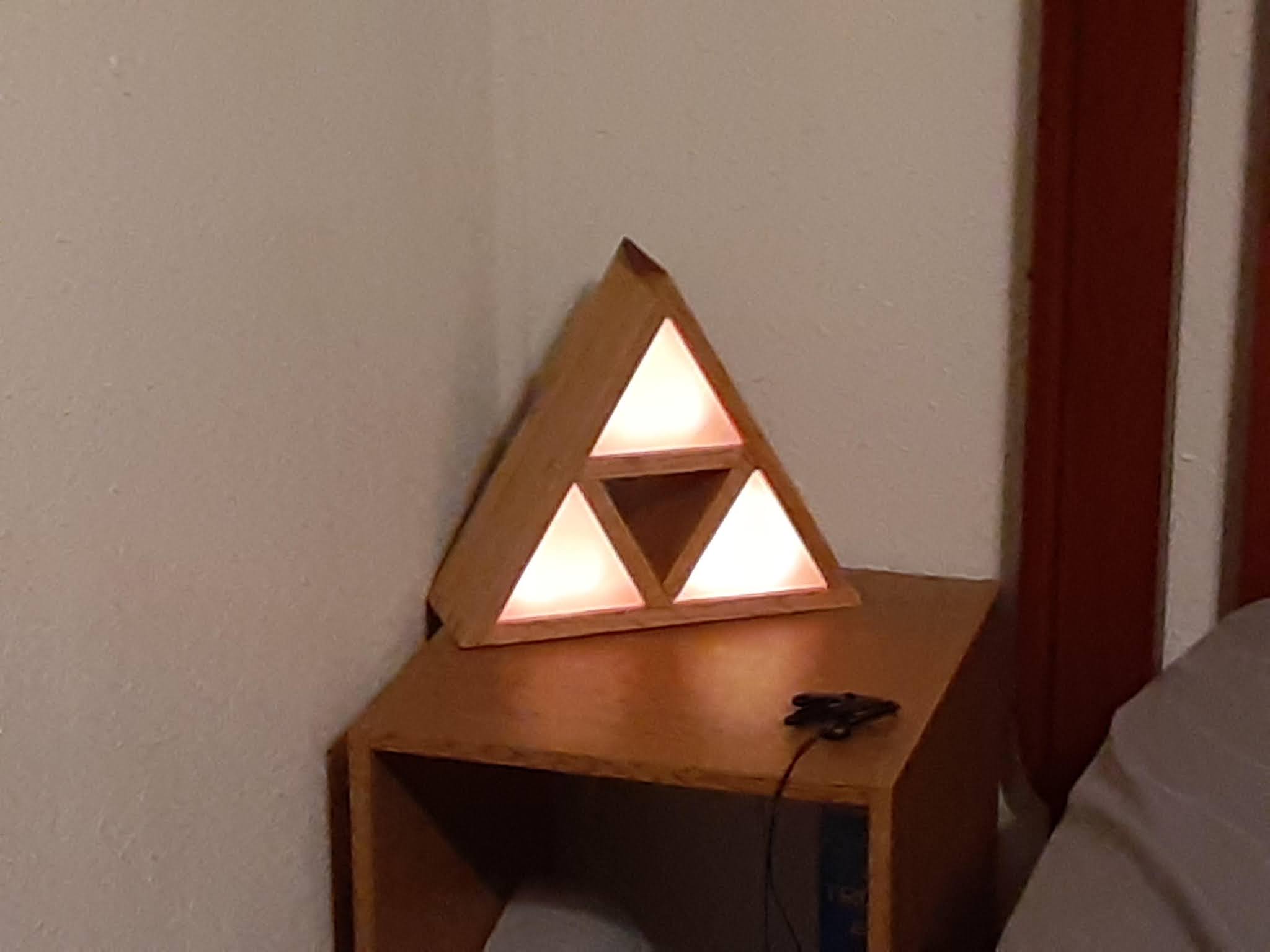
During the Spring 2020 when everything went tits up because of the 'rona, we spent some of the time doing home improvement projects and I decided to make myself a lamp like one I've seen people make on Reddit. Using a piece of oak and some very precise calculations, I got the wood frame all done, then finished it with some plexiglass and rice paper, some LED light strips, and some leftover fabric to make a lamp that can change colors and is dimmable. 

While I enjoyed the 3DS version of Majora's Mask for the updated graphics and portability, there were quite a few changes they made that I wasn't too keen on, such as the Zora swimming nerf and the boss battles. Thankfully, a group of people who know how to patch such things made a patch available for those of us who have custom firmware. It fixes many of the problems that crept into the remake and makes it more like the original N64 version. 

Over the summer, the big thing I was looking forward to was the release of Hyrule Warriors: Age of Calamity. Truth be told, I wasn't the biggest fan of the first game, but this one looked more like Breath of the Wild so I was a little more excited. Avery picked up our copies on release day (along with a keychain). However, it happened to release right when I was in the middle of a few games so I put it off and didn't play it for a few weeks. However, I found myself rather enjoying the game, as Aonuma-san had given Koei Tecmo some direction and insight to making it feel more Zelda-like. This article articulates a lot of what I thought and felt about it


To complement my lamp I made, Brady found a Triforce tree topper on clearance at GameStop and sent it my way. Anne also finished Breath of the Wild just after Christmas 2020, making 19 out of 19 Zelda games completed for her. She practiced her profanity skills and learned some patience along the way, but for now she can claim to have at least completed all of the games (for now). Convincing her to do the spin-offs or 100% them . . . that's a different story. 

[Disclaimer - the information was accurate as of the publication date, but has been made less accurate as future events/developments have happened since publication]

Sunday, April 11, 2021

My final list of changes to Breath of the Wild


It's funny how I hold Breath of the Wild in such high regards while at the same time making the largest list of changes I would make to the game. I think it's because it came so close to absolute perfection that all of these ideas occurred to me. It should be noted that almost all of these are very minor fixes/upgrades.

Quality of Life upgrades - making things involving tedious menus and such easier


  • There ought to be a way to switch whole outfits at once on the quick menu. The down button of the D-Pad could have been used for this instead of whistling for horses, and some other button combo could have been used for whistling. Being able to change between the Climbing Gear with another set that is needed for the environment (like the Fire, Rubber, or Snow sets) would be very convenient. They could make it so the pause menu has 4 slots for whole sets of clothes that can be pre-loaded. I would choose the climbing set, the Barbarian/Fierce Deity set, the stealth set, and then depending if I’m in Zora’s Domain or Goron City, the Zora or Goron set. Alternatively, whole sets could be equipped all at once in the menu (see below for more).
  • The ability to repeat recipes provided the requisite materials were available. Pretty self explanatory. 

  • The ability to arrange weapons/shields/bows/armor/ingredients however you want rather than having 2 auto-sort options. Also self explanatory. 

  • Ability to choose which elements of the HUD to display (like if you want the weather but not the stealth meter) and choices of where to put them on the screen, kinda like how phones give you the ability to choose where widgets go. This would include the stamina meter - I would prefer it go to the right of the life meter and not be attached to Link's person, so to speak.


Systems
  • Making outfits have 4 pieces of clothing (pants, shirt, helmet, earrings/circlet/ring). It would make some of the armors less redundant, and would make mixing/matching combos more interesting. The earrings could be just added elemental bonuses if things like fire/ice/stealth/etc., or have it just add extra armor for sets like the barbarian clothes. 
  • To add to the 4-piece clothing set idea, since the clothing sub-menu is a 5 x whatever grid, once the player has all 4 pieces of clothing the first option in the menu should be to equip all 4 at once, making switching whole armor sets a single button press. So for example, once Link has acquired the Topaz Earrings, Rubber Helm, Rubber Armor, and Rubber Tights, those 4 items should appear on the menu together on the same line, with the 5th slot being a button to put on all four of the shock-resistant pieces on at once.
  • Upgrading armor should come in 2 parts - each one can be upgraded 4 times with its armor rating by infusing it with horns, bones, and other monster parts. It should then have its effect/magic abilities (like stealth, fire resistance, swim speed, etc.) be upgraded 4 times separately with elemental things like the Safflina plants, chuchus, minerals, etc. Since this would effectively double the amount of times each piece of armor is upgraded, I would also give Link the ability to upgrade it several times at once - like to upgrade it from brand new to level 4 armor/level 4 magic could be done in one step if you have the materials to spare. It would make it interesting to have highly effective armor that doesn’t protect against the cold, or vice versa. 

  • The Snow Boots and the Sand Boots should have been part of the Rito/Voe sets so that you don't lose the set bonus when choosing faster travel. The Zora set had non-set bonuses for the hood (better water attack) and the armor (swimming up waterfalls). The ability to run faster in snow/sand could have just been added to the already existing sets, or have it be one of the "effect" upgrades I mentioned in the above paragraph.

  • Add in water, earth, and poison elementals, and make them work in pairs. Fire and Ice weapons/armors/arrows already work great as opposing elements, but there was nothing to serve that function to lightning. I would suggest adding a green earth elemental thing to enemies like Keese/Chuchus/Wizzrobes, and make its corresponding stone be Emerald. Water could be the 5th element and its stone is Opal [already present in the game], then add a purple stone like Amethyst for poison and have it counteract the Water elementals. Let Amber be a non-elemental gemstone that is related to armor.

  • Make some vertical surfaces impossible/harder to climb, kinda like what they did with the shrine walls. Or at least put something that makes climbing look feasible, like vines or a brick texture, on vertical things. 

  • Make the amiibo exclusives unlockable by some other method, however tedious it might be. Rogue Squadron let the player unlock the Naboo Starfighter by either doing 4 perfect tutorials (which takes more than an hour) or by entering a code. Something like this could let players either grind for these outfits or use amiibo. 
  • Link’s house has a museum of weapons/clothing or at least more spots to store stuff at home. The “shed” out back could be the entrance to his basement storage or something. Maybe Link can have fewer things to carry around, but have more at some kind of storage facility (like pouches in Skyward Sword). 

  • Reduce the total number of Korok Seeds to find a bit and up the varieties, with a counter of how many are left in each area (after you find Hestu in the Lost Woods) kinda like the Maiamai map from ALBW. Two additional heart containers for 100 Korok seeds each to motivate finding at least 650 seeds.


Difficulty

  • Get some harder Boss battles, and have 4 harder dungeons (like super shrines) that require at least 15, 30, 45, and 60 completed shrines to get to (kinda like Mario 64’s locked gates) in order to unlock the Master Sword. 
  • Make the beast mode Ganon harder. 

  • More enemy variety - mix up some of the enemy camps with some leevers, tektites, goriyas, likelikes, and a few other types, with Iron knuckles and Darknuts in the shrines or super shrines. 

  • Make the Master Sword a requirement to defeat Ganon instead of just a good idea.  I realize that would kill the speedrunning community, but in-universe lore suggests that Link needs it. 


Story/Lore

  • Included a few more memories to flesh out the story a little more. (I originally said this before some of the DLC memories were added, but even more still wouldn’t be a bad idea. Along with that, have some more books lying around stables/broken homes or talk to NPCs to tell some of the lore. Examples of things that could be fleshed out are items such as  who the forgotten sage is, or more on how the Yiga clan happened, and filling in some of the missing history between BotW and any of the other games (and if Age of Calamity weren’t an alternate timeline thing, this spin-off game would have been the perfect vehicle to tell some of the backstory).
  • Final mode where no more blood moons happen and Link can eliminate all of the enemies in the game (as sort of a post-game optional quest - it would need some sort of tracker letting you know there are 200 enemies left to kill in the Hebra region or whatever).

  • A couple more small towns (not as elaborate as Hateno or Kakariko – maybe smaller ones more like Lurelin) and another fortress ruins similar to Akkala somewhere where the approach is harder and guarded by enemies. 


Monday, December 28, 2020

My Favorite Zelda Games (sorta)


I often get asked by my son which Zelda game is my favorite, or which order I would put them in if I were to rank them. But making an ordered list would be kinda like listing your children in order of how much you love them - it just isn’t done.
But despite that, there are clearly some that I have enjoyed more than others, so instead I have them in tiers/categories using a family relations analogy, along with an estimate of how often I could play them.


1. Siblings/Parents/Kids (when getting along): These are your closest/favorite relations; it’s only natural that you love your own kids more than others. I could play these any time and not get tired of them. LttP, MM, WW, BotW


2. Grandparents: you know them well and love to visit often but you’re also sometimes glad that you get an occasional break from them. I can play these two or three times a year and be good.  OoT, ST, LoZ, LA, OoA, OoS, TP, ALBW


3. Niece/Nephew: The fun little relatives that are good in small doses. AoL, MC, PH, BSLoZ, AST, CoH, AoC. I could play these once every 2 years and be satiated. 


4. Second Cousins: Okay when you can get a small group together for a quick visit, but you don’t actively hang out with them. FS, FSA, TFH, SS, LXBT, TBToL, BQ, MNPTP, HW. Maybe once every 5 years for these. 


5. Creepy uncle/Drunk mean aunt: Distant relative you tolerate at family get-togethers. You avoid them whenever possible. NT, FPTRRL, TBFDS, G&W:Z Playing these once a decade is good. 


6. Red-headed step children: You begrudgingly acknowledge their existence but you don’t want to have any dealings with them if at all possible. TLoZGW, L:FoE, Z:WoG, ZA, TMTP. Playing these only once is more than enough. 


7. Good Friends:  You hang out with them whenever you can, enjoy their company, you chose them and built a relationship over the years. These would be games in the Mario, Metroid, Megaman, Castlevania, and Ace Attorney series, among others.


Breath of the Wild Map Names and references


This is something I've been wanting to do since Breath of the Wild came out, but never got around to doing. The map in Breath of the Wild has a lot of locations named for characters and locations from past games. On the one hand, it's kind of a cool bit of fan service for those who played the older games. However, it does throw the whole "timeline" concept out the window, as there are lots of places that are exclusive to each of the timelines and shouldn't be mixed. There weren’t a lot of named characters/places until Link's Awakening, so the few that appeared in the earlier games were mainly bosses. Things that aren't map names will be in italics. Also, there are several references to names that originally appeared in Adventure of Link, which were re-used as sage names in Ocarina of Time. Most people will see and recognize them more from Ocarina of Time's use of the names, so I put them in that section of the list.  


0 Recurring Locations/Landmarks/Items

Spectacle Rock (first in LoZ)
The Lost Woods (first in LoZ)
Kakariko Village (first in ALttP)
Hyrule Castle (first in ALttP)
Death Mountain (first in LoZ)
Lake/Mount Hylia (first in ALttP)
Temple of Time (first in OoT)
Hylian Shield (first in OoT)


1 Legend of Zelda

Gleeok Bridge - Gleeok (Level 4 boss)
Manhala Bridge - Manhandla (Level 3 boss)
Aquame Bridge/Lake - Aquamentus (Level 1 boss)
Digdogg Suspension Bridge - Digdogger (Level 5 boss)
Ancient Tree Stump - Level 1 Location
Cap, Tunic, and Trousers of the Hero, Sword (Amiibo Exclusive)


2 Adventure of Link

Helmhead Bridge - Helmet Head (Midoro Palace boss)
Carok Bridge - Carock (Maze Island Palace boss)
Orsedd Bridge - Horsehead (Parapa Palace boss)
Rebonae Bridge - Rebonak (Island Palace Iron Knuckle boss) 
Dark Hood, Tunic, and Trousers (note - a case could be made for OoT instead of AoL)


3 A Link to the Past

Sahasra Slope - Sahasrahla the Elder
Hebra - Mount Hebra (Japanese Light World Mountain name)
Lanayru/Naydra - Nayru, Goddess of Wisdom from ALttP Manual lore
Faron/Farosh - Farore, Goddess of Courage from ALttP Manual lore
Eldin/Dinraal - Din, Goddess of Power from ALttP Manual lore
Rikoka Hills - Kakariko Village


4 Link's Awakening

Goponga Island and Village - Goponga Swamp (near level 2)
Tabahl Woods - Tabahl Wasteland (near graveyard)
Tal Tal Peak - Tal Tal Mountains (northern mountains)
Koholit Rock - Koholint Island
Toronbo Beach - Toronbo Shores (where Link washes up)
Malin Bay - Marin the singer
Kanalet Ridge - Kanalet Castle
Ukuku Plains - Ukuku Prairie (near level 3)
Martha’s Landing - Martha’s Bay (near level 5)
Mabe Village Ruins/Prairie - Mabe Village
Ulri Mountain, Ulria Grotto - Ulrira the Telephone guy
Torin Wetland - Tarin, Marin’s dad
Yarna Valley - Yarna Desert (SE corner of island)
Peak of Awakening - title of the game itself


5 Ocarina of Time

Bonooru’s Stand and Pierre Plateau - The Scarecrows at Lake Hylia
Ja’Abu Ridge - Lord Jabu Jabu (also in OoA) and Jabun (WW)
Kaepora Pass - Kaepora Gaebora the Owl
Ruto Lake, Mountain, and Precipice, Vah Ruta - Ruto the Sage (Who was named after a town in AoL)
Darunia Lake, Vah Rudania - Darunia the Fire Sage (Who was named after a town in AoL)
Lake Saria - Saria the Forest Sage (Who was named after a town in AoL)
Mido Swamp - Mido the Kokiri Bully (Who was named after a town in AoL)
Rauru Hillside and Settlement - Rauru the Light Sage (Who was named after a town in AoL)
Nabi Lake - Navi the Fairy
Talonto Peak - Talon the Ranch Owner
Medingo Pool - Medigoron the Sword maker
Koukot Plateau - Kotaku and Koume the Gerudo Witches
Ranch Ruins - Lon Lon Ranch
Forest of Time - Just a general reference to Ocarina of Time
Vah Naboris - Nabooru the Spirit Sage (Who was named after a town in AoL)
Cap, Tunic, and Trousers of Time; Biggoron's Sword; Shiek's Mask; Epona (Amiibo Exclusive)
Phantom Ganon Skull, Armor, and Greaves (DLC)


6 Majora's Mask

Mikau and Lulu Lakes - Guitar Player and Singer for the Zora Band Indigo-Gos
Inogo Bridge - The Zora Band Indigo-Gos (also resembles Ingo the farm hand from OoT in English but not the original Japanese)
Romani Plains - Romani Ranch
Lake Darman - Darmani the ghost Goron
Toto Lake - Toto the manager of the Zora Band Indigo-Gos
Breman Peak - Bremen Mask
Gero Pond - Don Gero the frog Composer
Telta Lake - Tatl the Fairy
Tingel Island - Tingle the Map Maker 
Fierce Deity Mask, Armor, Boots, and Sword (Amiibo Exclusive) 
Majora's Mask, Tingle's Hood, Shirt, and Tights (DLC)


7/8 Oracle of Ages/Seasons

Horon Lagoon - Horon Village
Tarm Point - Tarm Ruins
Lodrum Headland - Holodrum
Brynna Plain - Labrynna
Spool Bight - Spool Swamp
Mable Ridge - Maple the Witch
Samasa Plain - Samasa Desert


9 Four Swords

None that I can find


10 Wind Waker

Tingel, Ankel, Knuckel and Davdi Islands - Tingle and his brothers (Also in MC as a set)
Mount Daphnes - Former King of Hyrule who is now a boat
Mekar Island/Lake - Makar the Korok and Companion
Aldor Foothills - Aldo the korok
Elma Knolls - Elma the korok
Rowan Plain - Rown the korok
Mount Drena and Drenan Highlands - Drona the korok
Irch Plain - Irch the korok
Lindor’s Brow - Linder the korok
Oakle’s Navel - Oakin the Korok
Ovli Plain - Olivio the Korok
Kolami Bridge - Prince Komali
Luto’s Crossing - Laruto the Sage
Lake Totori - Rito race
Vah Medoh - Medli the sage and Companion
Cap, Tunic, and Trousers of the Wind (Amiibo Exclusive) 
Seabreeze Boomerang; Shield of Antiquity (Amiibo Exclusive) 
Island Lobster Shirt (DLC)


11 Four Swords Adventures

None that I can find


12 Minish Cap

Veiled Falls - Veil Falls
Thims - Smith (Link’s Grandfather)
Minshi Woods - Minish Woods
Crenel Hills/Peak - Mt Crenel
Pico Pond - Picori people
Trilby Plain/Valley - Trilby Highlands
Mount Gustaf - Ghostly King Gustaf


13 Twilight Princess

Rutala Dam - Queen Rutela the ghost Zora
Ralis Pond - Prince Ralis who is helped by Ilyia
Darb Pond - Darbus the Goron (boss of Goron Mines)
Midla Woods - Not Midna, actually, and just a coincidence.
Arbiter’s Grounds - Arbiter’s Grounds Dungeon 
Midna's Helmet, Zant's Helmet, (DLC)
Cap, Tunic, and Trousers of Twilight (Amiibo Exclusive) 
Bow of Light; Sword of the Seven Sages (Amiibo Exclusive)


14 Phantom Hourglass

Mercay Island - Mercay Island
Linebeck Island - Captain Linebeck
Zauz Island - Zauz the smith
Bannan Island - Bannan Island where the the old seafarer lives
Molida Island - Molida Island
Lake Siela - Ciela the Fairy


15 Spirit Tracks

Proxim Bridge was supposed to be Aboda from Aboda Village but wasn't translated correctly
Phantom Helmet, Armor, and Greaves (DLC)
Lake Kolomo - the Lokomo race of Spirit Guardians


16 Skyward Sword

Pillars of Levia - Levias the Dragon
Gortram Cliff - Gortram the Goron who runs the Minecart game
Breach of Demise - Demise, the original enemy
Batrea Lake - Batreaux the Monster turned Human
Eagus Bridge - Professor Eagus
Horwell Bridge - Professor Horwell
Lake Floria, Floria River - Lake Floria behind the Ancient Cistern
Owlan Bridge - Professor Owlan
Gorko Lake/Tunnel - Goron who teaches Link about Goddess Walls
Cap, Tunic, and Trousers of the Sky; Goddess Sword (Amiibo Exclusive)


17 A Link Between Worlds

Oren Bridge - Oren the Zora Sage
Seres Scabland - Seres the Sage
Ravio's Hood (DLC)


18 Tri Force Heroes

Tuft Mountain - King Tuft of Hytopia


19 Breath of the Wild

Mount Rhoam - King Rhoam Bosphoramus Hyrule who gives Link the Paraglider
Satori Mountain - Satoru Iwata, former president of Nintendo


Being a Nintendo Fanboy (part 4)


Being a Nintendo Fanboy (part 1)


Being a Nintendo Fanboy (part 2)


Being a Nintendo Fanboy (part 3)


For the handheld market, all of the iterations of the Game Boy and DS lines were the clear and dominant systems. The only challengers  worth mentioning are the Atari Lynx, the Sega Game Gear (both of which competed primarily against the original Game Boy), the PSP (which competed against the DS) and the PS-Vita (which competed against the 3DS). The closest that any of these came to second place was the PSP which sold half as much as the DS. Basically anything else in that list (including N-Gage, Game.com, etc.) was practically unknown. I heard about a few others, like the Sega Nomad and the NeoGeo pocket, but never saw them played, never saw them in a store, and I never knew anyone who owned one. As far as I’m concerned, they might as well have never existed for as little of an impact that they made.

While they weren’t handheld consoles per se, the Tiger line of single-game handhelds were popular enough that it wasn’t uncommon to see them in kids’ toy collections at home or being played by kids on an airplane. Nintendo had its own line of single game handhelds - the Game & Watch series, which preceded the Tiger ones and were much better, though they didn't flood the market the way that Tiger did.

And while the same "generation" groupings exist for the handheld market, I'm only going to do four comparisons, and I'll just categorize them by the major competitions. I'm also not including anything before the Game Boy, as there are hundreds of single game pocket devices, including Nintendo's Game & Watch series.


Nintendo Game Boy (and later Game Boy Color) vs Sega Game Gear vs Atari Lynx

For me, this is the real beginning of actual handheld gaming. The previous entries (like the Game & Watch series) were far less capable and weren't fun beyond a few minutes. That being said, nobody I knew of took their Game Boy everywhere they went, except for one guy and only when it was new to him. It was the kind of thing that you took with you on a trip to play in the car/plane or some kind of planned outing where you knew ahead of time that you’d have some down time or kids in need of entertainment (like waiting at the DMV).
But it wasn’t uncommon to see kids at airports, waiting rooms, and other places where people mostly have down time while waiting for something. The second most common thing I remember seeing are the Tiger single games, unfortunately. As crappy as they were, they were cheap and didn’t gobble up batteries like a Game Gear or Lynx would. Truth be told, I have never seen either one out in the wild, so to speak. It was either Game Boy or Tiger.


Category

Winner

Reasons


Graphics


I’m giving this one to Atari because of the 16-bit processor. The Game Gear’s graphics were blurry with movement, but they were backlit.

Sound Effects/
Music


All three were about the same in terms of sound output.

Console Design/Form Factor/Button Placement


I much preferred the horizontal oriented consoles as they’re easier to hold.


Games

A no brainer. Nintendo’s library was more robust with higher quality games including the usual Mario, Zelda, Metroid, Mega Man, Kirby, and Pokemon. Oh, and Tetris.


Price/ Availability

The Gameboy was half the cost of the other two systems, and was much easier to find in stores.

Battery Life

This was one of the main things that helped Nintendo win. It had a much better battery life than either system.
Accessories/
Peripherals
The sheer proliferation of the Gameboy line meant that there were far more and better accessories.
Online Services
N/A

Internet wasn't a thing back then.

Backwards/
Cross-
Compatibility

GBC would play all GB games with (optional) color enhancements.


Box Design

Plastic boxes > cardboard boxes


Coolness Factor

The Gameboy was just far and wide more popular than anything else on the market for years, despite brief flashes of Sega popularity.


Overall Winner


 Game Boy Advance and Game Boy Advance SP
      vs. Nobody at all, really

What can I say about this one? Nintendo so handily beat the competition that there really wasn’t any. The GBA was a huge leap in terms of technical/graphical ability, it added 2 more buttons, and the SP improved upon it with the addition of a backlight.


Category

Winner

Reasons


Graphics


Only game in town, but much improved over original GB.


Sound Effects/
Music

Only game in town, but much improved over original GB.

Console Design/Form Factor/Button Placement

The GBA was horizontally oriented and better than the original, but the SP went back to being narrow and vertical.

Games

Only game in town.

Price/ Availability

Only game in town.

Battery Life

Only game in town.

Accessories/
Peripherals 

As the only game in town, there weren’t accessories for anything else.

Online Services
N/A


Wasn’t a thing.

Backwards/
Cross-
Compatibility


Every GB and GBC game can be played on a GBA with color enhancements for the original GB games.


Box Design

The only time cardboard wins is when there’s no competition.


Coolness Factor

Only game in town.


Overall Winner


 Nintendo DS (and DS-Lite/DSi) vs Sony PSP

Sony decided to throw their hat into the ring with a handheld system, and while it was technically superior, it didn't have the history and install base that Nintendo did. 


Category

Winner

Reasons


Graphics


Individually, the PSP’s graphics are generally better because of access to more processing power. But the DS had two screens, doubling the graphical output


Sound Effects/
Music

Sound design had progressed to the point where the hardware wasn’t limiting developers’ choices/visions for sound and music.

Console Design/Form Factor/Button Placement

The clamshell design gives it double the screens and keeps it from being scratched when not in use. The touch screen and microphone adds new kinds of interactivity and ways of playing.


Games

There’s no competition here. The DS library outshines the PSP’s, even after considering the amount of shovelware.

Price/ Availability

They could both be bought at the usual places, but the DS was almost half the price of the PSP.

Battery Life

Because of the higher processing power of the PSP, it also burns through battery quicker.

Accessories/
Peripherals 

Both had similar kinds of accessories.

Online Services


This was more of a per-game feature, rather than an online service in the way we think of them now, but Sony's services are better in general.

Backwards/
Cross-
Compatibility


The original DS and DS Lite could play the entire GBA library, while the PSP has some connectivity features with the PS3.


Box Design

Both came in plastic cases.


Coolness Factor

Mainly because it’s riding on the success of the PS3 line and all of the clout that comes with it.


Overall Winner


Nintendo 3DS vs. Sony PS-Vita

Really there's nothing new to add, other than it's just the next iteration of the Nintendo vs Sony handheld as the last competition. Both added new features and capabilities to their systems but once again Nintendo trounced Sony. 


Category

Winner

Reasons


Graphics

Like the previous generation, the Vita had more processing power, but the 3DS (again) had 2 screens, but one was 3D that didn’t require glasses.


Sound Effects/
Music


Like the last one, sound design had progressed to the point where the hardware wasn’t limiting developers’ choices/visions for sound and music.

Console Design/Form Factor/Button Placement

The clamshell design gives it double the screens and keeps it from being scratched when not in use.


Games

Again, Nintendo’s library of games outshines the competition.


Price/ Availability

Both were the same price at launch, but Nintendo had a 10-month jump, and it also got a permanent price cut before the Vita was released.

Battery Life

Because of the higher processing power of the Vita, it also burns through battery quicker.

Accessories/
Peripherals 

Because of the sheer volume different between the sales figures, there’s just a lot more stuff available for the 3DS.

Online Services


In general, Sony’s online services will be better than Nintendo’s.

Backwards/
Cross-
Compatibility


The 3DS can play the entire DS library, as well as Virtual Console games from past Nintendo Systems. The Vita was only compatible with digital games, but was usable with certain PS3/PS4 games.


Box Design

Both came in plastic cases.


Coolness Factor

Mainly because of the more “grown up” feeling that the PlayStation brand gives off versus the “kiddy” nature that Nintendo espouses.


Overall Winner