Sunday, August 8, 2021

My Favorite Series (besides Zelda)


While individual games/movies are great, what I really love is a continuous series where I can compare and contrast entries with each other. I especially love them if there's some kind of continuity of story that carries over, and that's one reason why I love the MCU (at least through Spider-Man: FFH). 

So having said that, here are some mini-reviews and thoughts about some of my favorite series of games that aren't Zelda related, along with lists of which ones I have and haven't played. Note: ports, collections, and remakes aren't listed here. 


Super Mario

Game

System

Played?

Finished?

Donkey Kong

Arcade/NES

Yes

Yes

Mario Bros

NES

Yes

Yes

Super Mario Bros. 

NES

Yes

Yes

Super Mario Bros. 2 (USA)

NES

Yes

Yes

Super Mario Bros 2 (JPN)

FDS

Yes

Yes

Super Mario Bros. 3 

NES

Yes

Yes

Super Mario Land

GB

Yes

Yes

Super Mario World

SNES

Yes

Yes

Super Mario Land 2: 6 Golden Coins

GB

Yes

Yes

Wario Land: Super Mario Land 3

GB

Yes

Yes

Super Mario World 2: Yoshi’s Island

SNES

Yes

No

Super Mario 64

N64

Yes

Yes

Super Mario Sunshine

GC

Yes

Yes

New Super Mario Bros. 

DS

Yes

Yes

Super Mario Galaxy

Wii

Yes

No

New Super Mario Bros. Wii

Wii

Yes

Yes

Super Mario Galaxy 2

Wii

No

No

Super Mario 3D Land

3DS

Yes

Yes

New Super Mario Bros. 2

3DS

Yes

Yes

New Super Mario Bros. U

Wii U

Yes

No

Super Mario 3D World

Wii U/Switch

No

No

Super Mario Odyssey

Switch

Yes

Yes


Mario Kart 

Game

System

Played?

Finished?

Super Mario Kart

SNES

Yes

Yes

Mario Kart 64

N64

Yes

Yes

Mario Kart Super Circuit

GBA

Yes

No

Mario Kart Double Dash

GC

No

No

Mario Kart DS

DS

Yes

No

Mario Kart Wii

Wii

Yes

No

Mario Kart 7

3DS

Yes

Yes

Mario Kart 8

Wii U/Switch

Yes

Yes

Mario Kart Live: Home Circuit

Switch

No

No


Donkey Kong


Game

System

Played?

Finished?

Donkey Kong

Arcade/NES

Yes

Yes

Donkey Kong Jr

Arcade/NES

Yes

Yes

Donkey Kong 3

NES

Yes

Yes

Donkey Kong ‘94

Game Boy

Yes

Yes

Donkey Kong Country

SNES

Yes

Yes

Donkey Kong Land

Game Boy

No

No

Donkey Kong Country 2: Diddy’s Kong Quest

SNES

Yes

No

Donkey Kong Land 2

Game Boy

No

No

Donkey Kong Country 3: Dixie’s Double Trouble

SNES

No

No

Donkey Kong Land III

Game Boy

No

No

Diddy Kong Racing

N64

No

No

Donkey Kong 64

N64

Yes

Yes

Donkey Kong Country Returns

Wii / 3DS

Yes

No

Donkey Kong Country Tropical Freeze

Wii U / Switch

No

No


Final Fantasy


Game

System

Played?

Finished?

Final Fantasy

NES

Yes

Yes

Final Fantasy II

NES

Yes

No

Final Fantasy III

NES

No

No

Final Fantasy IV (released as FF2 in USA)

SNES

Yes

Yes

Final Fantasy V

SNES

No

No

Final Fantasy VI (released as FF3 in USA)

SNES

Yes

Yes

Final Fantasy VII

PS1

Yes

No

Final Fantasy VIII through XVI

Various

No

No


Mega Man

Game

System

Played?

Finished?

Mega Man

NES

Yes

Yes

Mega Man 2

NES

Yes

Yes

Mega Man 3

NES

Yes

Yes

Mega Man 4

NES

Yes

Yes

Mega Man 5

NES

Yes

Yes

Mega Man 6

NES

Yes

Yes

Mega Man 7-11

Various

No

No

Mega Man X 1-3

SNES

Yes

Yes

Mega Man X 4-8

Various

No

No

Mega Man Zero (all)

Various 

No

No


Punch-Out!!

Game

System

Played?

Finished?

Punch-Out!!

Arcade

Yes

No

Punch-Out!!

NES

Yes

Yes

Super Punch-Out!!

SNES

Yes

Yes

Punch-Out!!

Wii

Yes

Yes


Ace Attorney

Game

System

Played?

Finished?

Phoenix Wright: Ace Attorney

DS

Yes

Yes

PW:AA Justice For All

DS

Yes

Yes

PW:AA Trials and Tribulations

DS

Yes

Yes

Apollo Justice: Ace Attorney

DS

Yes

Yes

PW:AA Dual Destinies

3DS

Yes

Yes

PW: AA Spirit of Justice

3DS

Yes

Yes

Phoenix Wright vs. Professor Layton

3DS

Yes

Yes

Ace Attorney Investigations: Miles Edgeworth

DS

Yes

Yes

AAI: Miles Edgeworth 2 Prosecutor’s Path

DS

Yes

Yes

The Great Ace Attorney: Adventures

3DS

Yes

Yes

The Great Ace Attorney 2: Resolve

Switch

Yes

Yes


Metroid

Game

System

Played?

Finished?

Metroid

NES

Yes

Yes

Metroid II: Return of Samus

GB

Yes

Yes

Super Metroid 3

SNES

Yes

Yes

Metroid Fusion

GBA

Yes

Yes

Metroid Zero Mission

GBA

Yes

Yes

Metroid Prime

GC

Yes

Yes

Metroid Prime 2: Echos

GC

Yes

Yes

Metroid Prime 3: Corruption

Wii

Yes

Yes

Metroid: Other M

Wii

Yes

Hell No

Metroid Prime Hunters

DS

Yes

No

Metroid Prime Pinball

DS

Yes

Yes

Metroid: Samus Returns

3DS

Yes

Yes

Metroid Prime Federation Force

3DS

Yes

Yes

Metroid Dread

Switch

Yes

Yes


Ninja Gaiden

Game

System

Played?

Finished?

Ninja Gaiden

Arcade

Yes

No

Ninja Gaiden

NES

Yes

Yes

Ninja Gaiden 2: The Dark Sword of Chaos

NES

Yes

Yes

Ninja Gaiden 3: The Ancient Ship of Doom

NES

Yes

Yes

Ninja Gaiden (everything else since)

Various

No

No


Castlevania

Game

System

Played?

Finished?

Castlevania

NES

Yes

Yes

Castlevania II: Simon’s Quest

NES

Yes

Yes

Castlevania III: Dracula’s Curse

NES

Yes

Yes

Super Castlevania IV

SNES

Yes

Yes

Castlevania: The Adventure

GB

Yes

Yes

Castlevania II: Belmont’s Revenge

GB

Yes

Yes

Castlevania: Rondo of Blood

TGfx16

Yes

Yes

Castlevania: Bloodlines

Genesis

Yes

Yes

Castlevania: Symphony of the Night

PS1

Yes

Yes

Castlevania Legends

GB/SGB

Yes

Yes

Castlevania

N64

No

No

Castlevania: Legacy of Darkness

N64

No

No

Castlevania: Circle of the Moon

GBA

Yes

Yes

Castlevania: Harmony of Dissonance

GBA

Yes

Yes

Castlevania: Aria of Sorrow

GBA

Yes

Yes

Castlevania: Lament of Innocence

PS2

No

No

Castlevania: Dawn of Sorrow

DS

Yes

Yes

Castlevania: Curse of Darkness

PS2

No

No

Castlevania: Portrait of Ruin

DS

Yes

Yes

Castlevania: Order of Ecclesia

DS

Yes

Yes

Castlevania: Lords of Shadow

PS3/XB360

No

No

Castlevania: Lords of Shadow-Mirror of Fate

3DS/PS3/XB360

No

No

Castlevania: Lords of Shadow 2

PS3/XB360

No

No


Friday, July 9, 2021

Games as Art


Games can be seen as different things by various people. Some see them as simple time wasters or like electronic fidget spinners (in other words, how I look at Game & Watch). Some see them as challenges to be conquered or fun adventures to go on. And some see them as art, albeit art that is usually only appreciated by players or other programmers/designers (one example I can think of is the Kraid fight on Super Metroid, where the tricks they usually use to make big bosses aren’t used and shows off the SNES’ capabilities, but only other developers would actually recognize this for the most part). And they’re all correct, to some degree.


Video games have evolved from simple gimmicks and time wasters (Pong, Game & Watch titles) to single screen arcade tests of reflexes (Pac-Man, Donkey Kong) to action side scrollers, and sprawling scavenger hunt adventures (Super Mario Bros, The Legend of Zelda) to fighting simulators, stealth games, first person shooters, and more. Over time, more and more genres of games have been developed. I touched on this a bit in my Reflections on the Evolution of Gaming (part 1) post, but as technology advanced, new types and sub-genres of games were developed, which spread the appeal of video games to audiences who weren’t interested in previous offerings. Some genres have mostly fallen out of favor (space shooters, for example) while others keep getting reinvented with new twists (like Tetris).


And while I’m not trying to get into a hardcore gamer versus casual mobile gamer distinction debate, it does have some relevance to the subject of this post. As a product/hobby/sport/whatever expands and gets larger numbers of consumers/spectators, there inevitably comes with it more casual fans, which is fine. But when doing reports on “gamers,” including the suburban soccer-moms who pull up Words with Friends or Candy Crush on their phones for free with the guys who spend $2,500 on a computer setup to play competitive Call of Duty is a little disingenuous and skews the statistics. To be clear, I’m not trying to be a gatekeeper here, just suggesting that we start using more precision in our language when describing things, reporting statistics, and writing articles when gaming as a hobby is concerned. 


Games can be many things these days, and as games have evolved, we have seen more story elements being added as features. In the 8-bit days, most of the story was contained in the instruction manual, and often it wasn’t a particularly well thought out plot. Many of the games’ stories could be whittled down to something like, “Rescue the Princess,” or, “Stop the mad scientist/supernatural monster from taking over the world,” type of plots. A few games (such as Ninja Gaiden) had story elements between stages in cutscenes or dialogue dumps. Games in the RPG category had more dialogue and story elements than most, and when the 16-bit era came around, some of them were quite detailed and emotional. It’s clear that the developers at Square took the story more seriously, and it paid off. It really gives the player more motivation beyond just, “try and score the most points” or whatever, and as gamers responded to games with stories developers took note and started including more story elements to satisfy their customer base. Shigeru Miyamoto was very prominent in developing games with a simple concept that can be communicated to the player in half a sentence or less ( “get to the top and rescue the girl” ) and not worrying so much about tremendous amounts of backstory - he left those kinds of things to other people.


But there has been a somewhat new-ish genre of game that is a tad confusing to me, and somewhat controversial because of the role they played in events like Gamergate (the most notable being Depression Quest). These games have, in my opinion, crossed over the line from being a game with a story to being a story that happens to have chosen video games as its medium.


There are many ways to tell a story - orally, in a novel, as a series in magazines, as a TV show, or in a movie. But now we have a new medium that allows the story to be told but with added interaction from the viewer - they're actively played and not just passively watched. Overall, I think that’s a good thing. But because the medium is something that is being played and not just read or watched, I think that the story should come second behind gameplay elements. In other words, the story is there to enhance the game, and not the other way around where the game just happens to be how one experiences the story.


The thing that got me thinking about this concept is that I’ve been able to purchase and play a wider variety of games on the Switch than I have on previous consoles, both due to having more pocket money and because the Switch eShop has a lot more overlap with the Steam selection and mobile games when compared to older generations. While I’ve found some games that are truly great, I’ve also found some that I probably wouldn’t have purchased had I known more than the screenshots and description blurb gave me.


Some examples are:


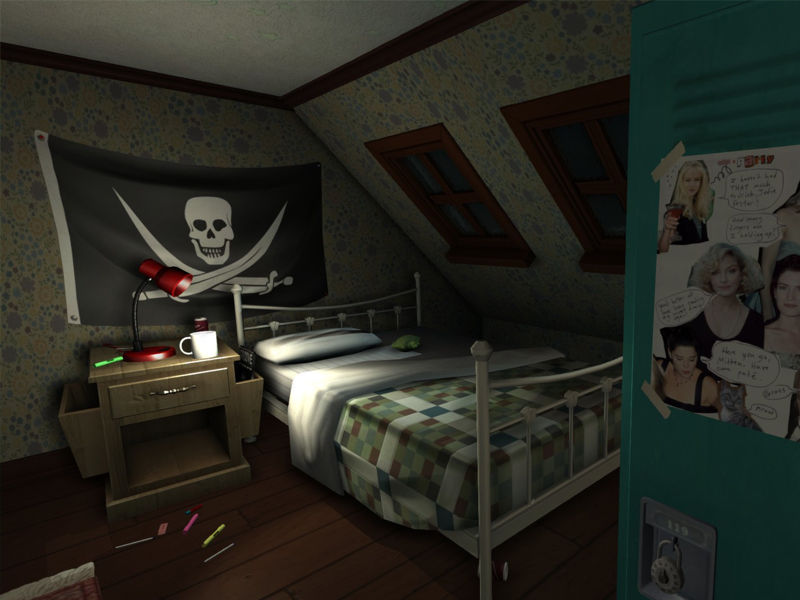
Gone Home
- the only real gameplay element is walking around the house and clicking on stuff. There is a very, very scant amount of puzzle solving akin to Maniac Mansion, but it’s so little it’s nearly imperceptible. Mostly it was just a short story about a kinda dysfunctional family dealing with infidelity and coming out as gay, all disguised as a game. The problem is that the game elements are so weak that if you lose interest in the story there’s no reason to play. I’m pretty sure the reason it was so highly rated (at the time) was purely because of the LGBT spin on the game.


Perfect Angle
- the story didn’t really matter to me at all. I couldn’t tell if the developers just tacked on a hastily written framework to explain how the solutions of each level somehow related to each other, or if the author was really trying to tell/relive some kind of childhood trauma and chose a game as a method of doing so. As a puzzle game, it was pretty good. But I didn’t see the need to include a story in much the same way that I don’t really need to learn about Mario’s medical degree to play Dr. Mario or find out about Regina to play PuyoPuyo. But the presentation of the puzzles was visually very nice.


The Gardens Between
- this was a simple puzzle game whose concept wasn’t terribly deep. It more or less was a glorified block sliding puzzle, albeit wrapped in really beautiful scenery. I saw some similarities between this game and Perfect Angle in that I almost felt like the creator was dealing with some personal crisis or was having abandonment issues and making the game was like therapy. It’s basically two friends reliving their greatest memories the night before one moves away from the neighborhood masquerading as a puzzle game. If the nostalgia-inducing graphics weren’t so beautifully made this wouldn’t really be anything special, and maybe not even as good as the colored pipe connection games people play on phones. To me, this felt more like a new electronic art medium that needed a game element hastily tacked on in order to qualify it as a game rather than an interactive digital sculpture. 


Inmost
 - I knew going into it that it would probably end up on this list, but it was only like $2 at the time so I figured, what the hell? It was pretty to look at, and was really kinda like 3 mini-games that switched back and forth at set points. One was a basic but decent action platformer, while another was a puzzle platformer. Both could have been developed further into more fully realized concepts but weren't, unfortunately. The third part was less interesting, and can be described as hide-and-seek, the video game. The main problem (besides needing some more robust development) is that it was trying to tell a story from three perspectives, and much of it was some kind of fantasy allegory or an imaginary world that someone suffering from trauma escapes to in order to avoid real-world pain. The story's purpose was to stitch the three platformer sections together, but failed because due to poor writing and storytelling. At the end, I wasn't sure what had really happened, which element represented what real-life event, and I didn't really care to investigate because it just wasn't that interesting. A good mystery story might have saved all three other phases of the game and gave it some replayability. 


There’s another group of games that is commonly and derisively referred to as “walking simulators,” which are games that have basically no real gaming elements - no puzzles to solve, no people to save, no bosses to beat, no skills to master, no races to win, no timed elements, no mistakes to make, and no Game Over screens to face. Essentially, it’s no different from reading a novel except that you get it in small doses and you need to press buttons to get the next chunk, or perhaps use the D-pad to move the character to get the next bit of text. In other words, it’s a short story pretending to be a video game that would be better suited on a Kindle. Some of the games listed above might be classified as such.


Some counter examples of games 
I enjoyed featuring a background story but which are, at their core, games that could have stood on their own are:


Portal
or Superliminal - both were mostly puzzle games, but the story of GLaDOS/Aperture and SomnaSculpt just enhanced it in the background while players moved from level to level. They probably could have been successful without the story, but the games were more intriguing with the story and it motivated players to keep moving on. In other words, the story enhanced an already great concept. 


Perfect Dark
or Splinter Cell
- similar to Portal in that most of the dialogue and story occurs between levels but there is a bit that happens while playing an excellent game that blends both perfectly. The player is given his/her objectives, and then left to complete them with minimal dialogue. 


Ace Attorney
Games
- It’s been said that these are more of a "choose-your-own-adventure" style visual novel, and it’s fairly spot on. But it also has enough game elements (point/click exploration, decision making, puzzle solving, and the ability to get a "game over") that I feel that it straddles the line and is about 48% story and 52% game. In this case, the mystery story is so well written that it's hard to put down. 


Cobra Kai
or Spider-Man: Maximum Carnage
- these are both beat-em-ups that have story from the comic book or TV show they are based off of in between levels. At the end of the day, it’s still mostly a game but you kinda feel like you went on the journey with them since the stages are based on events from the original show/comic.


Unravel Two
 - This was a really neat co-op puzzle platformer featuring tethered characters made of yarn who can help each other overcome jumps and obstacles. The graphics are beautiful, and the concept is a new idea that (to my knowledge) has never been done before. I got this to play with my wife as something to do together, and it absolutely works as a co-op game (and not the kind like Kirby or Mario Odyssey where the experienced player can serve as an assistant to help a younger player). However, in the background of the game there is some kind of story, and it's incredibly vague. I'm not really sure what's going on and what it's supposed to mean or represent, but honestly I don't care. The game is great as just the puzzle platformer and doesn't really need the story. But unlike something like Portal or Perfect Dark where the story augments the game, this one adds nothing. I would say either make the story good and engaging, or just don't do it at all. As it is, it kinda serves as a bit of a distraction instead of an enhancement. I feel that it's almost the opposite of a game like It Takes Two, which is similarly cooperative, but the story of the parents impending divorce is front and center and drives the plot of the game forward. 


Of course, there are plenty of RPG style games where the story/dialogue is a major part of the game, like Final Fantasy IV, Final Fantasy VI, Octopath Traveler, or ChronoTrigger where the story is so good that it's one of the main things drawing players into its world. 


As an art form, games have come a long way. We sometimes get new 8- or 16-bit “retro” games to this day (Shovel Knight, Shredder's Revenge) because we are nostalgic for that style, but we also get new and beautiful games like Breath of the Wild as well. It’s easy to see the artistry, skill, and love the makers put into their craft. Sometimes the beauty adds to an already great game, and sometimes it camouflages the fact that it’s an underdeveloped concept and the shiny graphics distract us from that fact. 

On somewhat of an unrelated tangent, I kinda hope the amount of games that copy the Skyrim opening goes down significantly. Not every game needs the protagonist to wake up without any knowledge of who they are or how they got there. There are other ways to introduce the world and have a tutorial than to assume the main character is an amnesia victim. 


I also realize that not every game is made for every gamer. And if someone wants to dress up a short story as a game, and use sprites instead of illustrations, more power to them. But I wish that reviews and the eShop would also classify these games as such so that we know what we’re purchasing ahead of time.


Thursday, July 8, 2021

Posters


This is just a quick post to put some of the posters and wallpapers I've made over the years. 


Reflections on the Evolution of Gaming (part 2)


Reflections on the evolution of Gaming (part 1)


I have a few more thoughts to add to my last post. Occasionally I’ll find myself trying to explain concepts that make perfect sense to me but are completely foreign to my kids, such as long-distance telephone calls and how cheat codes propagated before the advent of the internet. There was a major shift in technology dealing with how we communicate between the late 90’s and the late 00’s. In between those times, there was this weird transition phase with things that are considered archaic, like limits/costs on text messages and a separate version of the internet designed for non-smart phones. It’s sort of like growing pains for teenagers, and how different parts of the body grow to their adult shape/size at different times, leading to awkward and gangly looking kids.


Likewise, console gaming went through a similar phase during the transition between 2D and 3D, which mainly affected the Sega Saturn, Sony Playstation, and N64, which I consider to be the awkward teenager stage of gaming. Adam Koralik has said that his favorite generations of consoles were the 4th and 6th generations, corresponding to Nintendo’s SNES and GameCube eras. His reasoning is that the designer/programmers developed the concepts and found out what they could and couldn’t do on the NES and N64 systems and learned how to make the games for those systems, but were somewhat limited by the technology. When the next generations came out, they could finally make the games they were intending to make all along. I firmly believe that the game Miyamoto was trying to make was A Link to the Past, but was unable to do so when he made the original Legend of Zelda, and likewise, something like Twilight Princess is what the Ocarina of Time developers had in their head but had to scale it back quite a bit to fit the N64’s capabilities.


During that era, there were certain practices that are considered weird by today’s standards that we just had to accept, and they all pretty much came about because of hardware limitations and other considerations. I’m going to mainly compare the original Playstation and the N64 here for these examples. Games like Resident Evil and Final Fantasy VII got around the PSX’s inability to create large 3D spaces by having the backgrounds be pre-rendered static images while the 3D characters were limited to where they were allowed to move. The 3D models were fairly blocky and didn’t have a lot of texture mapping. Because of the relatively large amounts of disc storage (for the time, anyway) developers could include pre-rendered video clips as cut scenes, and some games actually had CD quality music played and recorded with actual instruments instead of digitized music or MIDI files. While loading times are still a thing these days, they were looooooong back then, and programmers tried all sorts of things to mask loading times. Another fairly unique characteristic was the “jitter” that accompanied polygons due to not having floating point values.


Meanwhile, on the N64, there were things such as an odd mixture of 2D sprites on 3D planes (like the trees on Super Mario 64 or the racers on Mario Kart), oddly the reverse of FFVII. Characters were still blocky, but slightly less so than the PSX. Both systems did camera tricks to show off the 3D capabilities, like how it swerves in/out/around the characters during a battle on FFVII, or the Lakitu Bros camera flying around Peach’s castle which both gave a tour/aerial view in addition to showing off. Due to cartridge limitations, pre-rendered Full Motion Video was basically out of the question, and was replaced with real-time rendered motion capture clips. These are still in use today, as the big advantage is smaller storage requirements but also having it reflect the situation accurately. By this I mean that games like Rogue Squadron will show the pre- and post-level cut scenes with whatever vehicle is chosen by the player instead of playing the clip of the suggested/preferred ship for the level. Music was still mainly produced internally by the sound chip, but there were instances of digitized music from real sources (like the Star Wars theme in Shadows of the Empire).


Another interesting relic of this “growing pains” period are the FMV games. With CD-ROM technology, it was far easier to store video clips, and it made developing what are basically, “choose-your-own-adventure” games that don’t involve much playing, just pushing a button to make a decision here and there. It sounds all fine and dandy, but these games spend their budget on sets, actors, costumes, and other usual TV/movie stuff instead of artists and level designers. In theory, these games should be easier to make because there's no need for programming hit boxes, background/foreground layers, and palettes - just links to video files, and graphically it was assumed they would be more appealing because they're actual video as opposed to looking like 16-bit pixels. The goal was to blur the line between game and movie. But in almost all cases, the actors aren’t even good enough to appear in B-movies, and the sets are clearly the cheapest stuff they could find. The most well-known example (and probably the best game in this category) is Night Trap. Due to the low quality of the “games,” their popularity quickly waned when the novelty of CDs wore off. These kinds of games also introduced us to the concept of quick time events, which is where players are prompted to push buttons during a cutscene to make them more interactive.


Voice acting is much better these days, though not perfect. But in the earliest instances of it, it was far more likely to be terrible. The scene between Dracula and Richter Belmont is one of my favorite examples of this. Again, this comes down to hiring bad actors to save money. All of this came about because the door was opened by the monumentally larger storage capacity of the CD (as compared to cartridges), which is both good and bad. It was good because it lessens some of the constraints developers had been fighting for years and because it reduced costs on the manufacturing side; but it was also bad because a lot of developers felt that they had to fill the disc with content to help consumers feel like they got their money’s worth, choosing to do previews, licensed music, video cutscenes, or other filler and fluff. Something can also be said about limitations breeding creativity.


Something else that moved along the evolutionary track is how controllers work and how they are shaped. They started out as a button and a stick (Atari), but as time went on, the stick was replaced with a D-pad, and more buttons were added. Various other control schemes were tried along the way - track balls, number pads, dials - as well as different button arrangements and controller shapes. For fun, compare the proliferation of NES controller variations versus how few there are for today’s consoles. Over time, most controllers have sort of morphed together to become very similar. The current version of the PS5 controller, the XBox Series X controller, and the Nintendo Switch Pro Controller have dual grips with mostly the same buttons/sticks in 
the same places (other than the left D-pad and stick being swapped on the PS). Sure, there were some hiccups in development along the way - motion controls, pressure sensitive or differently sized/shaped buttons, touch screens, 3 grips, and memory card slots - but eventually good ideas won out over bad ones and we seem to have settled on the ideal controller, at least one that works well enough for games in general. There will always be the random odd example like the DDR Dance Pad, light guns, or the Guitar Hero guitar, but the modern controller has the right amount of buttons and the right configuration for 98% of games.


Right in step with the controller development was how games were programmed to be played. Super Mario Bros popularized the, “B runs and A jumps” concept that most games have followed suit out of habit, and ones that don’t just feel . . . wrong. When 3D games first hit the scene, there wasn’t a ton of thought put into how one would control them, and many of the earlier games have really bad/awkward controls. Eventually, though, a game comes along with such good controls that most games started emulating it. Ocarina of Time and Super Mario 64 come to mind as examples of doing it so right that most games handle like them these days. Different ways of handling FPS and Third-Person views were tried but now they almost all control the same, which makes picking up a new game in the same genre a much gentler transition. Just like evolution in species, the good ideas persist and the bad ones get left by the wayside. Street Fighter II and Mortal Kombat were the games to revolutionize fighting game controls, which still persist to this day.


I’m excited to see where this pastime goes, but hopefully we don’t forget the lessons of the past along the way.

Monday, July 5, 2021

Rewriting A Link Between Worlds


While I really liked A Link Between Worlds, I kinda felt like they (Nintendo's writers) were phoning it in when it came to some of the story elements. They had a good opportunity to connect the storylines between ALttP and the original LoZ and didn't even try. So this is my effort to do that, and other than a couple of cut scenes, mostly all it would take is to amend the text a little.

The backstory - what isn't explicitly mentioned right off the bat is that after the events of A Link to the Past, the remaining people of the Dark World founded Lorule. Once Ganon was gone, the people made a kingdom and turned the Pyramid of Power into a Castle and started to live life again. But because they haven't had the Triforce's power in the realm, after a while the land has been starting to crumble, hence why the map is fractured, and Lorule is slowly dying. These facts come to light in small snippets from Hilda or other Lorule denizens. Also, there never was a Lorule Triforce - only the normal one that Ganon had used to transform the Golden Land into the Dark World all those years ago. 


The game starts off the same - Link wakes up, gets the sword, takes it to the captain, goes through the graveyard tunnel, fights Yuga, meets Ravio, etc. After that he goes to the castle to inform Zelda what's going on and there's a lot of commotion and that's because not only is there graffiti on the castle walls, but the people are panicking because the Triforce has disappeared and they don't know what happened to it. Inside the castle while he waits for Zelda, Link reads the history of Hyrule but the fifth panel of the story is going to be changed a little bit to be a little more in line with the events of ALttP, specifically that the Triforce was never split into 3 parts and that it's kept by the royal family in a secure place, only to be used in the most dire of circumstances. As Link is led to meet Zelda, she's talking with a captain and mentions that she can't figure out how the intruder slipped past the guards while we are shown a view of the Triforce location, which has vines lining the walls in the same way that the Palace of Darkness did (see pic above) hinting that Yuga flattened himself and slid along the wall under the vines. Zelda’s theory is that someone is trying to resurrect Ganon, but it’s a red herring. 


Then Zelda gives the Pendant of Courage to Link and sends him to see Sahasrahla. He doesn't believe that Ganon is returning anytime soon, but that they should trust Zelda's intuition just to be on the safe side and sends Link to fetch Osfala. After that, all the normal stuff happens, he gets the Master Sword and goes back to Hyrule Castle. As Link is confronting Yuga, he turns Zelda into a painting and slips into Lorule thinking that Link won't be able to follow. Link enters Lorule and after poking around the castle a bit, he sees the ceremony Yuga performs with the portraits of the Seven Sages. It’s revealed that Yuga has the Triforce of Power and that he tried to grab the whole Triforce, but it split and two of the pieces are missing (mirroring what happened to Ganon in Ocarina of Time).


Yuga (correctly) assumed that Zelda has the Triforce of Wisdom, and that one of the descendants of the Seven Sages was the most likely candidate to have the Triforce of Courage so that’s why he turned all of them into paintings and kidnapped them. However, none of them have it, so in his frustration he scatters them across Lorule. He then begins the process of extracting the Triforce of Wisdom from Zelda’s painting when Link shows up in a triumphant entrance and sees that Hilda is attempting to “stop” Yuga, and tells Link that she can hold him for a while, but needs the help of the Seven Sages to aid her in completely stopping Yuga, as her magic isn't strong enough. This is a ruse done as a way to keep Link occupied while they do the ritual to get the Triforce from Zelda. We will later find out that Link was a bit noisy (probably breaking pots or something) and Hilda had caught onto his presence, hence the fake-out "binding" of Yuga to send Link away.


So then the rest of the game goes on like normal with Hilda telling Link small bits of Lorule back history whenever he reaches a new area or completes two dungeons and then Link finally recovers all of the portraits and goes back to Lorule Castle sooner than Hilda expected. He walks in on Hilda (without being seen/heard this time), and sees that Hilda has been successful in extracting the Triforce of Wisdom from Zelda by showing her hand with the Triforce symbol on it while gloating to the painting of Zelda. Then it becomes apparent that Hilda and Yuga are in cahoots when she says to Yuga (who surprisingly isn’t being restrained in any way), “Okay now give it to me,” and Yuga tells her ‘no.’ It turns out that Yuga kinda admired Ganon and when he got the Triforce of Power decided to follow in Ganon’s footsteps and try to get the whole thing. Hilda is bewildered and angered at this betrayal because he’s double crossing her and ruining the plan they had. Hilda was supposed to get the whole Triforce and Yuga was the backup agent she hired when Ravio had chickened out.


Then Yuga senses the Triforce of Courage in the room and notices Link, who has been watching this play out. It turns out that in rescuing the sages, Link demonstrated the courage to be worthy of the Triforce of Courage, and Hilda realizes that by sending Link on what she believed to be a wild goose chase, she inadvertently caused Link to gain the Triforce of Courage. Yuga lashes out at Link and the first phase of the fight ensues. When he is beaten, Yuga takes the Triforce of Wisdom from Hilda and phase 2 begins. When Link is successful, he takes the Triforces of Power and Wisdom away from Yuga, frees Zelda, then gives her the reunited Triforce willingly. Ravio runs in and tries to stop the madness, reporting that most of Lorule has been destroyed, that the fighting over the Triforces has accelerated the destruction process, and the remaining good people are all gathered in front of the castle wondering what they should do.


Hilda surrenders herself to Zelda for her crimes, fully expecting to be executed for her plot, but also admitting that she was desperate. Zelda then uses the Triforce and after a flash of light, Zelda, Link, Hilda, Ravio, Sheerow, and all of the people from Lorule (but not Yuga) are standing in Hyrule. Zelda announces that the people of Lorule are offered refuge, and that she won’t execute Hilda. However, her titles, magic, wealth, and political powers are revoked and that she will be just a regular citizen in Hyrule. Zelda expresses sympathy for Hilda trying to save her people, misguided as it was.


The epilogue has Zelda deciding that the completed Triforce is too tempting of a target to be kept at the castle, and it can’t be destroyed lest Hyrule ends up like Lorule. They decide that one of the pieces should be hidden far away in a palace just in case. It’s also decided that the people of Lorule will take up living in the forest because they would feel more comfortable there than in places like Kakariko, and it wouldn't be a smart idea to have them so close to the sacred grove and the Master Sword's resting spot, so Link leaves the sword in the care of Damp
é (someone they know they can trust), whose descendants will watch over it until the next hero needs use of it.